Showing posts with label The Lion the Witch and the Wardrobe. Show all posts

Monday, September 2, 2024

Our Favorite Narnians


I recently finished re-reading (and rewatching) The Chronicle of Narnia. It's been one of my favorites for about fifteen years now, since I was first shown Prince Caspian at a college movie night. They're always good movies and books that I could watch and read on repeat to boost my mood. So for this post I asked some of our team to pick their favorite Narnian (which unfortunately rules out my favorite protagonist, Shasta/Cor). With such an inspiring series, I hope you're able to glean some inspiration from our favorites.

--Spencer

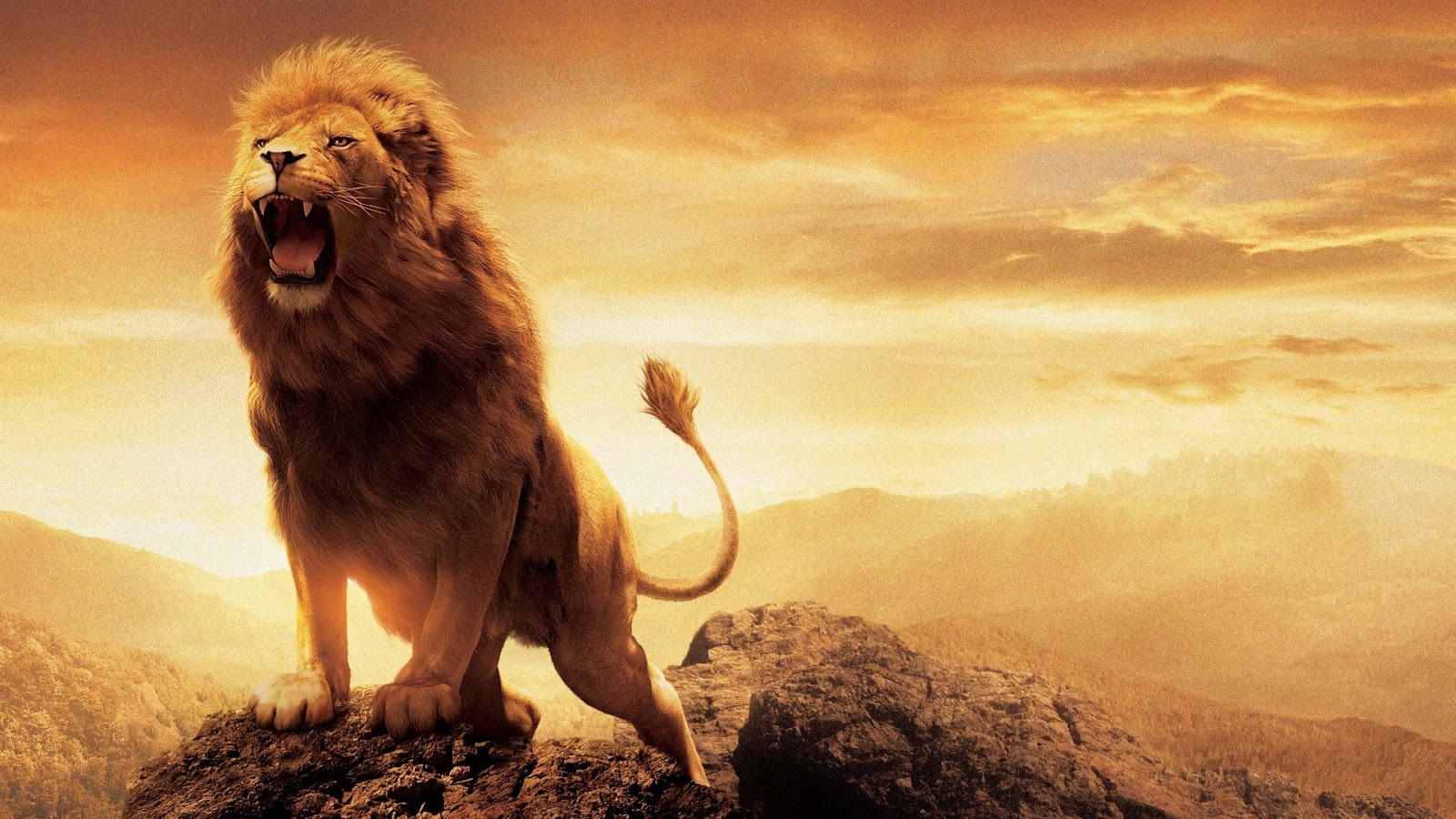
Aslan 

I couldn't decide between Aslan and Edmund for they are the best characters in the series. However, without Aslan, Edmund's redemption would be meaningless. Therefore, in this post I will highlight why Aslan is the best character. 

As any fan of Narnia knows Aslan is symbolic of Jesus Christ. They share striking parallels that underscore their roles as symbols of divine intervention, sacrifice, and redemption in their respective narratives. Both figures are depicted as powerful yet benevolent leaders who offer profound guidance and protection to their followers. Aslan, like Jesus, embodies the ultimate moral authority, representing the highest virtues of courage, wisdom, and selflessness. His actions in The Chronicles of Narnia, such as his sacrificial death and subsequent resurrection, echo Jesus's life.

The symbolism surrounding Aslan is deeply rooted in Christian theology. Aslan’s death in Edmund’s place and his resurrection are direct allegories to Jesus's crucifixion and resurrection, signifying themes of atonement and the triumph of good over evil. Through these similarities, Aslan serves not only as a central figure in Narnia’s lore but also as a literary reflection of the profound spiritual and moral teachings of Christianity. The reason I believe that The Chronicles of Narnia is successful is thanks to Aslan similitude to Jesus Christ.

--Michael


Reepicheep is my favorite because he is an embodiment of “by small and simple things are great things brought to pass.” Despite being small in stature, he used his talents to fight for Aslan and always kept his eyes on the goal of one day entering Aslan’s country. I loved the interaction between Reepicheep and Aslan in the film version of Prince Caspian when it almost appears that Aslan will not be giving Reepicheep back his tail. At the sight of Reepicheep’s squadron of mice willing to cut their own tails off, Aslan restores Reepicheep’s own tail. It is sweet to see Reepicheep’s own loyalty to Aslan and see his desire fulfilled in being allowed to enter Aslan’s country, no longer needing his rapier, and the subsequently greet the seven friends of Narnia into that same country. He is loyal, he is fearless, he is a talented fighter and chess player, what more could you hope to find in a mouse!

--Russell

It's a struggle to decide on my favorite Narnian. Depending on the day it could shift between Reepicheep, Eustace, and Lucy (especially the movie versions) but for today I landed on Puddleglum. He's probably the biggest reason I'm still upset that The Silver Chair never got adapted for the movies. While the kids frequently described him as a "wet blanket", he stated multiple times that he was more optimistic than most Marshwiggles. Despite his apparent pessimism and his perceived negativity, I relate to Puddleglum a lot.

He came across as a pessimist compared to Eustace and Jill, but he never faltered in his commitment to see the quest through and find Prince Rilian. Imperfect as he was, Puddleglum tried to follow Aslan's signs despite the grievances of his traveling companions. True he made some mistakes, like going to the giants' castle, but he demonstrated faith in Aslan's words despite his mistakes and even though he didn't know the outcome. He readily accepted that following Aslan's direction didn't mean their journey would go smoothly, just that they'd get where they needed to be. In effect, he was willing to die on that quest if it meant listening to Aslan. And of course he was the one who finally stood up to the Lady of the Green Kirtle and put his fate in Aslan's paws regardless of the outcome. "I’m on Aslan’s side even if there isn’t any Aslan to lead it. I’m going to live as like a Narnian as I can even if there isn’t any Narnia."

Honestly, I probably come across a lot like him. Sometimes I have to verbalize my anxieties in order to stay optimistic (my wife has noted this many times) and sometimes I can get pretty down despite my faith and my words. But I'm on Aslan's side too. 

Also, did I mention that he was portrayed by Tom Baker in the 1990 BBC adaptation of The Silver Chair? The Fourth Doctor himself! Legendary!

--Spencer

Monday, April 8, 2024

Good Movie Additions: The Lion, the Witch, and the Wardrobe


Book-to-movie adaptations get a bad reputation from years and years of Hodge podge work (see fans of Percy Jackson and their movies) but I still stand behind the apple pie metaphor from a blog post TJ did years ago. It’s an adaptation, after all, not a direct translation. So some artistic liberties are taken. Some adaptations cause fans to die a little inside (see the Burrow burning in Half-Blood Prince) because they’re unnecessary, but some enhance the feeling and theme of the story (see Stephen’s post about Dawn Treader). I guess my point is that not all creative additions to book-to-movie adaptations are bad. That’s what I want to delve into with some of these blog posts. Today’s example: The Lion, the Witch, and the Wardrobe


Scenes from the Blitz

The book starts out with the four children arriving at the professor's home. The blitz has already happened. But in the movie, the Blitz scenes make the war more real to modern audiences. The war had barely been over five years when The Lion, the Witch, and the Wardrobe was first in print, so readers of the book probably didn’t need reminding of the traumatic experience. But those of us in modern days, especially those of us in North America, have never experienced night time air raids. So seeing the bombings, and what the Pevensies (and other kids) were running from makes the urgency much more real. In addition, there were several references to the war throughout the adventure in the movie setting up a juxtaposition of the war in the “real” world, fought by others, to a war fought in Narnia, in which the Pevensie children were commanders. 


Entering Narnia

In the book, the siblings were simply exploring when Lucy wandered into Narnia. And then later, during a game of hide and seek, she and Edmund ventured into Narnia more or less together. Finally, when they entered the wardrobe as a family, CS Lewis simply had them hiding from visitors. As grateful as I am to the writer of these wonderful stories, those situations don’t exactly come across as good cinema. Instead, the movie portrayal created a greater sense of mystery around the wardrobe and entering Narnia; Lucy checks the wardrobe during a game of hide and seek, and then tries to return during a midnight walk. And when she returns with both brothers  and her sister, the broken window provides a sense of urgency that drives the story forward. 


Peter’s Shadows

Even before entering Narnia, the movie gave greater depth to the characters, especially the brothers, that was not as obvious in the text especially during a first reading. Even before entering Narnia, Peter and Edmund were at odds with each other; this conflict was only magnified as they entered the wardrobe. For example, Peter’s pride reinforced Edmund’s betrayal, as he gave a woman’s coat to his brother. In contrast to that pride, we also saw Peter’s fears and insecurities, as he’s hesitant to fight, while the book makes it seem like accepting his destiny was easy for him. “We’re not heroes,” he claimed. Movie Peter directly told Mr. Beaver and Aslan that he didn’t want to fight and instead just wanted to get the family home. Instead of running away, he found the courage inside to face his destiny.


Edmund’s Betrayal 

Peter’s pride may have reinforced the betrayal (like with the lady’s coat mentioned above), but the movie added layers of emotional baggage and depth to Edmund’s betrayal beyond the sibling relationships. From the moment they arrived at Beaver Dam, Mr. Beaver noted to Edmund, “Enjoying the scenery?” There was a weight upon Edmund. Add to that when he saw Tumnus turned to stone, instead of simply seeing a statue, and his failed efforts to save the fox. It became obvious early on that Edmund wanted to turn back, but couldn’t.


The Journey to Aslan

From the moment the children meet the beavers in the film, there was a sense of urgency, lost in the wordiness of the novel (Tangent: I love the added line from Susan in the movie, “He’s a beaver; he shouldn’t be saying anything.”). I particularly found Mrs. Beaver’s urgency more understandable in the movie and honestly found her slow speed in the book off-putting (you have a witch chasing you; take all the head start you can!). The depiction of the battles in the movie, including the skirmish on the frozen river, added a sense of action lacking in a direct translation of the book. 


So agree or disagree? What were the best parts of The Lion, the Witch, and the Wardrobe movie? What could you have lived without? Next up for Narnia posts is going to be about The Horse and His Boy—my favorite! 

For Narnia and for Aslan!

Monday, February 13, 2023

Pokemon Nicknames: Narnia (2)

As I work my way through another play through of the Pokémon games, I find myself stuck against Jasmine of Johto  so while I grind my fire Pokémon to a higher level, enjoy some more Pokémon nicknames based in Narnian fairytales (as Eustace described them).

Bibarel as Mr. Beaver (or Mrs. Beaver)

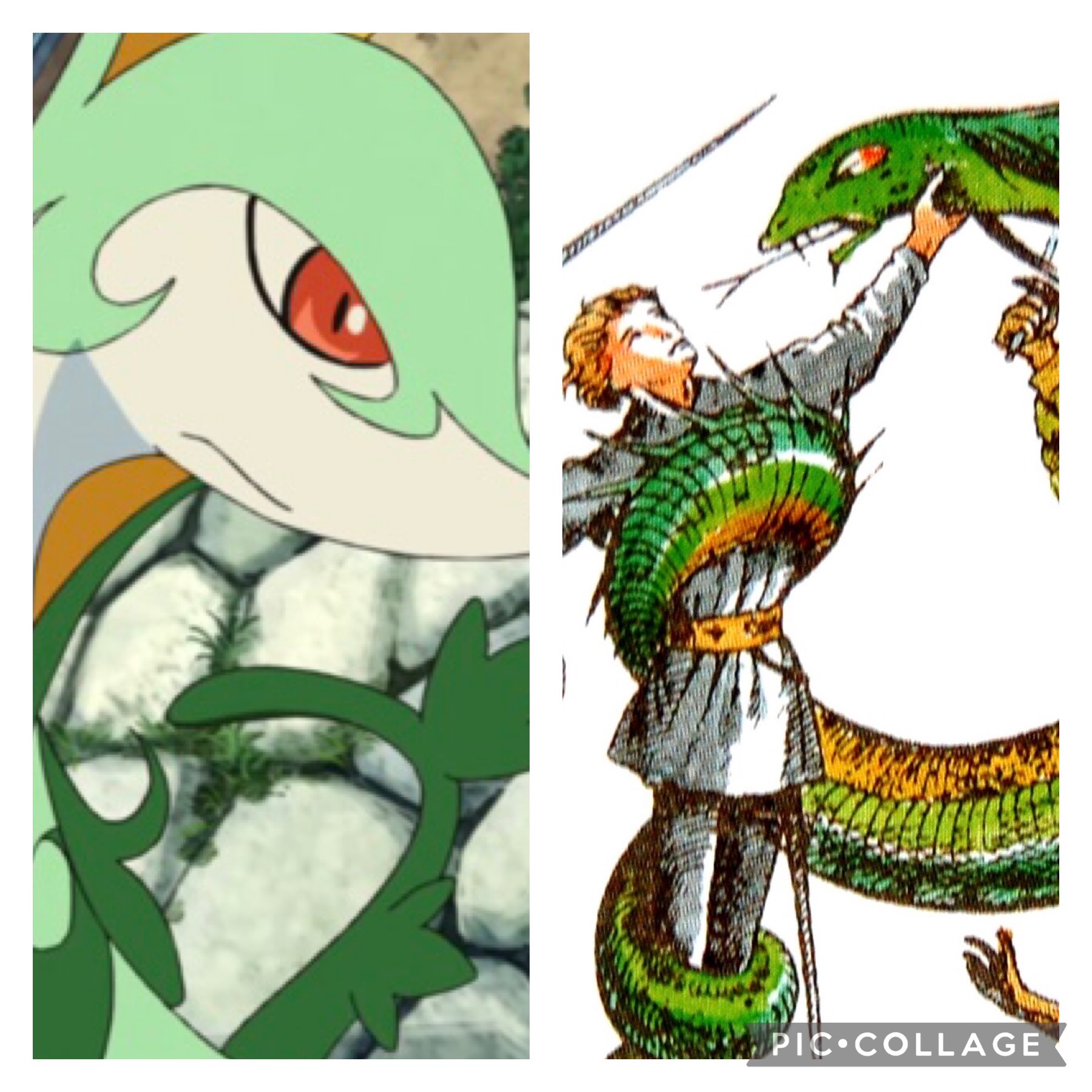
Serperior as Green Kirtle

Decidueye as Glimfeather

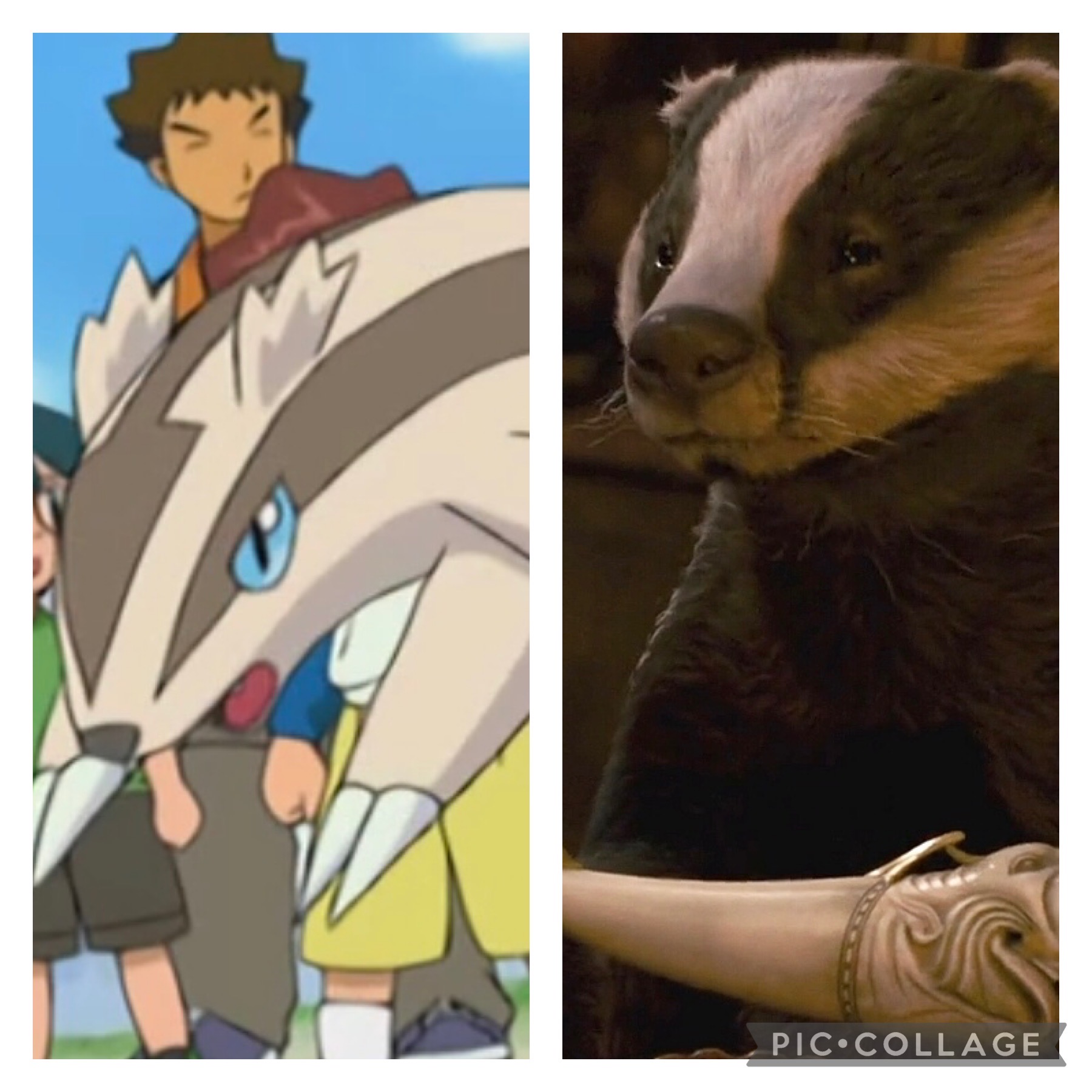
Lycanroc as Maugrim

Mudbray as Puzzle (or Rabadash)

Oranguru as Shift

Solgaleo as Aslan

Skwovet as Pattertwig

Monday, December 12, 2022

Pokemon Nicknames: Narnia

Like with her older sister before her, I've been making a point of reading from The Chronicles of Narnia to my unborn daughter. As I'm reading and watching/playing Pokemon, I've had some thoughts pop into my mind about another series of Pokemon nicknames. This time, we're going through the Poke-Wardrobe to see what we've got in Poke-Narnia.

Raticate as Reepicheep

Rapidash as Bree (or Hwin)

Dragonite as Eustace

Murkrow as Sallowpad

Ursaring as Bulgy Bear

Linoone as Trufflehunter

Lombre as Puddleglum

Gardevoir as Jadis

Jirachi as Ramandu

Friday, November 11, 2022

5 Gospel Truths that C.S. Lewis Got Right


It is obvious that C.S. Lewis writings is symbolic of Christianity in all his work. After his conversion to Christianity in the early 1930’s he wrote his magnum opus The chronicles of Narnia in the 1950’s where he intended the stories to appeal to children as well as adults to convey a larger message of Jesus Christ.

In this post we will go over 5 truths that C.S. Lewis wrote in The Chronicles of Narnia that we believe to be true as members of The Church of Jesus Christ of Latter-Day Saints.

The Horse and His Boy: Judging Others

Shasta, the main protagonist, is asking Aslan why he injured his friend, Aravis, and Aslan replies by saying I tell no one any story, but his own. Before Telling Shasta this Aslan also told him I am telling you your story, not hers [Aravis]. No one is told any story but their own. What can we learn from Shasta’s experience with the lion? That God will tell us what he expects from us, and we should not be focus on judging others sins. Most of us are not called to be judges (unless given authority) therefore we should not judge others.

In Matthew chapter 7 Jesus concludes the sermon on the mount by saying:

1.  Judge not, that ye be not judged.

2. For with what judgement ye judge, ye shall be judged: and with what measure ye mete, it shall be measured to you again.

3. And why beholdest thou the mote that is in thy brother’s eye, but considerest not the beam that is in thine own eye?

4. Or how wilt thou say to thy brother, Let me pull out the mote of thine eye; and, behold, a beam is in thine own eye?

5. Thou Hypocrite, first cast out the beam out of thine own eye; and then shalt thou see clearly to cast out the mote out of thy brother’s eye.

We read later on when Aslan talked to Aravis that he injured her because she needed to learn humility and empathy --- specifically for the maid that she caused to be punished when she ran away from home.

The Lion, the Witch and the Wardrobe: Identity

By the end of the four Pevensie siblings adventure Aslan pronounced them as Kings and Queens of Narnia. The Sons and Daughters of Adam and Eve can become Kings and Queens from the most high God. The fundamental principle we can learn from this is that our identity is more than a label we put on myself. We are all Children and heirs of our Heavenly Father and he is promising us to become Kings and Queens as we follow Him.

This reminds me of President Nelson talk he gave in a broadcast to the saints of Jesus Christ:

No identifier should displace, replace, or take priority over these three enduring designations:

·  Child of God

·  Child of the covenant

·  Disciple of Jesus Christ

Your potential is divine. With your diligent seeking, God will give you glimpses of who you may become.

Narnia: Stewardship and Environmentalism


In Prince Caspian, Caspian uncle King Miraz is destroying the ways of Narnia. Animals that were captured were forced not to speak and eventually forgets how to speak. Also, in the Last Battle Shift, an ape, attempts to deceive the inhabitants of Narnia to believe that Puzzle, a donkey, is Aslan. With the confusion and disbelief the destruction of Narnia came to be and Narnia became no more. This message reminds me that we are environmental stewards of this beautiful earth. We have been instructed to take care of this earth.

Doctrine and Covenants 49:19-21:

19. For, behold, the beasts of the field and the fowls of the air, and that which cometh of the earth, is ordained for the use of man for food and for raiment, and that he might have abundance.

20. But it is not given that one man should possess that which is above another, wherefore the world lieth in sin.

21. and wo be unto man that sheddeth blood or that wasteth flesh and hath no need.

Under Environmental stewardship and Conservation it says:

God has made us accountable for the care and preservation of the earth and the wise use of its resources. As stewards, we avoid complacency and excessive consumption, using only what is necessary. We make our homes, neighborhoods, and cities beautiful. We preserve resources and protect for future generations the spiritual and temporal blessings of nature.

As members of the Church of Jesus Christ we are taught to try our best to make our homes, neighborhoods, and cities the best.

The Last Battle: Death and Resurrection and Judgement (**Spoilers**)

While Shift was deceiving people with Puzzle being Aslan, he gets Dwarfs to join his side and after everyone dies Lucy is sad about the outcome of the Dwarfs and wants them to come with her to new Narnia.

“Aslan,” said Lucy through her tears, “could you – will you – do something for these poor Dwarfs?”

“Dearest,” said Aslan, “I will show you both what I can, and what I cannot, do.” He came close to the Dwarfs and gave a low growl: low, but it set all the air shaking. But the Dwarfs said to one another, “Hear that? That’s the gang at the other end of the stable. Trying to frighten us. They do it with a machine of some kind. Don’t take any notice. They won’t take us in again!”

Aslan raised his head and shook his mane. Instantly a glorious feast appeared on the Dwarfs’ knees: pies and tongues and pigeons and trifles and ices, and each Dwarf had a goblet of good wine in his right hand. But it wasn’t much use. They began eating and drinking greedily enough, but it was clear that they couldn’t taste it properly. They thought they were eating and drinking only the sort of things you might find in a stable. One said he was trying to eat hay and another said he had got a bit of an old turnip and a third said he’d found a raw cabbage leaf. And they raised golden goblets of rich red wine to their lips and said “Ugh! Fancy drinking dirty water out of a trough that a donkey’s been at! Never thought we’d come to this.” But very soon every Dwarf began suspecting that every other Dwarf had found something nicer than he had, and they started grabbing and snatching, and went on to quarreling, till in a few minutes there was a free fight and all the good food was smeared on their faces and clothes or trodden under foot. But when at last they sat down to nurse their black eyes and their bleeding noses, they all said:

“Well, at any rate there’s no Humbug here. We haven’t let anyone take us in. The Dwarfs are for the Dwarfs.”

“You see,” said Aslan. “They will not let us help them. They have chosen cunning instead of belief. Their prison is only in their own minds, yet they are in that prison; and so afraid of being taken in that they cannot be taken out.”

We believe in multiple kingdoms of glory and the highest kingdom is where God dwells. God will judge us perfectly and will place us where we will be most happy. That is why we are asked to repent and obey his commandments that when our judgement comes we will be happy to dwell with God knowing that our sins are cleaned by Jesus Christ.

The Lion, the Witch, and the Wardrobe: Jesus Christ Resurrection

The most important truth of them all is that Jesus Christ lives today. As we all know Aslan represents Jesus Christ and when Edmund was supposed to be killed because he broke the laws of the land, Aslan volunteered as tribute. Aslan was sacrificed and became resurrected again because 

When a willing victim who had committed no treachery was killed in a traitor’s stead . . . death itself would start working backwards

When Aslan is resurrected, he became a life-giving being. Breathing new life into those that turned to stone. This religion would not be possible if it was not for the breath of the savior’s resurrection.

           3 Nephi 11:10-17

10 Behold, I am Jesus Christ, whom the prophets testified shall come into the world.

11 And behold, I am the light and the life of the world; and I have drunk out of that bitter cup which the Father hath given me, and have glorified the Father in taking upon me the sins of the world, in the which I have suffered the will of the Father in all things from the beginning.

12 And it came to pass that when Jesus had spoken these words the whole multitude fell to the earth; for they remembered that it had been prophesied among them that Christ should show himself unto them after his ascension into heaven.

13 And it came to pass that the Lord spake unto them saying:

14 Arise and come forth unto me, that ye may thrust your hands into my side, and also that ye may feel the prints of the nails in my hands and in my feet, that ye may know that I am the God of Israel, and the God of the whole earth, and have been slain for the sins of the world.

15 And it came to pass that the multitude went forth, and thrust their hands into his side, and did feel the prints of the nails in his hands and in his feet; and this they did do, going forth one by one until they had all gone forth, and did see with their eyes and did feel with their hands, and did know of a surety and did bear record, that it was he, of whom it was written by the prophets, that should come.

16 And when they had all gone forth and had witnessed for themselves, they did cry out with one accord, saying:

17 Hosanna! Blessed be the name of the Most High God! And they did fall down at the feet of Jesus, and did worship him.

These are 5 truths that I find important as I read Narnia. There are many more truths spread out the series and his others works. No wonder he is quoted so much in general conference.

What truths Have you found while reading The Chronicles of Narnia?

Friday, March 26, 2021

For Narnia and For Aslan!

With Easter coming up just a week away, I wanted to throwback to one of my favorite series, Narnia. This series won my heart back when I was a freshman in college and it never let go. So as we look forward to Easter, I want to talk about quotes by Aslan, Narnia’s representation of the Savior. 


“If the Witch knew the true meaning of sacrifice, she might have interpreted the deep magic differently. That when a willing victim who has committed no treachery, is killed in a traitor's stead, the stone table will crack, and even death itself would turn backwards.” (The Lion, the Witch, and the Wardrobe, 2005 Movie)

I wrote about this one a couple years ago. The White Witch was conceited enough to think that Aslan could be defeated in the name of the “deep magic” holding Narnia together. It makes me wonder how the adversary can believe he has an edge against us in mortality. Satan thought he had won our souls when Jesus Christ died, but he must have overlooked just how powerful the Atonement would be in saving the sons and daughters of God.


“Oh, Adam's son, how cleverly you defend yourself against all that might do you good!” (The Magician’s Nephew)

Isn’t this true of human nature? It’s easy to disregard counsel and advice when it’s hard to do. We fight against people who have different opinions from our own and we get defensive. Maybe this is why Jesus Christ said that the meek would inherit the Earth. If it’s our pride that gets in the way of listening to God’s word, then it’s meekness and humility that enables us to turn to God to transform us into our best selves.


“To know what would have happened, child? No. Nobody is ever told that.” (Prince Caspian)

It would be impossible for me to tell you how much time I’ve wasted on the “what if” game. What if I had changed my career path sooner? What if I had mended bridges with that friend sooner? What if I’d held my tongue instead of losing my cool? It’s a beautiful thing to learn from the past, but when I let myself live there, it only brings me down. In the movie version, Aslan says that we can’t know what would have happened, but “what will happen is another matter.” So let’s learn from our mistakes and use it to better the future.


“I was the lion who forced you to join with Aravis. I was the cat who comforted you among the houses of the dead. I was the lion who drove the jackals from you while you slept. I was the lion who gave the horses the new strength of fear for the last mill so that you should reach King Lune in time. And I was the lion you do not remember who pushed the boat in which you lay, a child near death, so that it came to shore where a man sat, wakeful at midnight, to receive you.” (The Horse and His Boy)

I’ve written about this one as well. I remember during my first reading this book I was struck by these moments. It was a hard time in my life and this quote gave me comfort. Despite all the things weighing on my heart, I could tell the Savior was watching over me. Through friends, through family, through strangers. Despite how alone I felt, I was never alone. 


“But there I have another name. You must learn to know me by that name. This was the very reason why you were brought to Narnia, that by knowing me here for a little, you may know me better there.” (Voyage of the Dawn Treader)

Here’s a good one to end on. John Piper is quoted as saying “All heroes are shadows of Christ.” It’s a bit more explicit in Narnia than in other series, but wherever there is good, you can find the attribute of Jesus Christ. Of course there is no better place than scripture to find those Christ-like attributes. So as we head towards Easter, let’s take some extra time to search and learn of Jesus Christ and His sacrifice for us.

Friday, March 30, 2018

The White Witch's Mistake


"Did you honestly think that by all this you could save the human traitor? You are giving me your life and saving no one. So much for love." --The White Witch (The Lion, the Witch, and the Wardrobe 2005 movie)

How often do you hear this lie from Satan in regard to the Atonement? How often does he tell you that you 'wasted" the Savior's blood? It's never wasted. The Atonement is always available to save you. And no matter which side you choose, Satan will lose and Christ will win.

I have to wonder what lies Satan told the Savior as He suffered in Gethsemane, as He mocked that night, and as He crucified on Calvary. I imagine it was similar to what the Witch said to Aslan. “So much for love.” I can see Satan whispering to the Savior as He knelt in Gethsemane, “You are in so much pain and yet they won’t repent. They’re mine anyway. You’re wasting your time. You are suffering and killing Yourself for no good reason.”


I think he also tells each of us the same lies. “You have gone too far. You can’t repent now. It’s too late. You might as well give up. Christ suffered for you and you’ve gone too far; you’ve wasted His blood.”

Narnia has been one of my favorites for years! Aslan being a type of Christ has taught me so much about the Atonement, from something as commonly understood as Aslan sacrificing himself to save Edmund from the White Witch (The Lion, the Witch, and the Wardrobe), to something as intimate for me as Aslan quietly protect Shasta (The Horse and His Boy).

Like Edmund, we have all made mistakes, betrayed those we love, told lies, gotten angry, and said things we didn’t mean. Like Edmund, we have all felt guilt and remorse for those mistakes. And (hopefully) like Edmund, that remorse has pushed us toward humility and repentance in order to make amends for what we’ve done.


Look forward to more Narnia posts. I’ve been hoping to do them for a long while and now it’s just time!