Showing posts with label The Last Battle. Show all posts

Monday, February 12, 2024

Running Further Up, Further In


(Guest post by Russell)

Dedicated to my pandemic running buddy, Spencer  

I love The Chronicles of Narnia and the writings of C. S. Lewis in general. I love the testimony that is shared throughout his works. I especially enjoy what is written in the final installment of the series, The Last Battle

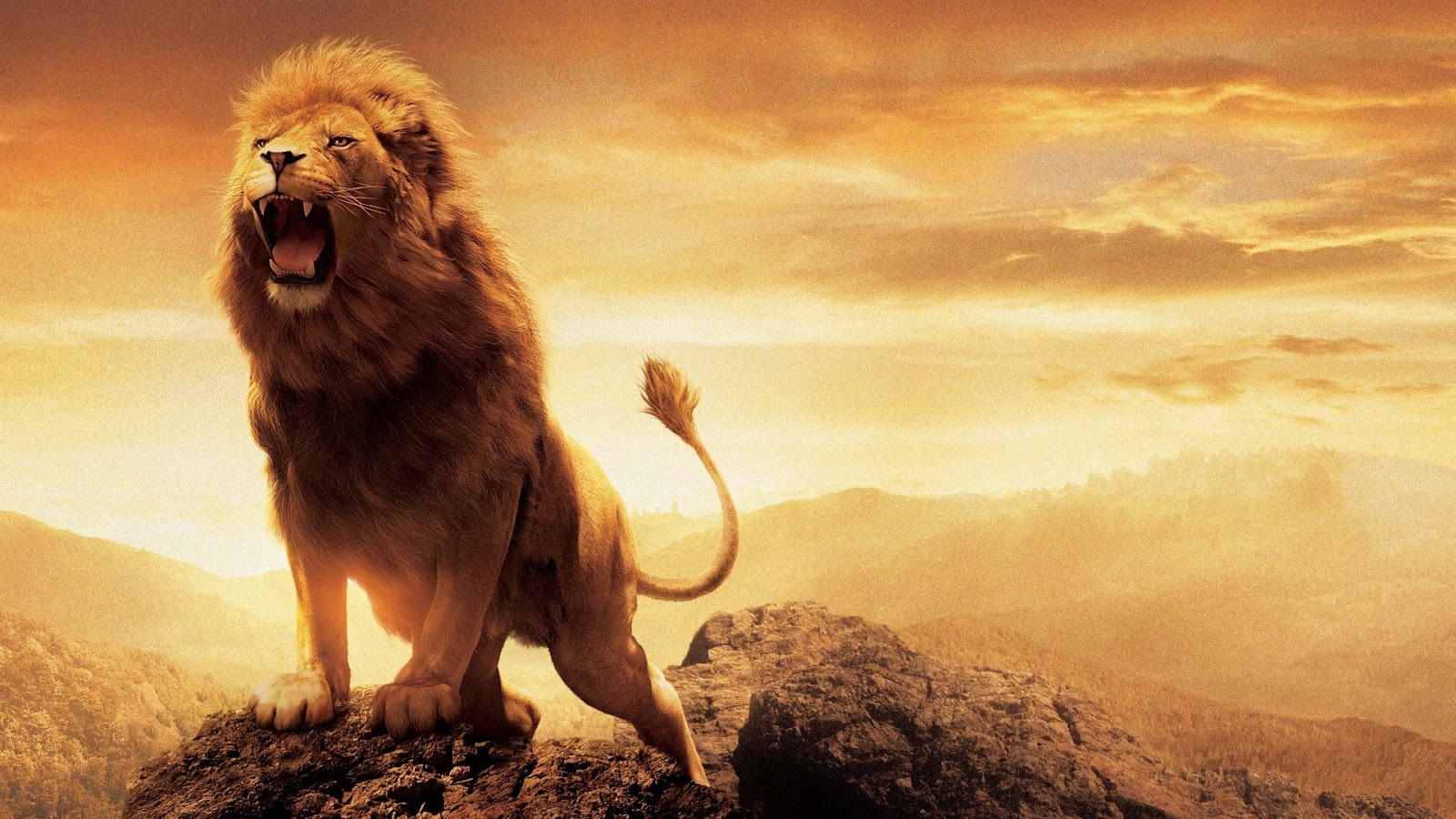
After the end of the actual last battle in the book, a stable door appears through which many characters enter and meet Aslan, the great lion who typifies Christ. I love the meeting of Emeth with Aslan. Emeth was a strong believer in his own religion. In his meeting with Aslan, Emeth is told that all his works in the name of Tash were acceptable unto Aslan.

After this interaction, many of the characters begin running. Their refrain and mantra becomes “further up, further in” as they run along. They see characters from previous books who were deceased. They are able to run up waterfalls and as they run they shout, “further up, further in”.


I don’t know if the second coming or millennium will include running, but I am reminded of the hymn, “If you could Hie to Kolob”. There are 5 verses to this hymn and the 5th one is what I think of when I think of the characters running,

“There is no end to glory;

There is no end to love;

There is no end to being;

There is no death above.

There is no end to glory;

There is no end to love;

There is no end to being;

There is no death above.”


I understand it is repetitive, but I think characters running through the countryside is repetitive. Again, I don’t know what the afterlife will be like, but I do look forward to meeting Jesus again. I look forward to feeling His love and glory. I love the song “I Can Only Imagine” by MercyMe. There is a phrase  that I relate to, 

“Will I dance for You Jesus

Or in awe of You be still?

Will I stand in Your presence

Or to my knees, will I fall?

Will I sing hallelujah?

Will I be able to speak at all?

I can only imagine”

At this stage of life, “I can only imagine” but I am grateful that we will one day see clearly and feel His glory, love, and peace.

Friday, July 14, 2023

Friday Creature Feature - Reepicheep


"We have nothing if not belief."

Recently one Sunday afternoon, I put on Voyage of the Dawn Treader for some uplifting background noise. The Chronicles of Narnia is a movie series (and book series) that I could pretty much have on repeat. The themes and messages have pulled me through some dark times (see my Horse and His Boy post). This time watching through Dawn Treader, I was reminded how much I love the mouse Reepicheep.

In case you've forgotten, Reepicheep was the leader of the talking mice, shortly before and during the rise of Prince Caspian. He was descended from the dumb mice who chewed through Aslan's binds on the Stone Table, back in the days of the Pevensie kids (rewarded with speech for serving Aslan). He was one of Caspian's most trusted soldiers, despite his small stature. In the movie version of Prince Caspian, he and the other mice help to infiltrate Miraz's castle in prepration for the oncoming fight. In the Second Battle of Beruna he was nearly killed and his tail was cut off. With Lucy's healing cordial, he was resuscitated, but it wasn't until he and his fellow mice showed humility to Aslan that his tail was restored.


Three years later (by Narnian time) he was aboard the Dawn Treader when they chanced upon Edmund, Lucy, and Eustace. At first he was at constant odds with Eustace (but who wasn't, right?). After their encounter with Dragon Island, Reepicheep forgave Eustace and they became friends. In the movie version, Reepicheep took to flying on Eustace's dragon head through their journeys and encouraging him to fight on. Reepicheep was also the only one it seemed (in both movie and book) to not panic when encountering the sea serpent.

Also of note for Dawn Treader was Reepicheep's belief in Aslan's Country. Many of the others on the boat thought they'd reach the end of the world and fall off the edge. But Reepicheep had been taught as a mousling, "Where the sky and water meet, Where the waves grow sweet, Doubt not, Reepicheep, To find all you seek, There is the utter East." And he took that in faith, giving him the hope that he'd one day see Aslan's Country. His faith was realized... he was the only Narnian to reach the End of the World and, surrendering his sword, he was granted passage into Aslan's Country. There he remained until The Last Battle, when he welcomed the Friends of Narnia into Aslan's Country and "further up and further in." 


There's one main reason I love Reepicheep: his example of faith. I like to think of myself as a person of faith, which I am, but I'm also certainly one to doubt, especially when it comes to divine worth. But maybe I just need someone like that around in my life to affirm me, like Reepicheep did with Eustace in the movie. The movie version actually makes me think of my trainer from my mission. It doesn't happen so much anymore now that I'm married, but I could always count on him for a pep talk with the same energy as Reepicheep's "Extraordinary things only happen to extraordinary people. Maybe it's a sign. That you could have an extraordinary destiny." Or my favorite, from Reepicheep's goodbye to Eustace, "What a magnificent puzzle you are. And a true hero. It has been my honor to fight beside such a brave warrior. And a great friend."

So here's to Reepicheep, a true hero of faith.

"Come on, let’s meet our destiny!"


Monday, February 13, 2023

Pokemon Nicknames: Narnia (2)

As I work my way through another play through of the Pokémon games, I find myself stuck against Jasmine of Johto  so while I grind my fire Pokémon to a higher level, enjoy some more Pokémon nicknames based in Narnian fairytales (as Eustace described them).

Bibarel as Mr. Beaver (or Mrs. Beaver)

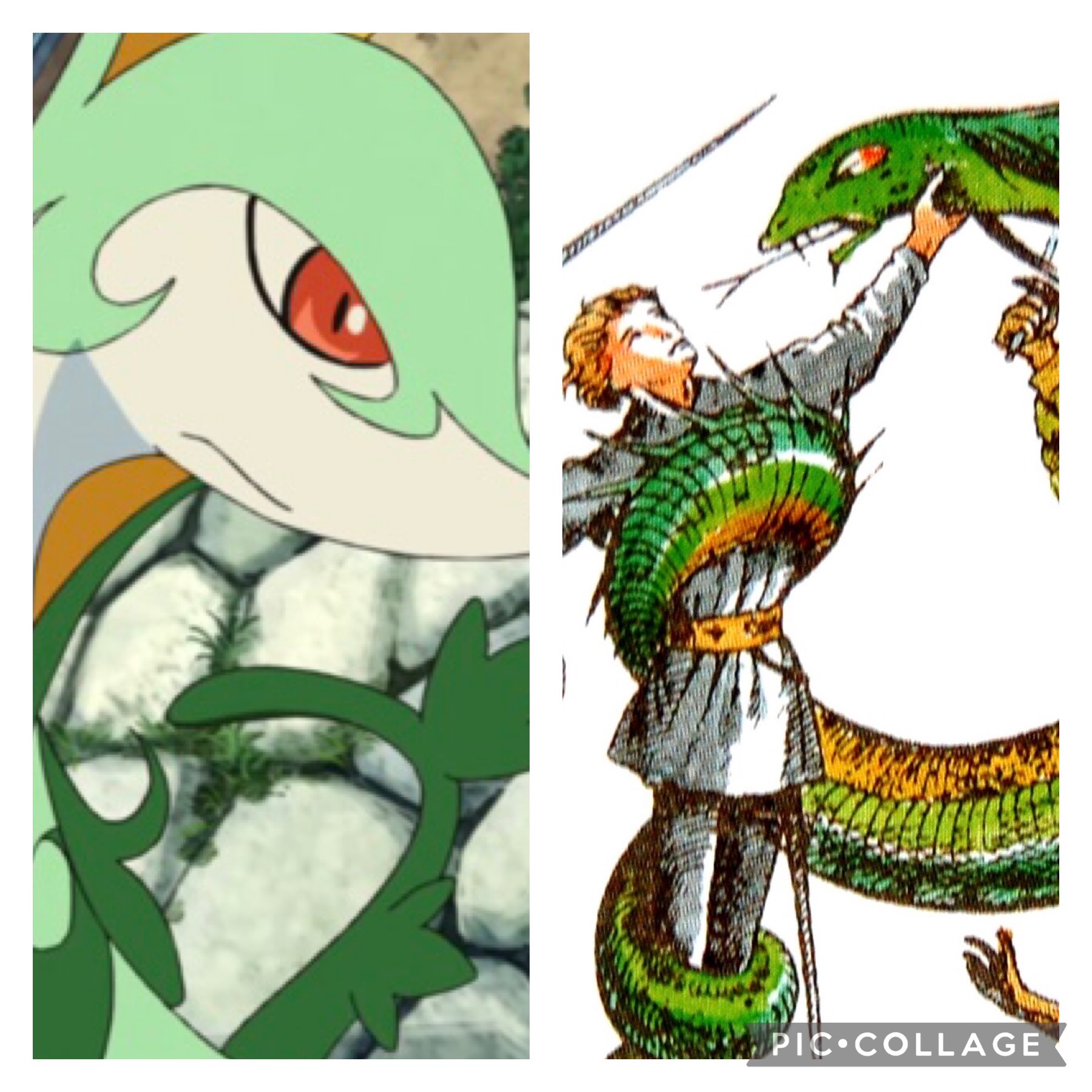
Serperior as Green Kirtle

Decidueye as Glimfeather

Lycanroc as Maugrim

Mudbray as Puzzle (or Rabadash)

Oranguru as Shift

Solgaleo as Aslan

Skwovet as Pattertwig

Friday, November 11, 2022

5 Gospel Truths that C.S. Lewis Got Right


It is obvious that C.S. Lewis writings is symbolic of Christianity in all his work. After his conversion to Christianity in the early 1930’s he wrote his magnum opus The chronicles of Narnia in the 1950’s where he intended the stories to appeal to children as well as adults to convey a larger message of Jesus Christ.

In this post we will go over 5 truths that C.S. Lewis wrote in The Chronicles of Narnia that we believe to be true as members of The Church of Jesus Christ of Latter-Day Saints.

The Horse and His Boy: Judging Others

Shasta, the main protagonist, is asking Aslan why he injured his friend, Aravis, and Aslan replies by saying I tell no one any story, but his own. Before Telling Shasta this Aslan also told him I am telling you your story, not hers [Aravis]. No one is told any story but their own. What can we learn from Shasta’s experience with the lion? That God will tell us what he expects from us, and we should not be focus on judging others sins. Most of us are not called to be judges (unless given authority) therefore we should not judge others.

In Matthew chapter 7 Jesus concludes the sermon on the mount by saying:

1.  Judge not, that ye be not judged.

2. For with what judgement ye judge, ye shall be judged: and with what measure ye mete, it shall be measured to you again.

3. And why beholdest thou the mote that is in thy brother’s eye, but considerest not the beam that is in thine own eye?

4. Or how wilt thou say to thy brother, Let me pull out the mote of thine eye; and, behold, a beam is in thine own eye?

5. Thou Hypocrite, first cast out the beam out of thine own eye; and then shalt thou see clearly to cast out the mote out of thy brother’s eye.

We read later on when Aslan talked to Aravis that he injured her because she needed to learn humility and empathy --- specifically for the maid that she caused to be punished when she ran away from home.

The Lion, the Witch and the Wardrobe: Identity

By the end of the four Pevensie siblings adventure Aslan pronounced them as Kings and Queens of Narnia. The Sons and Daughters of Adam and Eve can become Kings and Queens from the most high God. The fundamental principle we can learn from this is that our identity is more than a label we put on myself. We are all Children and heirs of our Heavenly Father and he is promising us to become Kings and Queens as we follow Him.

This reminds me of President Nelson talk he gave in a broadcast to the saints of Jesus Christ:

No identifier should displace, replace, or take priority over these three enduring designations:

·  Child of God

·  Child of the covenant

·  Disciple of Jesus Christ

Your potential is divine. With your diligent seeking, God will give you glimpses of who you may become.

Narnia: Stewardship and Environmentalism


In Prince Caspian, Caspian uncle King Miraz is destroying the ways of Narnia. Animals that were captured were forced not to speak and eventually forgets how to speak. Also, in the Last Battle Shift, an ape, attempts to deceive the inhabitants of Narnia to believe that Puzzle, a donkey, is Aslan. With the confusion and disbelief the destruction of Narnia came to be and Narnia became no more. This message reminds me that we are environmental stewards of this beautiful earth. We have been instructed to take care of this earth.

Doctrine and Covenants 49:19-21:

19. For, behold, the beasts of the field and the fowls of the air, and that which cometh of the earth, is ordained for the use of man for food and for raiment, and that he might have abundance.

20. But it is not given that one man should possess that which is above another, wherefore the world lieth in sin.

21. and wo be unto man that sheddeth blood or that wasteth flesh and hath no need.

Under Environmental stewardship and Conservation it says:

God has made us accountable for the care and preservation of the earth and the wise use of its resources. As stewards, we avoid complacency and excessive consumption, using only what is necessary. We make our homes, neighborhoods, and cities beautiful. We preserve resources and protect for future generations the spiritual and temporal blessings of nature.

As members of the Church of Jesus Christ we are taught to try our best to make our homes, neighborhoods, and cities the best.

The Last Battle: Death and Resurrection and Judgement (**Spoilers**)

While Shift was deceiving people with Puzzle being Aslan, he gets Dwarfs to join his side and after everyone dies Lucy is sad about the outcome of the Dwarfs and wants them to come with her to new Narnia.

“Aslan,” said Lucy through her tears, “could you – will you – do something for these poor Dwarfs?”

“Dearest,” said Aslan, “I will show you both what I can, and what I cannot, do.” He came close to the Dwarfs and gave a low growl: low, but it set all the air shaking. But the Dwarfs said to one another, “Hear that? That’s the gang at the other end of the stable. Trying to frighten us. They do it with a machine of some kind. Don’t take any notice. They won’t take us in again!”

Aslan raised his head and shook his mane. Instantly a glorious feast appeared on the Dwarfs’ knees: pies and tongues and pigeons and trifles and ices, and each Dwarf had a goblet of good wine in his right hand. But it wasn’t much use. They began eating and drinking greedily enough, but it was clear that they couldn’t taste it properly. They thought they were eating and drinking only the sort of things you might find in a stable. One said he was trying to eat hay and another said he had got a bit of an old turnip and a third said he’d found a raw cabbage leaf. And they raised golden goblets of rich red wine to their lips and said “Ugh! Fancy drinking dirty water out of a trough that a donkey’s been at! Never thought we’d come to this.” But very soon every Dwarf began suspecting that every other Dwarf had found something nicer than he had, and they started grabbing and snatching, and went on to quarreling, till in a few minutes there was a free fight and all the good food was smeared on their faces and clothes or trodden under foot. But when at last they sat down to nurse their black eyes and their bleeding noses, they all said:

“Well, at any rate there’s no Humbug here. We haven’t let anyone take us in. The Dwarfs are for the Dwarfs.”

“You see,” said Aslan. “They will not let us help them. They have chosen cunning instead of belief. Their prison is only in their own minds, yet they are in that prison; and so afraid of being taken in that they cannot be taken out.”

We believe in multiple kingdoms of glory and the highest kingdom is where God dwells. God will judge us perfectly and will place us where we will be most happy. That is why we are asked to repent and obey his commandments that when our judgement comes we will be happy to dwell with God knowing that our sins are cleaned by Jesus Christ.

The Lion, the Witch, and the Wardrobe: Jesus Christ Resurrection

The most important truth of them all is that Jesus Christ lives today. As we all know Aslan represents Jesus Christ and when Edmund was supposed to be killed because he broke the laws of the land, Aslan volunteered as tribute. Aslan was sacrificed and became resurrected again because 

When a willing victim who had committed no treachery was killed in a traitor’s stead . . . death itself would start working backwards

When Aslan is resurrected, he became a life-giving being. Breathing new life into those that turned to stone. This religion would not be possible if it was not for the breath of the savior’s resurrection.

           3 Nephi 11:10-17

10 Behold, I am Jesus Christ, whom the prophets testified shall come into the world.

11 And behold, I am the light and the life of the world; and I have drunk out of that bitter cup which the Father hath given me, and have glorified the Father in taking upon me the sins of the world, in the which I have suffered the will of the Father in all things from the beginning.

12 And it came to pass that when Jesus had spoken these words the whole multitude fell to the earth; for they remembered that it had been prophesied among them that Christ should show himself unto them after his ascension into heaven.

13 And it came to pass that the Lord spake unto them saying:

14 Arise and come forth unto me, that ye may thrust your hands into my side, and also that ye may feel the prints of the nails in my hands and in my feet, that ye may know that I am the God of Israel, and the God of the whole earth, and have been slain for the sins of the world.

15 And it came to pass that the multitude went forth, and thrust their hands into his side, and did feel the prints of the nails in his hands and in his feet; and this they did do, going forth one by one until they had all gone forth, and did see with their eyes and did feel with their hands, and did know of a surety and did bear record, that it was he, of whom it was written by the prophets, that should come.

16 And when they had all gone forth and had witnessed for themselves, they did cry out with one accord, saying:

17 Hosanna! Blessed be the name of the Most High God! And they did fall down at the feet of Jesus, and did worship him.

These are 5 truths that I find important as I read Narnia. There are many more truths spread out the series and his others works. No wonder he is quoted so much in general conference.

What truths Have you found while reading The Chronicles of Narnia?

Friday, November 5, 2021

Come further in! Come further up!

Near the end of the book "The Last Battle" in the series The Chronicles of Narnia by C.S. Lewis, Aslan invites:

"Come further in! Come further up!"– Aslan, The Last Battle, C.S. Lewis

As I remember the story from when I read it in childhood, Peter, Edmund, Lucy and many other characters from the books follow Aslan on a chase through Aslan's country and find Narnias within Narnias, each one more beautiful and real than the last. This, to my reading, is a narrative about how our understanding of the Gospel deepens and grows over time as we learn line upon line.

As a young man, I knew that Jesus Christ lived. I loved the Gospel. I even thought I understood it. I knew everything in my head, and some in my heart, but my understanding was cloudy and veiled. I "[saw] through a glass darkly" (1 Corinthians 13:12), but had so much more to learn. That learning has been deeply painful at times, but the insights and understanding I obtained, along with the compassion I gained for others, has been breathtaking.

The grandeur and beauty and peace of the Lord Jesus Christ's Gospel, of the Plan of Happiness of our Heavenly Father, is enormous. It is beyond my capability to put into words. Joseph Smith once said in a letter to William W. Phelps:

"Oh Lord God deliver us in thy due time from the little narrow prison almost as it were total darkness of paper pen and ink and a crooked broken scattered and imperfect language"– Joseph Smith, Jr.

It is because of this limitation of language that reading, pondering and praying – not in a hurried way, but in a quiet, contemplative way – are so important. Only through the Spirit can we really learn the deep principles of the Gospel. Or rather, only that way can we have the Spirit with us so that as we move throughout our day the Spirit can guide our understanding to deeper and more heartfelt insights.

One of the ways I have found that I learn best is by observing others - sometimes in person, but also, quite often, in fictional stories that deal with real-life situations.

For example, I recently finished reading "The Undaunted" by Gerald N. Lund. It is a piece of historical fiction which follows a family that participates in the real-life trek from Cedar City and Panguich Utah to the San Juan, Four Corners area of Utah. Through reading the story, I gained a better insight into what a Zion people really looks like and how they treat each other. The narrative emphasized the importance of truth and honesty, coupled with love and caring. It clarified and amplified the complementary principles of love and truth. Most interesting to me was that as I read examples of these principles in the book, I continued to stumble on additional scriptures, conference messages, and newspaper articles that reinforced the principles I was learning about.

As another example, much of my understanding of the Gospel has come through reading C.S. Lewis's Chronicles of Narnia. One of my favorite passages that stuck in my heart as a child is a story in the last book in the series.

In "The Last Battle", Emeth, a Tarkaan and a follower of Tash instead of Aslan, finds himself in Aslan's country. He encounters Aslan and subsequently recounts the experience:

"Then I fell at his feet and thought, Surely this is the hour of death, for the Lion (who is worthy of all honour) will know that I have served Tash all my days and not him. Nevertheless, it is better to see the Lion and die than to be Tisroc of the world and live and not to have seen him. 

Emeth is certain he will be destroyed for worshipping at the wrong altar, but he was pure in heart and was seeking truth. He continues his story:

"But the Glorious One bent down his golden head and touched my forehead with his tongue and said, Son, thou art welcome. But I said, Alas Lord, I am no son of thine but the servant of Tash. He answered, Child, all the service thou hast done to Tash, I account as service done to me.


Because Emeth sought to do good and was pure of heart, Aslan counts the service he did to Tash as service to Aslan. Emeth begins to understand:

"Then by reasons of my great desire for wisdom and understanding, I overcame my fear and questioned the Glorious One and said, Lord, is it then true, as the Ape said, that thou and Tash are one? The Lion growled so that the earth shook (but his wrath was not against me) and said, It is false. Not because he and I are one, but because we are opposites, I take to me the services which thou hast done to him. For I and he are of such different kinds that no service which is vile can be done to me, and none which is not vile can be done to him. Therefore if any man swear by Tash and keep his oath for the oath’s sake, it is by me that he has truly sworn, though he know it not, and it is I who reward him. And if any man do a cruelty in my name, then, though he says the name Aslan, it is Tash whom he serves and by Tash his deed is accepted."

Aslan then checks for understanding, and clarifies what he means when Emeth doesn't yet quite grasp it:

"Dost thou understand, Child? I said, Lord, though knowest how much I understand. But I said also (for the truth constrained me), Yet I have been seeking Tash all my days. Beloved, said the Glorious One, unless thy desire had been for me thou wouldst not have sought so long and so truly."

And then, Aslan says what is perhaps my favorite line of the entire passage:

"For all find what they truly seek"– C.S. Lewis, The Last Battle

This idea - that all have access to truth, and can find it if they seek with pure heart and real intent, and that those who do not have the chance at receiving the full truth in this life will receive it later - is core to the Gospel of Jesus Christ. It is further fleshed out by numerous ancient and modern scriptures. I love that C.S. Lewis came to understand the core of this truth even without being a member of the Lord's restored church. Of course, exactly how the Lord enables this infinite reach of the Atonement is not understood by Lewis in these passages, but it is miraculous that he understood as much as he did and is a testament to the Lord's desire to flood the earth with knowledge of Him.

I understood the core of this truth as a child by reading the stories in the Chronicles. That truth has only grown and deepened as I've matured and weathered many storms in life.


Truly learning and understanding the gospel in our minds and hearts is a long, and often painful, process for everybody. Some of it we learn through reading the scriptures, some of it we learn through personal experience, and some of it we learn through stories we read and hear. In fact, I think that most of it has to be learned through experience and stories, not through traditional, western-style learning. So much of what we need to learn really isn't possible to communicate through direct words. I think that's part of why Jesus Christ taught in parables, and I'm certain it's why much of what is taught in the temple is taught through symbols and rituals rather than words.

Though my memory of the story I opened with is not quite accurate – there is only one Narnia within Aslan's country, not multiples – I have found that the symbolism contained in that story true. As we follow Jesus Christ, his Gospel and the vision of His land - Zion - becomes ever more clear and beautiful. Just as Emeth found himself in Aslan's country because he sought with pure intent, if we keep our eyes and ears open, and our hearts are honest, God will pour pure knowledge of Him into our hearts and minds.

All God's children who truly seek Him will hear His voice and find Him, whether they receive a fullness in this life or the next. God is not a respecter of persons, nor does he hide all his truth in one spot, reserving it for the lucky few who find it. Rather he spreads it as far and wide as he can.

"Come further up! Come further in! … For all find what they truly seek"– C.S. Lewis, The Last Battle