Showing posts with label D&D Breakdown. Show all posts

Friday, January 13, 2023

D&D Class Breakdown: Sorcerer

 For new players, it can be hard to choose your first class. For veteran players, it can be hard to choose a class and not fall into stereotypes everyone's seen a thousand times. So now I'm going to deconstruct the 5E Player's Handbook classes (Sorry Artificer, you'll come later) and talk about what works, what doesn't, and some interesting ways to play the classes. 

I won't be going into game mechanics as much as I'll be going into roleplay. 

Let's talk about Sorcerers! 


What Is a Sorcerer? 
Now we get into the arcane magic users, AKA sorcerers, wizards and warlocks, we have to ask: What's the difference? In most fictions the the three words are used interchangeably but in Dungeons and Dragons each is a distinct class and mislabeling one for another is a faux paus you do not want to make at the table. I usually don't get into the game stuff so early but with the magic users I have to just so we know what we're talking about. 

In game, sorcerers gain their access to magic through their bloodline, meaning someone in their family once upon a time was a dragon, demon, angel, eldrich abomination etc. and now they've been blessed with the magic gene (Don't think about the logistics on how this happened. It'll just ruin your day).


Historically sorcerers are like the demigods in Greek and Roman myth, children of a god or other mythical creature and a human and are therefore blessed with powers (We also won't get into how that happened). Celtic myths talk about people who have fairy blood in them, dating back to some weird ancestor that disappeared down a rabbit hole or was replaced with a doppelganger while still an infant, and now they are good at growing plants. To this day we still contribute ability with genetics, as anyone who's done their family history and found anyone of historical significance on the family tree will remind you every time you come in contact with them. We expect the children and grandchildren of great people to themselves be great, even if Albert Einstein's great-grand nephew just wants to play Fortnite. 

In the Game

Sorcerers in Dungeons and Dragons are usually the outsiders in the group. Their power manifests in youth and most of the time they're left to figure out magic on their own. Take the backstory of any of the X-Men and find and replace the word "Mutant" with the word "Sorcerer" and you'll have most of the common backstories. While the sorcerer doesn't have to do much to acquire their magic besides being born, they are limited on the number of spells they know. Since Dungeons and Dragons tends to have a lot of combat, this means that the sorcerer usually knows spells that are of a "do damage to as many people as possible as fast as possible" variety. Sorcerers can also cast the most frequently in a day without needing to recharge their mana batteries so they're usually used as the damage dealer in the group. 
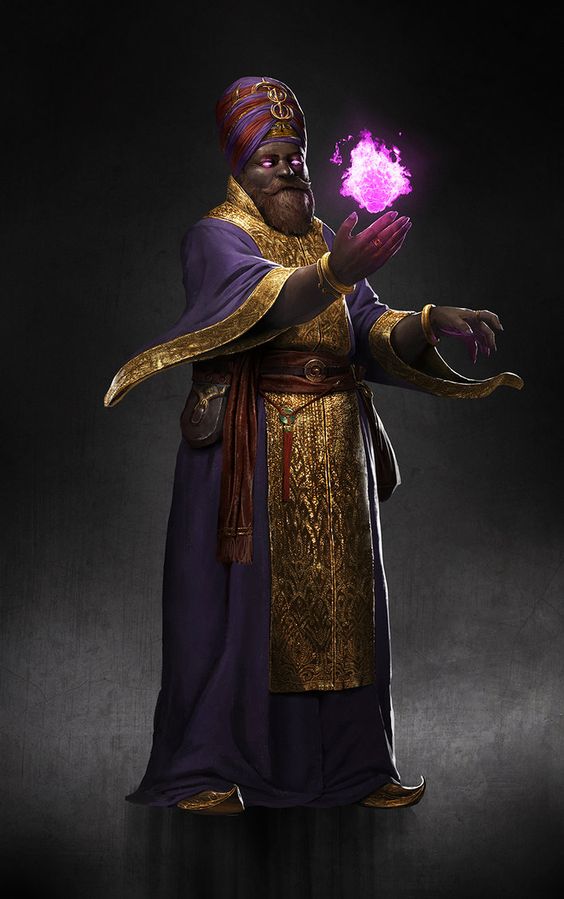


Most players who pick up the sorcerer tend to go the mutant route, making the sorcerer the outcast of society because they were born different, or because they remind their families about how weird great grandpa Albert dated that succubus back in the day. It doesn't help that one of the subclasses for sorcerer is the wild magic sorcerer, which has to roll on a random magic effect table every time they do something cool to see what wacky/detrimental effect befalls the entire party. 

Breaking the Trope
Roleplaying as your favorite X-Men character but with magic can be fun, but the diversity of the class means that they're can be so many more interesting options to try out. Here are a few ideas.


Controller: Instead of focusing on damage spells, focus on spells that effect the enemies in different ways. Cast Grease and knock an enemy squad prone, or use Enlarge/Reduce to disorient the enemy and give your party members a better advantage. 

Illusionist: Things aren't always what they seem, and when you're a sorcerer illusionist things never are as they seem. Turn any situation to your advantage by confusing and tricking your opponents with illusions. A good illusionist can win a battle without ever dealing damage. A great illusionist can avoid the battle altogether. 

Showman: Bards don't have to be the only class who like to put on a show. Be a magician but with real magic, always willing to leave your audiences stunned and amazed and your enemies enthralled until you hit them with that perfect fireball. 

Famous Sorcerers

Elsa and Rapunzel (Disney) I'm just going to list them both together. Both gained their powers from something in their lineage, Elsa from her mom's honoring the spirits and Rapunzel from her mom drinking tea made from the magic sunflower. 

Benders (Avatar The Last Airbender/Legend of Korra) In the series people of different nations are born with the ability to manipulate different elements. As demonstrated in Korra when people move from those areas their children still have the predisposition to have the bending abilities of their native homes, as demonstrated with Mako and Bolin, brothers whose parents were Fire Nation and Earth Kingdom and who each became a bender from one of their respective parent nations. 


X-Men (Marvel) Okay I've danced around it long enough: Mutants from the X-Men franchise are basically sorcerers due to their powers coming almost strictly from their genetics. 

-JOE


Wednesday, October 5, 2022

D&D Class Breakdown: Rogue

For new players, it can be hard to choose your first class. For veteran players, it can be hard to choose a class and not fall into stereotypes everyone's seen a thousand times. So now I'm going to deconstruct the 5E Player's Handbook classes (Sorry Artificer, you'll come later) and talk about what works, what doesn't, and some interesting ways to play the classes. 

I won't be going into game mechanics as much as I'll be going into roleplay. 

Let's talk about Rogues! 


What is a Rogue? 

We have yet another class based off basic pre-industrial jobs. I kind of love how what was an everyday job 500 years ago is now a fantasy aspiration, like having physical skill is only obtainable in fiction. 

Well that's a mood. 

Anyway, like the fighter and ranger, every culture has someone able to blend into the shadows for one reason for another. The need in criminal circles is obvious, since being able to sneak is handy for thieves and assassins, but the skill also comes in handy for those who need to spy, hunt animals silently, and even protect the innocent by infiltrating bad guy spaces.  

Professional criminals are of course commonly tied to rogues, with burglars being the most in need of the skills. This isn't the "Give up your GP or your HP" sort of thug that mugs people on the streets, but the one that slips into the governor's manor in the dark of the night, taking only the truly valuable jewels, and leaving before anyone even realizes he's there. That's the spirit of the rogue. 


Quick note: the X-Men Rogue, the southern belle mutant who steals people's memories and abilities with a touch, is obviously not the kind of rogue we're talking about. Her name is in reference to the more ambiguous rogue, someone who is on the outskirts of society or the group. Since Rogue can never have a physical relationship without causing harm, she took up the name to express that she will always be an outsider. 

In The Game

Always looking for the next take, the rogue is the unsavory element in society that everyone regrets to admit that they need. The rogue knows how to get into the most guarded dungeons, infiltrate the enemies bases, and deal the lethal blow quickly and effectively. 

Most other classes see the rogue as an unstable wild-card, never quite sure weather or not the rogue can stay loyal if the right about of gold is offered, or if the dangerous individual with the unsettling amount of knives may become the next big bad. 


Players generally play three types of rogues: the murder-hobo, the kleptomaniac and the edge-lord. The murder hobo is the immoral psychopath with a lust for blood and who takes any slight as an excuse to execute the countless NPCs who cross their path. The kleptomaniac will steal anything that's either not nailed down or on fire, sometimes regardless of their value or how much trouble it could cause. The edge-lord wants everyone at the table to know that their character is dark and mysterious, constantly talking about sulking alone in a dark corner and taking a no-nonsense attitude to the parties shannegains. 

Annoying, all of them. 

Breaking the Trope

People playing this class tend to focus only on the criminal aspect of the rogue, rarely exploring the possibilities the class truly has. The following ideas will break away from the basic criminal element and show what can be done with the rogue class. 

Thrillseeker: There's a certain thrill of being somewhere you're not supposed to and seeing things only certain people can see. The thrillseeker may take a trinket here or there, but their main goal is to see what they can find, see how far in they can get before they get caught, and see what dirty little secrets they can reveal. 

Scout: Having someone to scout ahead is an unappreciated strategy for parties. You're basically breaking the DM's game by taking a peek ahead and setting off traps, accessing enemy strengths and weaknesses, and taking out an annoying guard ahead of time. 

Master of Disguise: You can hide in the shadows, yes, but what if you blended into a crowd? What if you got close to the cultist leader by pretending to be one of his inner circle? Slip into the king's party, dance with the queen, taste some crudités, take out the corrupt duke, then slip out with the rest of the shocked party guests. 

Famous Rogues

Vax'ildan (Critical Role): The rangers twin from Vox Machina, Vax is prone to breaking and entering to find the bad guy's lair and getting into trouble, including being hypnotized by a vampire. He's handy in a fight, but don't put him up against a door. 

Catwoman (DC) Selina Kyle is a literal cat burglar, so much so that at one point she put on cat ears and started owning the nickname. She's robbed every bank, museum and penthouse in Gotham, broken into and out of Arkham Asylum, and robbed billionaires like Bruce Wayne and Lex Luthor. The only thing you find after one of Catwoman's burglaries are some shredded curtains and your valuables missing. 

Flynn Ryder (Tangled)
I'd put Aladdin on here to represent Disney, but honestly Aladdin's a shoplifter compared to Flynn, who we meet completing a successful heist to steal a crown. He's a charismatic thief who can talk his way into and out of most situations. Not content to steal everything of value, Flynn focuses on the high value targets to get what he really wants, though his biggest prize is when he stole Rapunzel's heart. 


-JOE

Wednesday, August 31, 2022

D&D Class Breakdown: Ranger

  For new players, it can be hard to choose your first class. For veteran players, it can be hard to choose a class and not fall into stereotypes everyone's seen a thousand times. So now I'm going to deconstruct the 5E Player's Handbook classes (Sorry Artificer, you'll come later) and talk about what works, what doesn't, and some interesting ways to play the classes. 

I won't be going into game mechanics as much as I'll be going into roleplay. 

Let's talk about Rangers! 


What Is A Ranger?

Every culture has someone who is a liaison between civilization and the wilds beyond. Sometimes that's a professional hunter who brings meat back from the woods to share with the village or it can be an expert to call in when a pack of wolves gets too close to people's houses. Today that translates to forest rangers, whose job is to keep the lines between human and wild as clear and defined as possible, no matter how many people want to try to get selfies with buffalo in Yellowstone. 

I have no idea how the Power Rangers come into any of this. 


In The Game

Rangers serve a nearly identical role as they do in reality, just substitute "animal" with "anything not human". Rangers choose an enemy, or enemies, that they are particularly angry against and get bonuses to tracking and fighting said enemy, adding bounty hunter/exterminator to their resumes, but in general are still seen as the ones who handle the owlbear that's made it's home too close to farmer Thunderstone's barn. 

A note on the difference between rangers and druids: Where rangers tend to defend humanity (or elfmanity, or dwarfmanity, or whatevermanity) from the wild, druids try to defend the wilds from humanity. The ranger is on the side of the people where the druid is on the side of the animals. This should put them at odds (Which would honestly make for interesting stories) but usually both parties will settle a problem by putting everyone back where they belong. 

Players usually play the ranger in one of two ways: Either Legolas or Drizzt. They either have a guy who shoots everything ever with arrows or a guy with two swords turning everything into an episode of Hell's Kitchen: Mincing Finals. For races they usually pick an elf, their favored enemy is usually either orcs or dragons, and their animal companions are almost always wolves or large cats. 

Yawn. 


Breaking the Trope

The thing about this class is that it could go in so many interesting directions, and 5E has even more flavors to add to the pot that it's a shame that only the two elf boys get ripped off. Let's use some imagination and come up with some fun alternatives to Orlando Bloom and... Well Drizzt. 

Defender of Alternative Biomes
As I said with the druids, people get obsessed with landing the wild classes in the forest when we have so many more interesting places to play, especially in Dungeons and Dragons. What if the ranger was an expert in sea hunting, and yes that's a thing read Moby Dick. Or use something like the underdark, or the feywild, where they know how to track creatures where a basic forest ranger would be beyond lost. 

Half Orc Ranger
Too many people pigeonhole the half-orcs into being idiot meat heads, when while they may not win at Trivial Pursuit they can survive in a tough spot. Even more interesting, what if the ranger was defending their orc village from encroaching humans, who they saw as the same type of beast as they would any invasive species? 


Scholar
At the turn of the century, expeditions were sent to Africa and South America in droves to research and discover new animals. Sometimes they'd be captured and dragged back to live sad lives in zoos, sometimes their pelts would be brought back and turned into creepy research pieces, either way, these guys had similar skills to the ranger. Arcane magic users don't have to be the only egg-heads in the party if you have a ranger looking to either stock a menagerie or fill a trophy room. 

Bounty Hunter
Rangers can take humanoids as a favored enemy with restrictions to their own race unless they are evil, so why not have a ranger that hunts members of another race that have in some way broken the law? Mean spirited and possibly racist yes but we're talking about fictional races here so let's calm down. I still want the opportunity to have a human ranger to specialize in hunting halflings...

Famous Rangers

Vex'ahlia (Critical Role)
Yup, the usual Matt Mercer darling is here. Vex is the typical bow-focused ranger who has a special taste for dragons. She also has an adorable animal companion in the form of a bear named Trinket, which aids in combat when she remembers that he exists. 

Mando (Mandalorian)
You can substitute this for Boba Fett if you want since in this context they're both the same. Both are trained in survival and how to hunt down prey, and are the bounty hunter type I mentioned above, only these guys do it in space. 


Gaston (Beauty and the Beast)
Gaston is an example of the historical ranger, since we see him coming in with hunting spoils and he brags about his antler collection in the tavern. The townsfolk love him, in story it's because he's the manliest man to ever man, but historically we can assume that some of his popularity comes from providing meat for the village in leaner times or during the winter, making him a lynch pin to the survival of the village. 

-JOE

Friday, July 15, 2022

D&D Class Breakdown: Paladin

 For new players, it can be hard to choose your first class. For veteran players, it can be hard to choose a class and not fall into stereotypes everyone's seen a thousand times. So now I'm going to deconstruct the 5E Player's Handbook classes (Sorry Artificer, you'll come later) and talk about what works, what doesn't, and some interesting ways to play the classes. 

I won't be going into game mechanics as much as I'll be going into roleplay. 

Let's talk about Paladins! 


What is a Paladin? 

The knight in shining armor, the paladin is a hero of the realm. He's the exemplar of bravery who charges the dragon to save the princess, who rides into battle on a magnificent horse with a lance looking for the next evil to defeat. 

Historically the first paladins were a group of knights that served Charlemagne, the first king of England, during his reign. After that they're mainly referred to as the leaders of righteous crusades and hero princes and kings. In modern times paladins have fallen mainly into the realm of fiction, ascribed to King Arthur's court and fairy tales. 


In the Game
In game paladins are the military wing of church organizations, their purpose to slay evil and bring the glory of whatever gods or ideals they swear allegiance to. Paladins who perform acts against their oaths can lose their power and become fallen paladins, which are evil counterparts to their former brethren. 


Some Dungeons and Dragons history: Once upon a time back in 3/3.5 paladins were required to be lawful good, and with their strict moral code players tended to play the paladins as overzealous bullies who confuses righteous indignation with pure stupidity and often would get the party in more trouble than they were worth. I went into detail about lawful good  before but suffice it to say this is not how lawful good works. Because of this and other game restrictions the paladin has gone out of favor with players, despite them being more open in 5th edition. 

Breaking the Trope
The paladin in 5e is a far more versatile class and can be a huge help in a party without having to be lawful stupid. The key is to remember that a moral code doesn't mean a person is ignorant or stupid, they're just devoted and have lines they refuse to cross. 

Defender of Alternate Faiths
Paladins tend to follow the pattern of knights of the round table, but what if the paladin's order protects the arcane instead? How about a paladin for a god of death? Look into alternate deities and find what would make a person devote their lives to protecting an ideal that's not the standard coded Christianity. 

Defender of Home
A hero of a city or for a nation is one thing, but what about the village hero? Imagine a cute halfling village who has a diligent protector, a paladin of Hobbiton if you will. Maybe they're adventuring to bring wealth back to their village, or get revenge on the person who destroyed the same, or the villain came from their quaint hamlet and the paladin must now take out the villager they once failed. 

Ronin
A wandering hero with no name, righting wrongs wherever they go, on some personal quest for redemption makes for a cool character and would be a great fit for a paladin (or a fighter or a ranger). No idea how they'd fit into a campaign with a bunch of other traveling weirdos but that's for the player and DM to decide. 

Famous Paladins

Vax'ildan (Critical Role)
Starting the game as a rogue, Vax later cross classed into paladin of the Raven Queen, a death goddess. The cross class was an interesting character development and worked perfectly with the sneaky assassin's style. 


Guts (Berserk) 
An anti-hero with a giant sword, Guts wields a blade that absorbs energy from all the evil things he's killed, trapping them forever from coming back. Since he has a brand on his neck that attracts demons and monsters, that blade gets fed often. He wanders trying to help who he can while keeping an eye out for a way to get rid of the brand. 

Trevor Belmont (Castlevania)
Okay full disclosure: I have never played a Castlevania game, but I absolutely love the show on Netflix. Trevor is a swearing drunk who upholds his family tradition of being a monster hunter. He teams up with Alucard, the son of Dracula because he's smart enough to understand that the enemy of my enemy is my friend concept. 

The Jedi Order (Star Wars)
All of them. They're all paladins. Anakin is a fallen paladin and the rest are just vanilla Walmart brand paladins.

-JOE
Friday, June 3, 2022

D&D Class Breakdown: Monk

For new players, it can be hard to choose your first class. For veteran players, it can be hard to choose a class and not fall into stereotypes everyone's seen a thousand times. So now I'm going to deconstruct the 5E Player's Handbook classes (Sorry Artificer, you'll come later) and talk about what works, what doesn't, and some interesting ways to play the classes. 

I won't be going into game mechanics as much as I'll be going into roleplay. 

Let's talk about monks!


...This is going to get ugly...

What is a Monk? 
The word monk is itself problematic. Used to describe the monastic traditions of various Asian cultures, monks represent the belief of reaching a state of enlightenment by tempering and perfecting one's own body. The English word is derived from the secluded Christian monks that were the closest word that described the people met in exploration and trade. 


Word etymology aside, the real problematic issues with the monks are that they continue the tradition of mythicizing non-European cultures and their spiritual beliefs. The monk itself in D&D is not just a martial artist, but a martial artist able to gain supernatural abilities through the perfection of their body, even obtaining the ability to become an outsider type in version 3.5. When a culture is perceived as mystic it can be just as problematic as any other form of racism because it misrepresents the people who identify with that culture. 

The traditions the monk is based off of are alive in well throughout the world, so Dungeons and Dragons players need to walk a fine line when incorporating the monk into the game... Which they don't always do...

In the Game
Since most D&D games take place in western medieval fantasy settings, the monk is an odd man out in society. Usually a story will say that the monks come from a mysterious distant land. 

Sound familiar? 

The exoticism of the monk in most games continues to perpetuate the structural racism that comes with the concept of the monk. Because the monk is supposed to be from a foreign land they usually only manifest in the player characters who play them. Rarely will an NPC be a monk unless it's a direct tie to the player's monk. 


So I've been talking a lot of trash about the monk, but let me be clear: I don't think Dungeons and Dragons is racist, nor do I think people who play monks are racist. I think that the monk is part of a bigger problem the game and most western fiction: coding non-western cultures into fiction to use their cultural traditions and beliefs to create exotic others. The reason I'm picking on the monk so much is (A) this is the series I chose to do and (B) with the freeform of Dungeons and Dragons we can use the monk but do better than rip off centuries of cultural appropriation. 

Breaking the Trope

For an example of the monk class done well I'd like to circle the Avatar: The Last Airbender franchise and then go get a cheeseburger, but let me expound on it. Pretty much every bender and fighter person in Avatar is a monk, the difference between them and the problematic monk is thus:  

A: The monks are not tied to one tradition, they are in fact a blending of multiple cultures and beliefs with a lot of homebrewed fiction to create their world. 


B: Except for the avatar, monks in this world are not exotic. They are so commonplace that nearly everyone knows somebody who can bend the elements or has trained in martial arts. 

So how do we break the trope in the campaign? Usually I address the player's creation choices but here I'm going to have to talk to the dungeon masters out there to alter their worlds. 

An Order 
If you want monks in your world, write an organization that specially trains and utilizes monks that is commonplace, even if it is secret or rumor. Make them part of the lore for the land the characters find themselves in, and not a far-off concept in a vague direction. Good starts are organizations like the Foot Clan from Ninja Turtles  and the Black Widows from the MCU. 

Specially Trained Heroes
If you can't fit organizations into your game world, try smaller groups, those who train in a specific way for a specific purpose. The best example here is Batman, who is a master in multiple martial arts to the point where he basically has his own way of fighting. He teaches his Robins the same style, a multi-form combat in capes, and thus in their way they perfect their own martial art style. This removes cultural appropriation from your campaign and adds ripping off Batman to the list of copyright crimes a dungeon master commits on a daily basis. 

A Fleshed Out Land
If you insist on the far-off land option, then flesh out said land. Write the culture, beliefs, the people and the practices of these people. Pick a specific Asian culture and understand its martial arts practices and use it as inspiration. Let the characters be able to visit the land and meet other people like their monk. Keep in mind with this my earlier warning about exotiocising another's culture for the feeling of other. 

Oops All Monks
Consider when describing your world sprinkling monks into the populace more. Make them as relatively common as fighters and sorcerers, this will make the monk less of an exotic oddity and more of just part of the world they exist in. Think about peppering your encounters with monks, either from the books or making your own. This can also give your players an extra challenge in their next fight. 

Famous Monks

Avatar Aang (Avatar the Last Airbender)
Like I said, everyone in ATLA is a monk, unless their a rando monk or Sokka the fighter. Aang gets top billing just for being the first one we get to meet. He also embodies the monk's goal to gain spiritual enlightenment through physical perfection. 


Batman (DC Comics)
Technically Batman is a fighter/rogue/ranger/monk but we'll focus on his monk part. Studying martial arts has given him multiple unusual abilities he uses to fight crime, including holding his breath for an extra long time and meditating for 20 minutes instead of sleeping. This of course extends to his army of prodogies, especially Nightwing who can do a quadrouple jump. 


Master Splinter (Teenage Mutant Ninja Turtles)
A martial arts master, Splinter is a dangerous foe despite his advanced age and being a giant rat. He has focused his mind and his body to be the perfect weapon, but he chooses a path of peace whenever he can. I'd put the Turtles here too, but when I was a kid I always wanted to be Splinter so here's a shout out to my favorite rat. 


Oogway (Kung Fu Panda)
While martial arts is one thing, the key is body perfection to extrordinary ability, like how Master Oogway was able to find his way to ascending to another plane. He was also able to defeat a powerful enemy with just a few touches of his claws, hardly even breaking a sweat like he was programming a microwave. 


-JOE
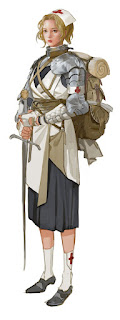
Check out the other D&D Classes as well: BarbarianBardClericDruid, Fighter

Monday, May 9, 2022

D&D Class Breakdown: Fighter

 For new players, it can be hard to choose your first class. For veteran players, it can be hard to choose a class and not fall into stereotypes everyone's seen a thousand times. So now I'm going to deconstruct the 5E Player's Handbook classes (Sorry Artificer, you'll come later) and talk about what works, what doesn't, and some interesting ways to play the classes. 

I won't be going into game mechanics as much as I'll be going into roleplay. 

Let's talk about Fighters! 


What is a Fighter? 
...What isn't a fighter? Historically a fighter is just anyone who makes a career out of knowing how to fight another human. Soldiers, mercenaries, guards, militiamen, cops, bouncers... The list goes on. Every society has needed someone who knows how to use a weapon to defend or attack. Specialized fighters, like the Spartans or samurai, are fighters but are focused on a specific form of fighting. The biggest focus is that the fighter is set to combat other humans, as opposed to animals, who they can still take on, or supernatural threats, which they can try and help but are usually left up to more spiritual leaders. 

In the Game

Dungeons and Dragons fighters are the same way. They represent career warriors who are fighting for whatever reason. Usually the fighter is the class chosen by players who want to be in the combat without the complications of spells or a ton of special abilities, like sneak attack or transforming powers. Some fighter subclasses, like the eldrich knight or the arcane archer, utilize some spells and magic in their combat, but this is usually little more than extra defense or giving attacks specific energy enhancements to break through more specialized monsters. 


The typical fighter player is some sort of ex soldier turned mercenary, out for vengeance against whatever or whoever killed his (insert relationship here). Occasionally you get the grizzled Ronin who wanders with a sword and a need to set right what's wrong with the world, or the grizzled world-weary traveler whose been in the game long enough to know that adventuring isn't about saving the day, sometimes it's just about saving your skin as they light up another cigar and stare into the distance. 

Breaking the Trope

For a class with so much variation in real life, it's surprising that it usually only gets played as grizzled and ornery, like they all have to be stock cowboys. With the range of motivation people have to fight throughout history, here are a few ideas to make the fighter more than the soldier of fortune. 

Dad Fighter
Usually adventurers in general only have families to either die tragically before the game starts or to show up as a bad guy Darth Vader style later on. What if the fighter has a happy family somewhere-wife, kids, mom, whatever, and the adventurer life is a way to bring in money? There's good money to be found in dungeons and random monsters, and this is just his 9-5 job. He sends gold and trinkets back to the wife and kids, and bugs anyone he can with stories about how little Susanna loves carrots while he stops the big bad guy from flooding the world with evil. 

Geek Fighter
This fighter's goal is to see if they can fight one of everything in the Monster Manual. They are constantly out for that last piece of bone or that trinket to complete their collection. They have a bag full of swords from all the bandits they've killed, and a necklace full of teeth from all the wolves they've taken down. Saving the world is great and all but if they could just get that red dragon tooth, and hay, if they kill the thing the world is saved so win-win. 

Hero
To go down in legend, to be part of the bard's song, to be known throughout the world as a great champion, this is what the hero aspires to. They want to be admired, they want to be remembered, and they want to be a legend. They will do whatever they can to do so. Think Joxer the Mighty from Xena, Warrior Princess and for those not in their mid 30's think of Hercules from Disney's Hercules. 

Famous Fighters

Porter Rockwell
I don't think I've ever had a real life example on this series! Porter Rockwell was the bodyguard of Joseph Smith and later Brigham Young. He's quoted as saying "I never killed anyone that didn't need killing", and he reportedly killed a lot of people as the protector of the prophets. He knew what he was good at and did it to serve. 


Chewbacca (Star Wars) 
Anytime we see Chewie in a fight he's either driving something, shooting his laser crossbow, or yeeting people off the nearest cliff. While some may argue barbarian, he's never in a wild uncontrollable fury like his fellow countryman, Krrsantan from Book of Boba Fett, who got drunk, lost control, and tore a guy's arms off. Chewbacca has more control. 

Jayne Cobb (Firefly)
Jayne is the muscle of the Serenity. A thug who works for the highest bidder, his only skill he brings to any table is his ability to fight anybody he's pointed at. Jayne is an excellent marksman, knows how to brawl in hand-to-hand, and can take a hit without barely batting an eye, just by being meaner than whatever hit him. 

-JOE
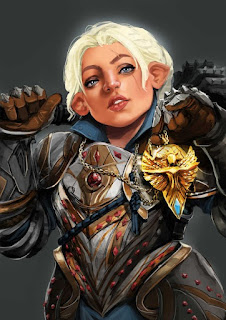
Check out the other D&D Classes as well: BarbarianBardClericDruid

Friday, April 1, 2022

D&D Class Breakdown: Druid

For new players, it can be hard to choose your first class. For veteran players, it can be hard to choose a class and not fall into stereotypes everyone's seen a thousand times. So now I'm going to deconstruct the 5E Player's Handbook classes (Sorry Artificer, you'll come later) and talk about what works, what doesn't, and some interesting ways to play the classes. 

I won't be going into game mechanics as much as I'll be going into roleplay. 

Let's talk about Druids! 


What is a Druid? 
Originating in northern Europe, the druids were an esoteric order of clerics, sages and holy men who revered nature. Believed to be responsible for ancient monuments like Stonehenge, the druids ruled early Europe until the encroachment of Christianity in the early 1200s. 


Despite their absorption by early Christians, several druidic traditions have survived till modern day. Ever wonder why we have a Christmas tree when they make no appearances at the nativity? Druid winter solstice tradition. Why is Halloween sometimes called All Hallow's Eve? Druid new year. Why is the Easter Bunny a thing? Druid fertility ritual.

Druids are cool. 

In the Game
Druids in Dungeons and Dragons are the sworn protectors of the wild, wherever that may be. They guard vast areas of untamed wilderness, from mountain ranges to deep oceans. Their communion with nature gives them magic to control plants, animals and the elements to their whim, even being able to shapeshift their bodies into more primal forms at will. Earlier editions require them to eschew forged iron in favor of naturally formed weapons. 


Most druids in game are based out of forest regions, some species of elf, and are either militant defenders of nature or free spirited hippie children. Mostly these tropes sidestep the problematic issue that may come up by playing a druid, that being their ties to paganism and the negative light Christianity tends to shine on pagan beliefs. Druids in the game are usually played as more specialized magic users that look great in green than they are spiritual leaders. 

Because the game druid and the historic druid are usually only vaguely connected by name, problemization is rare on the ground. Druid orders do still exist to this day, so sensitivity should always be adhered to for those in the group who may keep to the old ways, but as long as players aren't mimicking direct druidic practices they're usually safe from offense. 


Breaking the Trope
The PETA/Love child trope is fun and is not offensive, but as usual here are some ideas for some different ways to play the druid to change it up in the game. 

Primal Druid
The archetypical druid is usually either played as having an average knowledge of civilization or a naivete to how civilization works but what if in connecting to the wilds the druid lost their connection to civilization and became more of a primal entity? Think along the lines of Tarzan or Mogoli, where the druid doesn't see themselves as an elf or a human but now sees themselves as one with the natural forces, and has no interest with  being part of the civilized world aside from their occasional collaborations with other heroes to accomplish their own greater good. 

The Evil Druid
The druid sees the destruction wrought by civilization and has taken it upon themselves to erase this plague from the earth, as they would any invasive species. Probably better for a BBEG in a campaign, the evil druid has a lot of mileage to be explored as a character. Will adventuring let them see the good in civilization, or will the bard's antics be what sets the druid over the edge? 

Druid of the Desert/Mountains/Jungle/Ocean/Beach/Plains
Like I said earlier, most players put druids home somewhere in a disingenuous forest, possibly because of the origins of the real life druids in Europe. While that's fine, there are still so many other biomes the druid could be the protector of. It should be noted that you may want to find out where your game is taking place so that your ocean druid doesn't end up spending the entire campaign in the mountains and becomes beyond useless. 

Druid of the Underdark
Forgotten Realms fans are aware of the vast network of interconnecting caves that form the Underdark, a place of untold horrors and where danger waits around every corner. What if a druid decided to become a master of this subterranean nightmare, cultivating giant spiders like some druids do wolves? While this might seem like a dark character a true guardian of the Underdark wouldn't care about politics, just the simple justice bestowed by those too foolish to survive. 

Famous Druids


Keyleth (Critical Role)
Of course we've got to throw in the Critical Role shout out. Keyleth explores the world as part of a ritual to become the chief of her tribe, learning to master the elements along the way. Her actress Marisha Ray says that she wanted to base a character after Avatar: The Last Airbender and came up with her elemental mastery as an homage to Avatar Aang's journey. 

Beast Boy (Teen Titans)
The beloved green changeling has a special affinity to animals, and therefore respects and tries to protect all the animals he can. Beast Boy has even gone so far as to become vegan, stating "I've been most of those animals you're eating". His respect for nature and ability to transform into any animal at will makes him as much a druid as anyone else who claims the title. 

Poison Ivy (DC Comics) 
On the opposite side of Beast Boy's altruism is the deadly Poison Ivy. Having access to the Green, an energy that encompasses and controls all plant life, Poison Ivy wages war on those who would try to harm her beloved plants. She's the evil druid archetype I mentioned earlier, only Poison Ivy doesn't care   as much about animals as she does for flora. 

-JOE
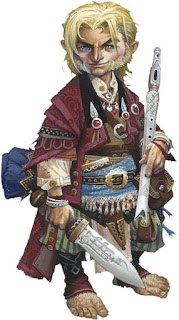
Check out the other D&D Classes as well: BarbarianBardCleric, Fighter

Friday, March 4, 2022

D&D Class Breakdown: Cleric

 For new players, it can be hard to choose your first class. For veteran players, it can be hard to choose a class and not fall into stereotypes everyone's seen a thousand times. So now I'm going to deconstruct the 5E Player's Handbook classes (Sorry Artificer, you'll come later) and talk about what works, what doesn't, and some interesting ways to play the classes. 

I won't be going into game mechanics as much as I'll be going into roleplay. 

Let's talk about Clerics! 

(Hay look, it's a class that isn't automatically problematic!)


What is a Cleric?
The cleric class is based on the stories of saints, prophets and religious heroes. While not directly representing any one religion or philosophy, the cleric is the hero who has curried favor with the divine to heal the sick, see the future, and other miracles in the name of deity. 

In Dungeons and Dragons clerics are the main healers in the game. Equipped with a plethora of buff/debuff spells plus the ability to spontaneously heal allies makes them a need for any adventuring group. 

In the Game
Every deity in Dungeons and Dragons has clerics to worship them and teach others their ways. Technically more administrative than the paladin, the cleric's main role is to help others learn and live the tenants of their faith, like missionaries in full plate armor. The zealotry of the cleric differs based on the cleric and the religion. Some have more of a live-and-let-live vibe, while others will attack anything evil or unholy with a righteous zeal. 


The biggest issue with the cleric in game is differentiating their role from the paladin. While both are great in combat, both can heal and both have religious bends to them, the main difference is that paladins are more combat focused, whereas clerics are more utility. Paladin is a massive hammer where clerics are a pocket tool brimming with gadgets. 

While not immediately problematic, the cleric can have issues both in roleplay and in character design. The biggest problem is the same problem author Rick Riordan had when writing the Percy Jackson series. In his novels he wrote about a cult that worshipped Hera in modern day, not knowing that they're were groups that do worship Hera in the real world who took issue with their depiction.  Most deities and religions in Dungeons and Dragons are made up by writers for the game and their accompanying fictions but some players like to either make overt references to real religions or wholeheartedly use ancient gods and practices in game. This can be offensive to someone who truly does believe in Thor when a player is a Thor worshipper. Others can be offended if the evil cult the group is trying to stop is a thinly veiled euphemism for their own religion. Remember when in doubt, err on the side of sensitivity to others. 

As for in game I am going to break my own rules for a moment and talk about gameplay. Many players think of the healer in the group as the skinny kind in the back of the party casting healing spells and trying to stay out of combat. While, admittedly, this is a valid way to play the class it doesn't have to be the only way. Clerics can wear full armor with no penalty to their spellcasting and have several spells to enhance their own damage or armor at a moment's notice. It's not only possible, but almost game breaking to play a fully realized battle cleric, who wades into the thick of battle with the rest of the group and heals his fallen comrades as they fall next to him. 

Breaking the Trope

Besides the aforementioned tank/Cleric I mentioned, there's almost endless ways to be the party healer. Here's just a few ideas: 


The Missionary: The cleric can act as a missionary for their faith, traveling the world to spread the word. They'll stand in the middle of the town square and preach their teachings to the masses, sending them to temples and churches to join in the great work. For extra fun flavor, have two characters be missionaries and go straight up tracting through Baldur's Gate. 

The Crusader: Great for multiclassing into ranger, the cleric is on a holy quest to vanquish some evil from the land. Make it as general as destroying all undead or as specific to challenging an evil organization or kingdom. Just remember: Don't be a jerk if someone else at the table is going to be something you hunt. Either find a way to loophole that character to be fine or just play as something else. 

The Party Cleric: Most clerics choose either a righteous deity like Bahamut or some battle deity like Tempus, but why not choose something unusual? Why not Yondalla, goddess of halflings and have part of your duties be eating second breakfast? Or be a worshipper of Mielikki goddess of the forest and focus on the protection of nature? You could even ask the DM if you could have a homebrewed deity that resembles someone along the lines of Baccus the Greek god of wine and celebrations, or Loki the Norse trickster god? Mix it up and try something less holy by western standards and more wild. Then imagine what church is like for Baccus worshippers. 

Famous Clerics

Fiction has healers and it has religious characters but rarely do they meet. That being said, here's a few of them. 


Pike Trickfoot (Critical Role)
Starting off with once again Critical Role is the gnome cleric Pike. Despite her size she has demonstrated immense power in her service to the Everlight and is usually the one to patch up the heroes after a fight or if needs be drag them back from the dead. 

Shepard Book (Firefly)
While not a healer in the traditonal fantasy sense, Shepard Book is a man who does gain power from his faith, and knows how to patch up a wound when needs be. He helps heal the lost and broken River Tam as she recovers from her time being experimented on, and he keeps the crews spirits in line even if they don't all see his doctrinal point of view. 

Dr. Beverly Crusher (Star Trek: The Next Generation)
(Yes you can pretty much put any doctor from Star Trek in here but Beverly is my favorite so if you don't like it just insert Bones, Bashier, or The Doctor in here)
On the opposite side from Shepard Book is Dr. Crusher, a scientist who with the tools of the Star Trek universe can heal nearly any injury in the time it takes most people to tie their shoes. If you replace "I sense" with "My tricorder indicates" and "I cast Cure Wounds" with "Hand me the tissue regenerator" she could easily be any party's cleric. 

-JOE
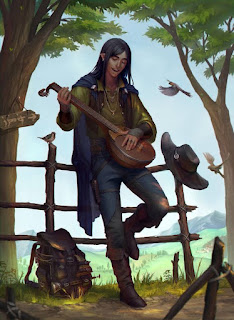
Check out the other D&D Classes as well: Barbarian, Bard, DruidFighter

Monday, February 7, 2022

D&D Class Breakdown: Bard

 For new players, it can be hard to choose your first class. For veteran players, it can be hard to choose a class and not fall into stereotypes everyone's seen a thousand times. So now I'm going to deconstruct the 5E Player's Handbook classes (Sorry Artificer, you'll come later) and talk about what works, what doesn't, and some interesting ways to play the classes. 

I won't be going into game mechanics as much as I'll be going into roleplay. 

Let's talk about bards!


What is a bard? 
Historically a bard is a traveling singer/storyteller and news outlet who would travel the world looking for new stories to tell or songs to sing. Usually living off the road they made their money in the occasional odd job, but made a majority of their money by tips from performing. Some lucky bards would be hired by kings or other high ranking officials to chronicle their epic feats in poetry and song. They were a combination Kindle, Spotify playlist and Facebook feed on legs. 

In Dungeons and Dragons bards are all that but with magic, drawing power from their ability to perform. Due to their nomadic lifestyle, they pick up a wide variety of skills from all classes. Bards can also use their performances to enhance their companions or debuff their foes. 

In the Game


Every tavern in your standard Dungeons and Dragons game has at least one bard sitting in the corner tuning a lute or singing a song. Sometimes seen as schemers on the same level as rogues, they're trusted only because they bring a level of entertainment to the commonfolk. They're usually people from half-bred races (Half-elf and Tiefling) or if there human they tend to have a backstory about how their parents didn't appreciate their artistic expression so they left home to find their own path. Essentially this is every person who didn't make it on American Idols fantasy life made into a character. 

None of this of course are what bards are truly known for. The best known bard trope is them being played like Austin Powers with magic. The bard trope of being a sex maniac has permeated every part of the D&D online discussion, from funny memes to conversations about consent. This trope is of course extremely problematic and I would be remiss if I didn't try to go into the specifics. 

First, if you're reading this blog it's likely you're probably at least conservative leaning and probably enjoy a Dungeons and Dragons game to kill some bad guys and roleplay out some laughs, but it's unlikely that you want the bard at the table to go into a lengthy discussion about how he's trying to seduce the bar maid as well as everything else in the room. The even more problematic bards will, when charisma checks don't work, resort to magic to seduce their partners, adding layers to the problematic behavior that the group then gets to endure listening to. Weather by magic or persuasion, a DM may attempt to fade them to black to hint at what's occurring, only for the problematic bard to decide to give a detailed account of their exploits. The entire game session then becomes hearing a player describe imaginary sex to everyone present until the group decides to disband. 

Second, and far more serious, is the fact that while the first issue of the descriptive bard is describing exploits, this can be triggering to people who have been victims of sexual assault, especially if the bard continues to harass an NPC despite them saying no, and especially if the bard decides to use magic to force the issue. Dungeons and Dragons is a game about escaping into a fantasy world with friends, and if not everyone is on board with the fantasy someone at the table is indulging then it's time to stop immediately. 

Breaking the Trope


The fact that the flirtatious bard trope is played so often and is so well known speaks to a lack of creativity on its part. A bard by their very nature should have more creativity to their character than "I roll to seduce" at every opportunity. Here are some ideas to switch up the trope and make some more interesting characters. 

War Bard
Fun fact: Many armies throughout time have had musicians who can help rally the troops and inspire them in battle. A bard trained to be specifically for military reasons and who focuses on the coordination and inspiration of their allies would be an invaluable asset to a team, and give them opportunities to roleplay in military situations when needs be. 

The Writer of the Epic
The wandering minstrel usually seems to have no real destination, just a lute and a few coins in their purse, but most were looking for that one epic story that would put their names in the history books, the one who wrote the great epic that's handed down generations. This bard would always be looking for the bravest adventurers, the most dangerous places and the most terrifying monsters to write about as they compose their epic. 

The Scholar
Instead of one epic story, the scholar is looking for all the stories. They want town histories, charters, journals, and anything else that can give them just a little more knowledge about the world. They'll go into deep caverns to find the lost maps of a long dead adventurer or brave an enemy encampment to find that one document that truly shows the king's heritage. They hope that one day the knowledge will be useful to someone but for now they feel that the most important job they can have is to be the one who gathers it. 

Full Edgelord
It always blows my mind that so few people ever play bards as punk rockers. As my favorite bard trope I can tell you it's a lot of fun to play a burnout bard covered in tattoos and earrings just looking for the next gig, more interested in not sounding like anyone else than they are saving the world. 

Famous Bards


Scanlan Shorthalt (Critical Role)
The gnome bard of Vox Machina, this little guy helped make the flirtatious bard trope famous, despite actually doing it justice. While he was constantly on the search for a romantic partner, he never pressured anyone or used his considerable magic on them to change their minds, even with his crush 
Pike Trickfoot. A gentleman as well as a hedonist, he probably played the trope the best it could be played. 

William Shakespeare
I'd love to just name drop all my favorite authors here but Shakespeare is known as the "Old Bard" so he had to be mentioned. And yes, this is THE William Shakespeare, not some fictional version on Dr. Who. While not using any magic we are aware of, Shakespeare wrote stories that speak to people centuries after his death, and will captivate audiences long after his name becomes legend and the source is forgotten. 

Dazzler (X-Men)
The musical mutant, Dazzler controls light with the use of her voice, and so when she gives a musical performance she can create a light show to augment her singing. In battle her light can blind enemies, create illusions and become focused into a laser beam to devastating effect. 

While fiction contains many characters who express themselves through art, none do so with the power and the usefulness quite like the bard. 

-JOE

Check out the other D&D Classes as well: BarbarianClericDruidFighter

Monday, January 10, 2022

D&D Class Breakdown: Barbarian

For new players, it can be hard to choose your first class. For veteran players, it can be hard to choose a class and not fall into stereotypes everyone's seen a thousand times. So now I'm going to deconstruct the 5E Player's Handbook classes (Sorry Artificer, you'll come later) and talk about what works, what doesn't, and some interesting ways to play the classes. 

I won't be going into game mechanics as much as I'll be going into roleplay. 

Let's start with barbarians!


What is a Barbarian? 
Traditionally, barbarians are anybody that belongs to a society that's outside of the norm (We'll get to why that's a problem later). Usually used to describe more "primitive" cultures in ancient times, the idea that unless you were living in the same way everyone else was and believed what everyone else believed you were somehow less than. 

The traditional Dungeons and Dragons barbarian has its roots in Viking culture with the berserker, a warrior believed to gain power from going into a blind frenzy in combat. Rather than formal military training these warriors went at the battlefield like a toddler does to their first birthday cake and with roughly the same amount of mess. 

In modern culture we can see this same type of fighter demonstrated in people who have taken a startling amount of drugs and are raging against an innocent victim. Or a tree. Or a car. The idea behind this is that when a person's inhibition's are lowered they put more force into their swings and ignore the pain from incoming attacks, hence why some of the intoxicated can shrug off taser blasts and sometimes even gunfire before they finally drop. 

Barbarians in the Game


In-game, barbarians usually hale from the edges of society, where the populace has to fight every day against animals and monsters to survive. They also commonly come from "savage" races, such as orcs and goliaths, where the strength bonus is more beneficial and where living away from society makes more sense since they're considered uncivilized races. Because they live outside of the bounds of Mrs. Hammarsham School For Culture, barbarians are generally seen as less than intelligent brutes who make social faux paus and have no problem killing for the sake of killing. 

Quick note: Here is the problem with the wildling barbarian trope: It hails back to the idea that anyone not firmly part of western civilization (Vikings, Guals, Native Americans, Africans ect) are dangerous rage monsters who will charge uncontrollably into battle. They also indicate that because a group of people isn't part of a dominant society that they are ignorant. While a player who rolls a half-orc barbarian from the Spine of the World probably isn't trying to be racist, it's good to remember where the trope's roots are planted. 

Barbarians in the party are usually the tank and are relied upon to do anything that requires heavy lifting or destroying something beyond recognition. In 3.5 the barbarian class also had to put special skill points to be able to read any language they knew (more racism). They usually see magic as either bad luck and only belonging to religious leaders and see anything more technologically sophisticated than a wheel to be an act of witchcraft. 

Despite their usual violent tendencies, barbarians often become the tender heart of the group. Their ignorance is played as charming and they take likings and obsessions to more mundane things that to them are extraordinary. Barbarians can sometimes become like a de facto guard dog for the group, protective of them (or a specific member) and will go through anything to keep them safe. 

Breaking the Trope


As much fun as the dumb barbarian trope is, this character can get old fast if the player wants to make any contribution to the game besides hit the stuff and make it fall down. 

Smart Barbarian
Yes, we want the barbarian to be strong and to take a hit, but that doesn't mean that intelligence and wisdom need to be completely tossed. Picture something like a Beast type from the X-Men who can completely devastate a group of grunts but will quote Chaucer while doing it. The barbarian may see violence as a necessity and find it fun to turn off his higher thinking for a second to go into a rage. Or he could have been educated at a formal school before having to learn to survive in the wilds, creating a Tarzan-like character. 

Rage Issues
The rage thing is a good gameplay mechanic, but why not make it into a roleplay mechanic too? Maybe the person flies into these rages and hates it because it's pushed everyone away from him. Maybe his rage is less of a supernatural ability and more of a mental disorder he's trying to overcome but is conflicted because if he truly leaves his rage behind he can't be the amazing warrior he is. The rage can become a fascinating thing to roleplay if done right. 

Non-Privative
Fun fact about the peoples who were originally called barbarians-they weren't. If the DM is cool with it, and you really want an outsider barbarian, try to make their tribe or culture more fleshed out than cave men and raiders. Maybe the barbarian is part of an elite honor guard who can tap into their rage for battle. Maybe the civilization has only been seen in part to protect its people Wakanda style. Or maybe people just assumed they were primitive because of how they looked or where they lived and nobodies ever bothered exploring deeper. 

Famous Barbarians


Grog Strongjaw (Critical Role) Okay so I know there's a barbarian in the second season, but I haven't listened to it yet because they're like three hours an episode and I got a job. Anyway, Grog is the quintessential barbarian. Small clan of violent raiders: Check. Dumb as a stump: Check. De facto heart of the group: Check. He's even the tank of the group. 

Drizzt Do'Urden (Icewind Dale series and others) I know he's considered a ranger, but in the Dark Elf Trilogy he spends about a decade in the wilds of the Underdark away from any other sentient being. There he develops what he calls the Hunter, a seemingly alternate personality focused purely on survival and suppresses his higher thought processes. He has trouble not entering this state while in danger for a long while after he returns to civilization, which is treated as a form of PTSD. While it's not his main class, he's definitely got a class of barbarian somewhere in his build. 

Bobby the Barbarian (Dungeons and Dragons the TV series) The youngest of the children to get lost in the Dungeons and Dragons universe, Bobby doesn't rage so much as he just charges into battle, usually needing to be rescued at some point during the episode. His Thunder Club can cause small earthquakes and cause rocks to dislodge. While he's not the most interesting or powerful barbarian on the list, he's certainly the cutest. 

Hulk (Marvel) The rage monster Hulk gets stronger the angrier he gets, though when not angry at all he is almost exclusively a non-combatant (Unless he borrows an Iron Man suit from Tony). Hulk can only rage as long as he's angry, but that's usually long enough to solve any problem with the solution "Destroy everything in eyeline". In some versions Hulk even dresses like the classic barbarian, further adding to the comparison. 

Bane (DC) Though his powers aren't natural, he does go into a berserker like rage whenever Bane takes his favorite performance enhancer Venom. He's been seen taking damage that would kill a normal man and destroy objects and people who get in his way. Bane is a dangerous barbarian because unlike the rest of this list he's generally on the bad guy's side. 

So if you want to roll up a barbarian, take a look at how you're going to make them. Are you going to fall back into old racist tropes that reflect the fear of the other? Does he have to be dumb? Does she have to be rude? 

-JOE

Check out the other D&D Classes as well: Bard, ClericDruidFighter