Showing posts with label Wizard of Oz. Show all posts

Friday, March 13, 2026

A Case of Mistaken Identity: The Wicked Witch

As we come to St. Patrick’s Day, it’s good to remember that it’s not easy being green. Especially when you’re constantly compared to one of the most heinous villains of witch-kind: the Wicked Witch of the West. So let’s start with the OG witch. The big baddy of Oz. 


The Wicked Witch of the West
The infamous witch of the original Wizard of Oz, specifically the 1939 movie adaptation, is one of the most devious and evil villains. The movie was released only two years after the Evil Queen appeared in Snow White. 

While the Evil Queen was fueled by vanity, I think it’s safe to say that the Wicked Witch wasn’t concerned with vanity, simply power. She’s known for being petty, vile, and volatile. At least as far as the movie is concerned, her identity is based in the obsessive need to have Dorothy’s slippers. That's what makes her such an iconic villain, even decades later. And that has impacted our view of this green-skinned woman ever since. 


Zelena (Once Upon a Time)
This iteration of the Wicked Witch came onto the scene as the residents of Storybrooke returned to the Enchanted Forest. With their cursed memories available, Snow, Regina, and everyone else immediately equated Zelena with the Witch from the movie. 

And that’s kind of how Zelena was raised in Oz. Because of her magic, her adopted father considered her some wicked curse. When she learned about her half sister and turned green with envy, her appearance only reinforced that belief to the people of Oz. You call someone wicked long enough and they’ll believe that’s all she is. In fact, she began to equate herself with wickedness. “Wicked always wins” may have been her mantra, but that line is filled with shame. It wasn’t until she was treated with love from her mother and her sister that she began to see herself as something other than “wicked”.


Elfaba (Wicked)
Going into the Broadway play, we're meant to compare Elfaba to the original Wicked Witch. Like Zelena, she was treated as a villain because of her magical abilities. Unlike Zelena, Elfaba kept to her values and her priorities in a version of Oz that was full of discriminatory propaganda. Because she wouldn't play the Wizard's game, Elfaba was villainized.

It would have been easy for Elfaba to take on that baggage, like Zelena, and believe she was "wicked". Instead, she was sure enough of herself to be able to recognize the darkness of the world she lived in and rise above it. There are a lot of possible interpretations of "Defying Gravity" and this is one of them. We live in a fallen world and it can be easy to take on who the world says we are. It takes a lot of internal strength to remain a person of integrity when everyone around says to conform. Elfaba literally rose above her haters. She may not have changed Oz, but her influence changed Glinda and Fiyero "for good".

Wednesday, September 25, 2024

Think Manga Invented Isekai? Think Again!


In the past decade, the isekai genre has risen to prominence in anime and manga, capturing the imaginations of millions with stories that transport ordinary individuals into fantastical worlds. From Sword Art Online to Re:Zero, these narratives are often characterized by their blend of adventure, otherworldly settings, and personal growth as protagonists navigate their new environments. The first Isekai in manga was Warrior From Another World written in 1979. However, long before anime embraced the idea of otherworldly travel, Western literature laid the foundation for what we now recognize as the core elements of isekai. Classic works such as Alice in Wonderland, Peter Pan, The Chronicles of Narnia, and The Wizard of Oz are quintessential examples of this concept, predating the modern genre by decades, if not centuries.

Isekai is a Japanese term that literally means different world. In the context of storytelling, it refers to a genre where the protagonist is transported from their ordinary life into a fantastical realm. In most cases, this world is vastly different from our own, often involving magical creatures, advanced technology, or new societal rules that challenge the protagonist's perception of reality. 

But, when we think about the core aspects of isekai—transportation to another world, the contrast between the real and the fantastical, and the protagonist’s journey through personal or moral development—we realize that this idea isn’t unique to Japan. Western literature has long explored this very concept, often in stories that are now considered classics.

Alice in Wonderland: The Pioneer of World-Hopping

Lewis Carroll's Alice's Adventures in Wonderland (1865) is one of the earliest and most enduring examples of isekai in Western literature. Alice, an ordinary girl, tumbles down a rabbit hole and into the bizarre world of Wonderland. From the talking animals to the illogical laws of nature, Alice must navigate this curious world while trying to understand the strange creatures she encounters.

Wonderland is, in many ways, the quintessential other world of an isekai story. It is bizarre, disorienting, and operates under rules that are completely alien to Alice. Yet, like many isekai protagonists, Alice grows through her experiences in this new realm. While she begins her journey bewildered by Wonderland’s oddities, she gradually learns to assert herself, starting off not knowing which direction to go to ultimately standing up to the Queen of Hearts before waking up in the real world. Her journey of self-discovery through the lens of a fantastical world makes Alice in Wonderland a clear precursor to the modern isekai genre.

Peter Pan: The Fantasy World of Neverland

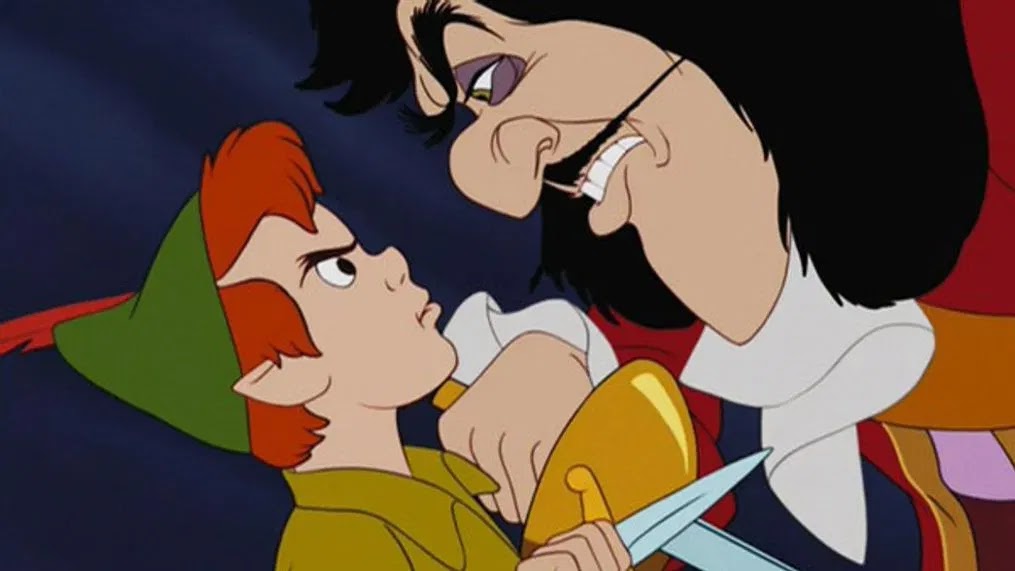
J.M. Barrie’s Peter Pan (1904) takes the concept of travel to another world in a different direction. Wendy, John, and Michael Darling are whisked away from their home in London by Peter Pan and flown to Neverland—a magical island inhabited by fairies, pirates, mermaids, and Lost Boys. Like an isekai, the real world and Neverland are starkly contrasted. In Neverland, time behaves differently, magical creatures exist, and the children are free from the restrictions of the adult world.

Neverland embodies the wish-fulfillment aspect that is so often central to isekai stories. In Neverland, children can fly, fight pirates, and live out heroic adventures. Yet, Barrie’s tale also explores the dangers of escapism, a theme that many modern isekai series touch upon. Wendy and her brothers eventually choose to return to the real world, having learned that while Neverland offers excitement and freedom, it is not where they truly belong. This idea of experiencing growth through an adventure in another world is a defining characteristic of isekai storytelling.

The Chronicles of Narnia: The Doorway to Another World

C.S. Lewis’s The Chronicles of Narnia series (1950-1956), particularly The Lion, the Witch, and the Wardrobe, is perhaps the most overt example of an isekai in classic Western literature. Four siblings—Peter, Susan, Edmund, and Lucy—stumble through the wardrobe into the magical land of Narnia, where they are destined to play key roles in the battle between good and evil. 

Narnia exemplifies many of the tropes seen in contemporary isekai: an ordinary group of people transported to a new world, where they discover latent powers or roles of great importance. The Pevensie children arrive as outsiders, but they soon find that they are integral to the world they’ve entered. They grow into leaders, learn valuable moral lessons, and by the end of their journey, they are different people from when they first entered the wardrobe.

Like many modern isekai stories, Narnia plays on the tension between the fantastical world and the real one. The Pevensies eventually return to their own world, but they are forever changed by their experiences in Narnia, just as protagonists in modern isekai are transformed by their adventures.

The Wizard of Oz: The Classic American Isekai

L. Frank Baum’s The Wonderful Wizard of Oz (1900) is another cornerstone of Western isekai literature. Dorothy Gale, swept away by a tornado from her home in Kansas, finds herself in the colorful, magical land of Oz. Much like Alice in Wonderland, Dorothy must navigate this new world and its eccentric inhabitants—including a scarecrow in need of a brain, a tin man seeking a heart, and a lion in search of courage—on her way to return home.

Oz is as strange and wondrous as Wonderland, but Baum’s story has a more defined hero’s journey. Dorothy undergoes growth and self-realization through her travels in Oz, learning that the power to achieve her goals lies within her all along. The theme of personal discovery through an adventure in a new world is a hallmark of both The Wizard of Oz and the isekai genre.

 Gulliver's Travels: Another Classic Example


Jonathan Swift's Gulliver’s Travels (1726) is another early example of isekai before isekai was a genre. The protagonist, Lemuel Gulliver, is repeatedly transported to various strange lands, including Lilliput, where the inhabitants are tiny, and Brobdingnag, where the inhabitants are giants. Each land has its own unique rules and customs, often reflecting satirical commentary on the political and social conditions of Swift's time.

While Gulliver's Travels is more of a satirical work than an adventure tale, it nonetheless shares key isekai elements. Gulliver’s experiences in these fantastical realms force him to reflect on human nature, societal norms, and his own place in the world, much like modern isekai protagonists are changed by their journeys through other worlds.

The Legacy of Classic Isekai

The isekai genre, as we know it today, may be synonymous with anime and manga, but its roots run deep in Western literature. Alice in Wonderland, Peter Pan, The Chronicles of Narnia, The Wizard of Oz, and Gulliver’s Travels all explore the fundamental theme of journeying to another world and growing through that experience. These stories set the stage for the modern isekai genre by blending escapism, adventure, and personal transformation in ways that continue to resonate with readers today.

In many ways, these classic works prove that the allure of otherworldly adventures transcends cultures and time periods. While isekai has evolved into a distinctly modern genre, its core themes remain as timeless as they were in the days of Alice, Dorothy, and the Pevensie children.

Wednesday, March 17, 2021

How to Defy Gravity


Maybe I'm fixated on her verdigris, but nobody does self reflection better than Elphaba. Halfway through the popular show Wicked, this green girl goes through a major life change and finally takes flight as we all knew she would. I can relate. At the midpoint of my life, I also went through some big changes and finally realized my true worth and power.

Something has changed within me. Something is not the same.

Elphaba has lived her life making herself small, feeling like an outsider, wondering why she was given a "gift or a curse". Then she has an event that changes her dramatically. When I was 42 (the answer to life, the universe, and everything), I had several things happen to me in a short amount of time: I witnessed my best friend's suicide, my wife left the Church, my son was diagnosed with brain damage. I went to therapy, and I quickly realized how much I despised myself because of my own "gift or a curse" I had inside. And it was right there in that therapy session that I decided to go on a journey of loving myself. Little did I know it would be setting off on a journey to work on my mental health, and eventually to defy my own gravity.  

I'm through with playing by the rules of someone else's game.

Elphaba is done listening to what others think and how they judge her. Screw them all! She doesn't know why she has this magical ability, but she knows it's part of her and she's ready to accept this aspect of her person, no matter how scary it might be. I'm still working on this part, I'm a work in progress, afterall! But I know that the more I stop worrying about the judgments of others, the closer I come to fully accepting myself, the way God intends me to love myself. 

Too late for second-guessing. Too late to go back to sleep.

This is Pandora's box. Once you've passed the point of no return, it's impossible to go back and wonder if you made the right choice. For better or for worse, this is the choice that was made, and it's time to follow through. You can never go back to numbing yourself and hiding parts of yourself. 

It's time to trust my instincts. Close my eyes and leap!

This right here. This is faith at its essence! When I was going through my self realization, I learned more about prayer and faith than I ever did in my entire life. I learned what it meant to pray, feel I received an answer, and then act on it. It's as scary and vulnerable as facing a great and powerful wizard, but it's the only way one can truly fly.

I'm through accepting limits 'cause someone says they're so.

Who is the "someone"? And why do we worry about what others say we can or can't do? We know ourselves, and we can do whatever we put our minds to. As Elphaba says, "Unlimited! My future is unlimited!" (By the way, fun fact: Did you know those first 7 syllables are the same notes as "Somewhere Over the Rainbow"?) Elphaba starts the show thinking she is limited in her ability to make changes, in her ability to fully realize her life. But when she finally rejects all those who limit her, she learns how powerful she was born to be. Likewise, humans are literal children of God. Get rid of the toxic and abusive people in your life. We were born to be unlimited. 

Some things I cannot change but 'til I try, I'll never know!

This should be the mantra of every person who wants to continue growing and learning throughout life. True, there are things that we don't have power over, and that's just fine. But we might surprise ourselves with the influence and power to change that we really do possess. But it requires us to close our eyes and leap!

I'm flying high, defying gravity!

End of the first act concludes with both a literal and figurative high note. Elphaba flies! She defies the wizard, she defies Glinda, and she even defies her own self doubt. Anything that pulls her down, she sheds, and she finally takes flight to the Western Sky. And haven't we all felt moments like these, where we can feel ourselves breaking past all the judgments of others, including the judgments we put on ourselves? (And if you haven't ever felt this sense of freedom, ask yourself what area of your life you can close your eyes and leap?)

And so Wicked has taught me that I am really am the unpopular freak with the green face. And when I finally learned to accept this fact -- accept who I am, embrace the weird, and let my freak flag fly -- that's when I finally found the magic to soar high. And if I'm flying solo, at least I'm flying free. And nobody is ever gonna bring me down!

Monday, February 22, 2021

“I hate good wizards in fairy tales; they always turn out to be him.”


During “The Pandorica Opens”, upon hearing the story of the Pandorica, River Song makes one of her off-handed snarky comments about the Doctor. “I hate good wizards in fairy tales; they always turn out to be him.” We never got a clear answer as to whether the Doctor was ever a “wizard” who locked a “feared being” in the Pandorica. Maybe River’s assumption was right and the Doctor locked an enemy in there? But so far, we don’t know. However, it did make me wonder if there are any other wizards we’ve heard of who could secretly be the Doctor. Here are a few I thought of.


Seventh Doctor - Radagast the Brown

Indulge me in some headcanon for a second. After the Seventh Doctor said goodbye to Ace (sometime after “Survival”), the Doctor went to another world. Future? Past? Who’s to say? But let’s call this world “Middle Earth”. Here he learned about “magic” and became known as Radagast and enjoyed isolating with forest animals. This is what Sylvester McCoy plays both the Seventh Doctor and Radagast in The Hobbit. It’s a bit of a stretch, but it’s a fun thought.


Post-Seventh Doctor - Merlin

This theory isn’t unique to me. If you’ve watched the Seventh Doctor era of Classic Doctor Who, you may recall the Doctor being called Merlin in “Battlefield”. The Doctor didn’t remember being Merlin, so we can safely assume “Merlin” was an incarnation of the Doctor after the Seventh. Based on different versions of the wizard Merlin, you can see aspects of the Doctor. For example, in Disney’s Sword in the Stone, Merlin appears to time travel and he has a bag that’s bigger on the inside. And in BBC’s Merlin, the young wizard appears to live unaged for thousands of years, much like the Doctor. Maybe someday we’ll get a Merlin story?


Future Doctor - Newt Scamander

This idea will be even more amazing if BBC decides at a future date to cast Eddie Redmayne as the Doctor. My first time watching Fantastic Beasts I got definite Doctor vibes from him. Maybe it was the bigger-on-the-inside suitcase. Maybe it was the running down the hall with Tina in hand (just like a companion). Either way, a British guy with a fantastically out-there outfit… he could be the Doctor. He even licked the ground in Crimes of Grindewald. Although if we’re talking Harry Potter world, maybe the War Doctor as Ollivander would work.


Any Doctor - Wizard of Oz

It doesn’t necessarily fit into the 1930s Wizard of Oz, but let’s think for a second. His clothes are super flamboyant (worse than the Sixth Doctor’s clothes) and his hot air balloon could definitely be the TARDIS (chameleon circuit fixed in the future, of course--it’s been done before). Oz could be an alien world that people visit in their dreams. Maybe the Wicked Witch was Missy in face paint? 

Wednesday, July 6, 2016

Top Ten Best Fantasy Worlds to Live In

10. Dinotopia
I've talked about this before, but the Dinotopia series features a fantastic world where sentient dinosaurs work side by side with humans in a utopian society (Dinosaur Utopia- get it?). Helping this fantasy is of course the beautiful scenes painted in the children's books of massive ancient cities and people just having fun side by side with dinosaurs.

9. Oz
Yes, they'res a Wicked Witch. And Yes, there's the Rollers, those scary things from Return to Oz, but if you ever read the books, Oz is less of a villain of the week place but is usually an incredibly peaceful place ruled by benevolent magic users with a great transportation system running through it.

8. Harry Potter Universe
Yes, again, there's evil here. But overall, it's kept in check by a massive community of witches and wizards. Reading the Harry Potter books made thousands of kids want to go to Hogwarts, even if they were far over the age of ten. Fun fact: The reason most of us didn't get our Hogwarts letters was because Voldemort wiped out all the Ministry's records of Muggle-Born wizards and witches born from 1985-1998.

7. Pokemon World
It doesn't really matter what age you are, who wouldn't want a team of cute animals as your friends and weapons of destruction? The Pokemon world, when not threatened by global disasters thanks to idiots in matching berets, is a place where you get to own and train Pokemon. I won't lie, if I had the chance I'd be a Pokemon trainer in a second.

6. Animal Crossing World
For those who haven't played the video game, pretend you run a small town in the world of Zootopia. Everyone gets along and as mayor you make most of the town income from fishing and picking apples. It's like being on a vacation all the time with your animal buddies, where the hardest decision you have to make is how to decorate your house.

5. Star Trek
Yes there's wars, but for the most part the United Federation of Planets is a Utopian society where anyone can literally be anything. Artistic and scientific pursuits are seen as equal, especially since money has become a thing of the past. Travel to the most distant stars or settle down at your personal vineyard, your future is yours.

4. Firefly Universe
Joss Whedon's Firefly universe is a lot like the Star Trek universe, but its a little more earthy and real feeling. Money is still around, but some argue that it's what makes the adventure even more sweet. Just grab a Firefly class ship and keep flyin'.

3. Avatar Universe
No, not the blue people. Avatar the Last Airbender universe. Imagine a world where half the population is born with the ability to manipulate the elements. Even if you're not a bender, you can still kick major butt. Plus if you start where Legend of Korra left off, there's a whole new world of spirits to meet and explore.

2. Every Studio Ghibli World (Except Mononoke)
Studio Ghibli worlds are full of whim and beauty that only the master Anime director can imagine. I clarify not the Princess Mononoke world because that world is just depressing, but could you imagine working at the bath house in Spirited Away? How about Totoro helping your garden? Or maybe traveling in a moving castle? Where could you go wrong?

1. Looney Tunes Universe
From its conception, the Looney Tunes world has been one I've always wanted to live in. Nobody dies, even from a direct gunshot to the face. You just turn your bill back to the front of your face and you're good to go. Play with the characters that brightened up your childhood? Yeah, I'm in.


Monday, June 1, 2015

Spelled by Betsy Schow

Today I'm gonna talk about a new book coming out tomorrow (unless you're lucky and can find it in a B&N or something.)

That book is Spelled by Betsy Schow.

What is Spelled? Here is a great review from the School Library Journal:

"A cute adventure with romance set in a world full of fairy-tale mash-ups. Readers will love Dorthea's evolution from spoiled princess to strong, confident heroine... For Oz fans, this work is a great clean-read alternative to Danielle Paige's Dorothy Must Die." - School Library Journal

Yes, Spelled is "unoriginal" as it is the story of the Wizard of Oz. But in all honesty, it's as much of the Wizard of Oz as Gene Wilder's Willy Wonka and the Chocolate Factory is Roald Dahl's Charlie and the Chocolate Factory. In other words, it's not. It's better. (Yes, I'm a fan of Willy Wonka...more a fan of chocolate...but whatever.)

So yeah, I may have a small bias in that Betsy is in my critique group. However, I have no problem stating how much I like this book. Betsy's humor is beyond amazing. Pretty much, I see Spelled as taking Baum's classic Wizard of Oz while throwing in Cher from Clueless who is bored with her dad's credit card watching the Home Shopping Network and then reversing the polarity (Doctor Who reference, basically saying flipping the world upside down).


Also, the story of spoiled brat to humble heroine is always one of my favorites. This is what makes Draco in Harry Potter 6 and 7 as interesting. Everyone needs a wake up call in life and as Dorthea gets hers, it's a really well-told reminder to not take what we have for granted. 

Since it's definitely worth reading, here is a nice handy-dandy link so you can go buy Spelled.

Alien abductions are involuntary, but probings are scheduled.

Friday, July 13, 2012

Oz The Great and Powerful Trailer

Something's been circling the internet lately, a trailer that warms my little heart.
http://disney.go.com/thewizard/?cmp=NLC-CDE|ozg|Launch|TrailerDebut|Primarybutton|Watchnow|071212|||synMovInTheatM|#main
That's right. It's a Wizard of Oz prequel.
Between this and The Witches of Oz TV series set to come out this year, it's looking like the Wizard of Oz is going to be like how Snow White was this year. I'm actually looking forward to this thing, though I am curious as to why James Franco picked up the roll. He seems more of the action-fighting-monkeys-chopping-off-arms-drinking-his-own-pee actor than a let's-go-play-in-CGI-land actor. But whatever it'll either rock the world or end up in a $.99 bin at Kmart.
-JOE