Showing posts with label Doctors Revisited. Show all posts

Friday, January 2, 2026

Fourth Doctor Revisited: "City of Death"


Welcome to 2026! How did we get here already? Wibbly wobbly timey wimey, of course. 

Thanks to some unfortunate insomnia, I've had some time to finally work my way through more Classic Doctor Who. Though I'd rather sleep, maybe it's Heavenly Father's way to forcing me to take some self-care time (I'd rather self-care with sleep, but He knows better than me). Recently I watched "City of Death" and had some more random thoughts about it (even more random than usual).

The "time slip" was an interesting mechanic. I kind of wish it had been used more throughout this story. Or maybe a story centered around it, a la Groundhog Day. With how the humans didn't seem affected by it, maybe this is the explanation of human Deja vu?


A plot to steal (and replace) artwork. Talk about a long con! One of the tools used in the heist made me chuckle. They used a "sonic knife" and all I could think about was Captain Jack Harkness, commenting on the Ninth Doctor's screwdriver: "This [knife] could be a little more sonic." Would've loved for the Doctor to commandeer it. Just because.

As if it weren't convoluted enough that Da Vinci painted about half a dozen copies of the Mona Lisa, modern viewers of Sarah Jane Adventures will remember when she came for revenge. Connecting the two stories, I have to wonder if all seven portraits used oils from sentient meteorite or if it was just the one that Sarah Jane's crew would encounter. Seven vengeful portraits is significantly more intense than the single.


Just like Clara Oswald in the modern series, Scaroth was splintered across time and space. Unlike Clara, the consciousness of his splinters were still telepathically connected and conscious of each other. Makes a long con like this easier over the centuries. Since the Doctor would eventually stop him, I can't complain too much about his meddling, since he apparently gave us some of our technological advances. 

I enjoyed Duggan tagging along with the Doctor and Romana. I kind of wish he'd become a companion to the Doctor. I don't know that we've had a detective on the TARDIS team before. Plus can you imagine the Doctor scolding Duggan across time and space for his impulsive fists. Though maybe after Duggan threw the most important punch in history, maybe the Doctor would've allowed it--kind of like how he would allow Ace's explosives (even though he'd say she couldn't have them).


There's still one question I need answered though: Why was it called "City of Death"? Of course there was death--it is Doctor Who after all--but it wasn't like all of Paris was dying. Was there a different plan for how the episode was supposed to go and the name never changed? Not important. Just curious, as I move towards the end of the Fourth Doctor.

This episode is also the origin of this iconic Fourth Doctor meme template.

Friday, November 21, 2025

Fourth Doctor Revisited: "The Armageddon Factor"


First off, I can never remember how many Gs and Ds are in "Armageddon"... This story rounded out the "Key to Time", which included the 500th episode of Doctor Who. After such an epic story, I figured I'd share some random musings from the finale. 

Villains of the story: The Shadow and the Black Guardian. After the Fourth Doctor and Romana diligently bounced through time and space for the White Guardian, the Shadow tried to swoop in and take the first five segments (after all that hard work). And to stop the Black Guardian from getting it... the Doctor undid the Key to Time arc, splitting the Key again. And with that the Doctor went on the run.


Regarding the actual plot of "The Armageddon Factor" itself, it's basically a fabricated war, like "Boom". Atrios vs. Zeos. The Shadow put this conflict together in service to the Black Guardian. Like the Trickster, the Black Guardian feeds on chaos. Makes me wonder if he's part of the Fifteenth Doctor's Pantheon (Toymaker, Trickster, Maestro, etc.), because he'd fit right in. I know the Black Guardian appears later on, especially during the Fifth Doctor era, so I'm looking forward to that.

This was our last appearance of the first Romana. She unceremoniously regenerated in the next episode, taking on the face of Princess Astra (from this story). Though, she had several faces during her regeneration process… do they each count as a regeneration? Also, did something trigger her regeneration? It seemed so casual.


We also met Drax (not the Destroyer), another Time Lord. He created Mentalis, the computer of K9's dreams. He was trapped on Earth for a time, but he was pulled into the Shadow's schemes. This story makes it sound like he was under duress, but pseudo-canon makes it seem like he had a more mischievous streak, like the Monk. Regardless, I wish we could have Drax back. Just one more of so many Time Lords we could have back!

Last thing: Drax called the Doctor “Thete” (Theta Sigma). It was a bit of a tease at the Doctor’s name. His real name, given so flippantly? Nope. College nickname. But I definitely remember talk of this moment when "The Name of the Doctor" was on the horizon. Personally, I hope we never get the Doctor's real name. That can stay between him, River Song, and Clara. It's not really important to the story anyway.


Alright. Now I need to get moving along through the Fourth Doctor and catch up to TJ... If only it hadn't been removed from Tubi... At least I've been able to watch the next story on Pluto TV so far. If you know it streaming somewhere else for free, let me know. 

Friday, August 1, 2025

Fourth Doctor Revisited: "The Invisible Enemy"


I feel like I'm finally getting into enough of a groove this year (only took me six months) that I've been able to work in time to continue through the Fourth Doctor stories. I recently watched "The Invisible Enemy" and while it's not a hugely highly rated story, I thoroughly enjoyed it. Plus it introduced the tin dog K-9 (in his first incarnation).

That's probably a great place to start: K-9. He was originally created as a companion to Dr. Marius. Since he couldn't bring his real pup into space, he created man's robo best friend. I've written about K-9 previously (see attached Creature Feature), but I just find it amusing and amazing how iconic the tin dog became. While certainly not a traditional companion, K-9 became endearing and loving towards the Fourth Doctor and Leela. I mean, there's a reason another version of K-9 was gifted to Sarah Jane.


Speaking of companions, Leela is no Dodo, but she hasn't been my favorite. That being said, she shines in this story. While her impulsive and possibly savage behavior can sometimes bug me, it became her strength in this story. Because she relied on her intuition and didn't overthink the situation, the Swarm couldn't take hold of her... I wonder what it's like to not overthink life... Maybe I could use some of Leela's antibodies.

The Swarm was an interesting villain. Because of its microscopic size, it can be the titular invisible enemy. Honestly, as creepy as the full-grown virus was, it was much more villainous when it was small. I understand wanting to get bigger (I'm not the tallest guy around) but the power of the Swarm was to infect people. Once it was human-sized, what was the appeal?


To fight against the Swam, the Doctor and Leela cloned and shrunk themselves to figure out the cause and cure. While the concept is very Magic School Bus, it was an interesting idea. Especially with the cloning involved and the accidental creation of the cure, there's a bit of Osmosis Jones going on there too. It's kind of out there but I felt like it was a perfect plot twist... if that term works for a positive twist.

Alright. I need to move along through the Fourth Doctor. TJ and I need more Doctor Who content to discuss. I look forward to meeting the Time Lady Romana again. Just a few stories to go. Did anyone else like "The Invisible Enemy" as much as me or am I the anomaly among Whovian?

Friday, April 11, 2025

Fourth Doctor Revisited: "The Deadly Assassin"

I'm still working my way through the Fourth Doctor era, trying to catch up to TJ. I recently watched "The Deadly Assassin" which is pretty unique among Doctor Who stories, especially of the classic era. We get a return to Gallifrey, the Master's dying form, a murder mystery, and the establishment of plenty of Doctor Who lore.


Let's start with the return to Gallifrey and the murder mystery. Last we left the Doctor, he said goodbye to Sarah Jane Smith (in the wrong city) to follow a call to Gallifrey. Come to find out it was a premonition about an assassination. And naturally the Doctor is in the right place at the wrong time and gets accused of the murder. How many times has that been used as a means of pulling the Doctor further into the drama? Not complaining. It works. Though this time it was an accusation from people who knew him and it took nominating himself as a presidential candidate to stay alive. And that role as the president keeps coming back whenever he visits Gallifrey again.

After the passing of Roger Delgado, the Master and his plots basically faded into the past, like the Great Intelligence and the Toymaker. "Frontier in Space" could have easily been the Master's last story. Instead, they decided to bring him back during the Fourth Doctor era. They could have simply made him regenerate, but instead gave him a plot to avoid his final death. This meant adding the rule of the twelve regenerations (which we'll address in a second) but it brought back this beloved villain. The first of many times that the Master should have been deader than dead and still came back. But we'll come back to this decaying version of the Master soon enough.


This is one of those stories that established parts of Doctor Who lore that has endured for decades. In addition to the limit of twelve regenerations, this story brought us back to Gallifrey, its politics and culture, and the Matrix. In some ways, showing the inner workings of Gallifrey makes them less mysterious I suppose (which is why I'd be very okay if they never reveal the Doctor's real name) but it gave a new sense of urgency. Yes, the Time Lords are very advanced and often benevolent. But this story also showed their darker aspects, making them not much better than humans. In addition, the regeneration limit puts a little more emphasis on each death of a Time Lord, as they're not just reborn forever. With the Doctor possibly being the Timeless Child, he might be the exception... but that's a discussion for when we rewatch the Thirteenth Doctor.

I couldn't find a source for the story, but I read on the Doctor Who wiki that Tom Baker wanted an episode all to himself. A big feat for any actor, to only play off himself. This is as close as we got in the classic era, but we've this companion-less style repeated in modern Doctor Who, with some companion-lite stories (like "Midnight") and one-off companions (like "Voyage of the Damned" and "Joy to the World"). It's one of the few times we truly see the Doctor alone (unless you count Spandrell or Engin as his companions). Peter Capaldi finally got to realize Tom Baker's Doctor-only adventure in "Heaven Sent" but even that story had the monster of the Confession.

Alright, guys! Time to speed things up with my Doctor Who viewing. I need to catch up with TJ so that we have more Whovian content to record on the podcast. 

Friday, March 7, 2025

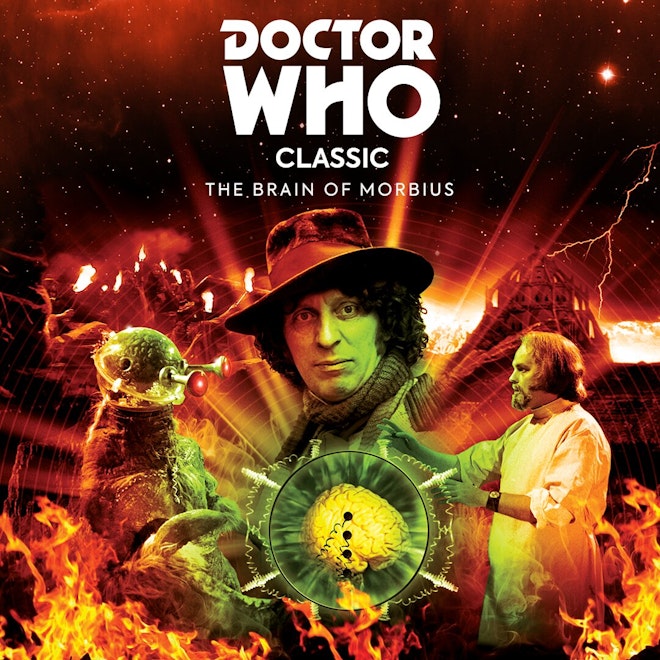
Fourth Doctor Revisited: "The Brain of Morbius"


Working my way through the Fourth Doctor still, but I slowed myself down rewatching/preparing for Captain America, Daredevil Born Again, and Thunderbolts. Marvel projects aside, I did have some thoughts about the Doctor and Sarah Jane's adventure in "The Brain of Morbius". I thought to write about the Sisterhood of Karn or about Morbius. Final decision: All of the above.

First let's talk about the Sisterhood of Karn. Before I ever watched this story, I encountered the Sisterhood when the mini-episode "The Night of the Doctor" brought the Eighth Doctor full circle before the 50th Anniversary. It was a short visit, but the Doctor's banter with the sisters proved a point. The Sisterhood of Karn fought in this story for the perpetuation of their immortality and they dabbled in Time Lord science (maybe they were involved with Tecteun's experiments on the Timeless Child?) but what is life without an end? Even from a religious perspective, living forever without a greater purpose.... well, go read "Tuck Everlasting". Despite the Fourth Doctor's feelings about the Sisterhood, he was happy to keep their eternal flame glowing. To be fair, they saved Sarah Jane from being blinded forever. 


Next on my notes: Morbius. He and Solon certainly played the role of a Dr. Frankenstein and his monster. However, I'd love to get more about Morbius. TJ and I have talked a few times about how we need more variety with our rival Time Lords. This story came after a few years after the death of Roger Delgado (the first actor to play the Master), so I'm not sure Doctor Who knew what to do about the Doctor's rival. While the Master returned in "The Deadly Assassin" we could have easily gotten more from Morbius. It would've been earlier in his timeline, but still. With Morbius, the Monk, the War Chief, and other renegade Time Lords, I can't help but reiterate the point of giving us a variety. But that's enough ranting for now.

My third and final note for this story: the Doctor's previous faces. During the mental battle between Morbius and the Doctor, a number of faces appeared as incarnations of the Time Lord before the First Doctor. It's a perfect example of how continuity is fluid in Doctor Who and it's constantly evolving and expanding. For decades, these faces were seemingly disregarded, but the Thirteenth Doctor later learned that other faces existed before she was the First Doctor. So while the Timeless Child is a subject of controversy, I maintain that the constantly "regenerating" continuity of Doctor Who is what's kept the series alive for over sixty years now. We may never get more information on these past lives, erased from the Doctor's memory, but it's all part of the ongoing wibbly-wobbly story.

That's enough about Morbius, but I'm sure I'll have more to say about renegade Time Lords at a later date (I always seem to have more). In the meantime, I need to figure out a good way to celebrate the twentieth anniversary of modern Doctor Who. Allons-y!

Friday, December 20, 2024

Fourth Doctor Revisited: "Robot"

“You may be a Doctor, but I'm the Doctor.”

It’ll be another few months before TJ and I finish off our Third Doctor podcast episodes (blame technical difficulties, the holidays, etc.). In the meantime, I finished Planet of the Spiders and now we enter the era of the iconic Fourth Doctor, his scarf, and his jelly babies. So let’s start with a few thoughts I had from Tom Baker’s inaugural story: “Robot”


Every once in a while there’s a Doctor Who story with a distinct lack of alien involvement. I’m often hit and miss with these stories. This one hit home with a theme about humanity’s fatal flaw (well, one of them anyway). Seriously though, human knowledge and hubris is more dangerous than any alien. The titular K1 Robot was designed to cover human lies and scheming. And then it blew up in their faces anyway.


Now let’s take a note about the best part of humanity: kindness. Leave it to Sarah Jane Smith to empathize with and show compassion to a machine. It didn’t take much, but Sarah Jane’s treatment of K1 is what prevented global catastrophe. She tried to understand the feelings of a machine in regards to how it was being treated. Most human beings don’t show that much consideration for living beings, never mind machines. Seriously though, is this a cautionary tale of AI? Of humanity’s pride? Or of how we treat machines? Remember the episode next time your self-checkout at Walmart seems to glitch.


And now with this post-regeneration story, it’s time to explore the long-reaching era of Tom Baker and his marvelous scarf. Like previous regenerations, it took the Doctor some time to get his footing, but a mystery kept him going. Plus we got to meet Dr. Harry Sullivan, companion to Sarah Jane and the Doctor for the season, as we bid goodbye to the UNIT era of Doctor Who. No more regular appearances from the Brigadier (but at least he kept the Doctor on payroll).


Now off into time and space with Sarah Jane and Harry as his companions. Let’s part with some wise words the Fourth Doctor:

"There's no point in being grown up if you can't be childish sometimes"

Friday, November 1, 2024

Third Doctor Revisited: "Planet of the Spiders"


It’s time to round off the Third Doctor content, as TJ and I are already on our way into the Fourth Doctor era. We’ve still got three podcast episodes to go about the Third Doctor, but this will be my last blog post dedicated to Jon Pertwee episodes of Classic Doctor Who. So please enjoy some of my random musings from watching the Third Doctor’s final story: “Planet of the Spiders”

Doctor Who did a great job rounding off the Third Doctor with a proper finale, just like they did with the Second Doctor. We had the return of Jo Grant (sort of) and Mike Yates. They even found a wonderful use of Sarah Jane being a reporter. All these pieces came together with an alien plot and the preparation for our formal regeneration-centric story.


“Why spiders?” Ron Weasley would say. There’s something somewhat universal about spiders making for a good villain. These spiders reminded me of “Turn Left” and “Runaway Bride”. What is it with Doctor Who and monster spiders? In addition to Donna’s two encounters with eight-legged aliens, we also had “Arachnids in the UK” with the Thirteenth Doctor. It should go without saying to not watch this story if you have arachnophobia. But that much should be clear from the title.

I had a little chuckle on the inside as our characters seemingly chased the crystal around like a comedy. It reminded me of watching “What’s Up, Doc?” when I was in college. I’ll have to watch it again sometime but I feel like to some extent you could put some Scooby Doo music synced to all the times the crystal changed hands. But in seriousness, I liked that they brought the crystal back with Jo’s letter, bringing the Third Doctor’s tenure full circle.


And of course we had the leading up to the Doctor regenerating, Our first proper regeneration since “The Tenth Planet”. But this time we had a name for the process and context for the change. Demonstrated by the example of the Doctor’s old mentor, known at the time as K'anpo, regeneration became a staple part of the Doctor Who lore. Now we can have regenerations of not only the Doctor, but also the Monk, the Master, the Rani, etc… or just the Master.

Speaking of regeneration, this was also the first of many times the Doctor sacrificed himself for a friend. Just like the Third Doctor sacrificed himself for Sarah Jane, we’d later see him sacrifice himself and trigger regeneration for the sake of Peri, Rose, and Wilf. A tragic ending for the Doctor each time.


Now on our way into the Fourth Doctor era. I wanted to say something about the portrayal of Tommy in this story and his becoming “normal” but I couldn’t articulate it–I’ll save it for another time. Overall I really enjoyed this story and we’ll discuss it more during our Third Doctor podcast series. I would just love to have the Hermit return. Can we please? Please?

Friday, September 13, 2024

Third Doctor Revisited: "The Three Doctors"


I knew I had to write something about the tenth anniversary special of Doctor Who when TJ and I got to that point. Despite the “First Law of Time” (as it’s called by the Time Lords) precluding the crossing of one’s own timeline, this story set the precedent for anniversary stories; “The Five Doctors” (twentieth anniversary) and “The Day of the Doctor” (fiftieth anniversary) continued this trend, in addition to other multi-Doctor stories (like “The Two Doctors” and “Twice Upon a Time”).


This story saw the return of the First Doctor, though due to William Hartnell’s health he was limited to filming his character trapped in a “time eddy”. According to the pseudo-canon material, he was pulled from time at the period when Vicki and Steven were his companions. Hartnell was unable to film with the other Doctors, but was able to film his scenes elsewhere to still help the other Doctors defeat Omega. It was the last appearance of the First Doctor, as portrayed by William Hartnell, as he passed away about two years later. All Whovians ought to be grateful to that first First Doctor actor, who started this 60+ year journey.

P


atrick Troughton as the Second Doctor also returned of course, recalling his encounters with Benton and Lethbridge-Stewart in “The Web of Fear” and “The Invasion”. I found his rivalry with his future self amusing. We kind of saw that dynamic between the Tenth and Eleventh Doctors, but this rivalry was much more pronounced. Unlike future multi-Doctor stories where the memories were blurred and mostly forgotten, the Second Doctor seemed to remember this adventure when encountering the Third Doctor again in “The Five Doctors”. His stories weren’t my favorite, but I enjoyed him as the Doctor, so I’m glad he returned and would return two more times. As he was on the orders of the Time Lords, my theory places this appearance after “The War Games” and before his regeneration (see my Fugitive Doctor post for more on that), but the pseudo-canon places this moment while Jamie and Zoe were still in the TARDIS.


Finally, the third of the three Doctors was naturally the current Jon Pertwee incarnation. Unlike other multi-Doctor stories, the Third Doctor was the only incarnation with a clear companion (even in “The Day of the Doctor” you could sort of say that Queen Elizabeth was the Tenth Doctor’s companion). Jo had wonderful chemistry with all three of the Doctors and I felt like she kept the story moving. And finally, after years of being stuck on Earth with UNIT, the Third Doctor’s exile on Earth finally ended, allowing him and Jo to willingly head into time and space (instead of the Time Lords directing his travels). 


This story also marks the first time the Brigadier and Benton entered the TARDIS. Insert “bigger on the inside” commentaries and the Brig’s repeatedly skeptical comments. You’d think that after three years of working closely with the Doctor, he’d be more willing to believe. But I guess like Ben and Ian, we needed that skeptic in the TARDIS.

The Time Lords in crisis: Something you don’t see too often. It shows just how big of a threat Omega was, though honestly I’m not sure I understand what effect Omega had on Gallifrey during this story. All the same, Omega was a big enough deal that he would be referenced throughout the series (example: The Hand of Omega in “Remembrance of the Daleks”) and he would reappear against the Fifth Doctor. Only a couple other Time Lords have that much recurring prominence in Doctor Who, besides the Master. But we’ll get to more Time Lords as we get into the Fourth Doctor era shortly I’m sure.

Friday, July 19, 2024

Third Doctor Revisited: "The Time Monster"


As of writing this blog post, I'm still working my way through the Third Doctor era (got slowed down by a couple other projects, like re-watching Wolverine). Regardless, I plough through the classic era, as TJ and I try to figure out when we have time to podcast together and to finish discussing the Second Doctor. In the meantime, I had some random thoughts as I watched "The Time Monster". It didn't make my "top stories" when I watched the Third Doctor years ago, but I definitely enjoyed it this time. So here we go!

This story is one of many that take a myth and make them relatable for me. "The Daemons" was another like this, as was the recent appearance of Sutehk against the Fifteenth Doctor (see also "Pyramid of Mars" with the Fourth Doctor). These are the kinds of stories that still pull me into Doctor Who. Human myth understood in a sense of science and/or aliens. 

This story was especially intriguing after watching/reading Percy Jackson. Like most kids I've learned bits and pieces of Greek mythology through my childhood (if you can count Disney's Hercules). Stories like this make me wish I'd understood more from my Classic Civilization at BYU (it was the only class I failed during my bachelor's degree--Let's just say The Odyssey and The Iliad went over my head). But between Doctor Who stories like this and being pulled into Percy Jackson, it makes me want to learn more about classic mythology. 


While I'm already referencing Percy Jackson, I was surprised by the ending of this story (even though I'd seen it before). Unlike what's portrayed in "The Lightning Thief" (I still need to read "Sea of Monsters"--I've only seen the movie), Kronos wasn't all evil in this story. Go figure. Just in Doctor Who fashion, taking a known creature or entity and flipping your expectations upside-down. 

It was an interesting twist to see different twists on time travel. The Doctor and the Master both had a TARDIS present, but there was also Crystal of Kronos that pulled the Master to Atlantis. To make it even weirder, the Doctor even managed to trap a TARDIS within a TARDIS within a TARDIS...). Time travel's crazy right?


According to IMDB this story is one of the lowest rated among the Third Doctor's adventures. Between the Master, Atlantis, and Kronos, I felt it was engaging and well paced. So why the low ratings? Maybe someone else has watched this tory and can give their review.

The Master's fate in this story demonstrated some of the Doctor's most undeserved compassion, like when the Tenth Doctor tried to keep the Master from dying. But it offers a soul-searching question, which I'll end on, would you wish eternal torment on your worst enemy?

Wednesday, May 1, 2024

Third Doctor Revisited: "Spearhead From Space"


Finally finished off with the Second Doctor era (and the head-canon following) so we're onto the Third Doctor era, as TJ and I continue to make our way through Classic Who. And I had enough random thoughts or tidbits to make a blog post. So here we go!

This was also my first exposure to the Third Doctor, over ten years ago, when some friends and I did a marathon of sorts before the 50th Anniversary Special; we had one story from each of the eleven Doctors of the time. Possibly one of the best things I did in college.

As the Third Doctor appeared, this was the first color episode to appear as well. I gotta wonder what it was like to watch the First and Second Doctors and then move into complete color, a novelty at the time. It's like a whole new era of Doctor Who. And not just because of the color.


With the Doctor grounded on Earth, unable to fly the TARDIS and working with UNIT, this episode (and this era) stretched the idea of who qualified as “companion” to the Doctor. Typically, Liz is considered the companion of this season, but she doesn't travel in the TARDIS any more than the Brigadier or other UNIT staff. In some lists, including my own, sometimes I'll even include recurring UNIT personnel, but I always include the Brig.

This story also brings up a lot of details that end up running through decades of Doctor Who. Let's start with the fact that this is the first time the Doctor's referenced to have two hearts, one of the few specific things we know about Time Lord anatomy. His allegiance with UNIT made him the organization's primary scientific advisor, which has continued over decades of canon, as recently as the Fourteenth Doctor.


As the second post-regeneration story, it was new territory for lots of themes and running gags. Lots of long time threads of regeneration began here. For example, the post-regeneration coma first happened here with the Third Doctor, but it would come up again with the Eighth, Tenth, and Twelfth Doctors, while the others showed no sign of problem. The Third Doctor was also the first of the Doctors to steal hospital clothes for his outfit, followed by the Eighth and Eleventh Doctors. 

The silly moments in this story also showcased the wonderful character of the Third Doctor and his comedic timing. I still can't get over the Doctor cuddling his shoes and escaping in a wheelchair. Can't wait to see more of him as I continue through the Third Doctor era (and I can't wait to see Sarah Jane again).

Wednesday, March 20, 2024

Second Doctor Revisited: "The Mind Robber"


As TJ and I work through Classic Doctor Who and while we wait for the Fifteenth Doctor’s first season, I still have plenty of thoughts about the Second Doctor’s era to ramble on about. So for this installment of revisiting the Doctor’s stories, I’m talking about “The Mind Roober”. 

So like many Classic Who stories, the first episode was quite slow. Par for the course with Classic Who, but I can’t imagine being pulled into the story like this back in the 1960s. I feel like I have to binge the whole 2-10 episodes (depending on the story) for it to hold my attention. It’s one of the reasons I’m glad Doctor Who is 40-60 minutes in Modern Who. It’s more like a mini-movie every episode. 


I just had to chuckle at the temporary recasting of Jamie in the land of fiction. Looking into it, Frazer Hines had contracted chicken pox from his nephew, so they had to continue the story without him. What a clever way to keep the show moving along even without the full cast present. Reminds me of when William Hartnell was on vacation so they used a silent stand-in for his hand during “The Celestial Toymaker”. Doctor Who has always kind of been clever about how to use their cast to work around illness and the actors’ personal lives. 

Being the father of little children, the land of fiction reminded me of my toddler’s imaginative play (also reminded me of fan fiction I’ve written too, I guess). To whatever extent, what geek wouldn’t want to put themselves in the middle of their favorite stories, even for a moment. It makes me wonder which works of fiction I might encounter if I were pulled in like the Doctor and his TARDIS team.


This would have meant nothing to viewers back when the story first came out, but every time there was a mention of “the intelligence” or “the master” I had to stop myself. For viewers of Modern Who (or anyone who has seen later Classic Who after this point), references to “intelligence” or “master” will likely bring to mind a couple of recurring Doctor Who villains. Even having seen this story before, I had to stop and check the TARDIS wiki to make sure I hadn’t forgotten a Great Intelligence or Master story.

Let’s close out these ramblings with a question for you guys. Which books/stories/movies do you think would be included if this story had been done with one of the modern Doctors? The first things that come to my mind are some kind of sitcom spoof, Harry Potter, or a generic superhero (I suppose they had that in this episode).

Friday, October 6, 2023

Second Doctor Revisited: "The Highlanders"


Breaking into the Second Doctor era, I was surprised to enjoy "The Highlanders" so much. The purely historical episodes were not my favorite (which is interesting because I also highlighted "The Romans" in the First Doctor era). But it was a great display of the Second Doctor's character and an introduction to his longest running companion.

When I first learned that Doctor Who was dreamt up as an educational show, all I could do was wonder how Daleks fit into a history lesson. And then you get episodes like this and I imagine this is the kind of educational-ish episode the creators had. On a related subject, please note how the Doctor shows absolutely no consideration for aberrations through history. A far cry from the First Doctor insisting that Barbara could and should have no impact on the Aztecs.


It was great to see the Second Doctor begins to show his personality, with disguises, voices, and accent. "I want a hat like that." All I could think of when I heard these lines was the Eleventh Doctor energy. What other incarnation of the Doctor had such an affinity for hats? And yet we got two moments of that Matt Smith trickling back down the Doctor's timeline. "I would like a hat like that." Though it should be noted that the Second Doctor was seen admiring a fez in the "Prisoners of Time" comic. We can only hope he bought it.

There's this trope in Doctor Who where the TARDIS team gets split up. If it weren't for that, the Doctor would have actually booked it out the situation. This story was easily that classic "TARDIS team gets split up and has to get together before they can leave" motivation. Especially since the Doctor can't truly risk changing anything about Scottish history, it made for an interesting dynamic.


I was excited to watch/listen to this story because of the introduction of Jamie McCrimmon, who would become the Second Doctor's best friend and long-time companion (he'd stay with the Doctor until his forced regeneration). With how important the Doctor/Jamie bromance is to this era, I was a bit surprised by the last minute invite into the TARDIS. It made sense as a way to get Jamie to safety, but I was confused and put off a little that there was no thought of friends or family left behind. 

Wednesday, September 6, 2023

First Doctor Revisited: "The Tenth Planet"


I couldn’t finish off the era of the First Doctor without highlighting his exit. So join me and some of my random thoughts from when I watched “The Tenth Planet.”

It was an interesting dynamic, how this story was somewhat Doctor-lite (an interesting contrast to future regeneration episodes). We know why this was, of course, as it’s the same reason regeneration was thought up in the first place. With Hartnell’s health failing, it makes sense that he was absent from chunks of the story. Kind of like how the Doctor was silenced and turned invisible during his encounter with the Toymaker. Compare this to all the Doctor-lite and companion-lite stories of the first Russell T. Davies era. Again, an interesting dynamic to kind of downplay the Doctor’s role. Heck, he didn't really do anything to defeat the Cybermen. They kind of defeated themselves. 


Despite being their first appearance of many, the Cybermen made only minor appearances. I suspect it may have been because of budget constraints or complexity of special effects. They'd go on in future appearances to be one of the most fearsome villains, but in this story couldn’t even go near radiation without human assistance. We didn’t even get any human Cyber-conversions. They alluded to conversion, but none of our humans fell victim to the process. Whether due to budget, special effects, or the imagination of the writers, nothing slowed down the Cybermen. They’d just keep on upgrading and becoming scarier until as recently as “The Power of the Doctor.” And you can bet RTD will bring them back at some point again.

Even though the Cybermen were absent at times, there was still a villain present. Sometimes that villain was the human race. Isn’t that just like Doctor Who? You have this villainous and scary looking alien/robot, but along the way the human race does something stupid that threatens the lives of innocents. Even almost 60 years ago, the Doctor wouldn’t stand for that. Thankfully the human race survived itself back then in the 80s or we wouldn’t be here talking about it today.


And then of course we have the regeneration sequence. The first of many. But modern Who fans ought to also remember an episode that takes place in the moments before the Doctor enters the TARDIS at the end of this episode. Of course, I’m referencing “Twice Upon a Time” when the First Doctor teams up with the Twelfth Doctor. I wrote about this story when it first aired. Maybe it was because there was no enemy alien present in the story, just the two Doctors, but it gave a greater depth to the First Doctor as a character. He’d grown so much since Ian and Barbara forced their way in and now he was forced to change again.

So I guess that concludes the First Doctor era (at least in blog form–we got some First Doctor coming in the podcast). Until we see the First Doctor again, I’ll finish with a line from Thirteen’s regeneration: “Tag, you're it!”