Showing posts with label Grace. Show all posts

Friday, May 9, 2025

Opposition [Inside Out] All Things

Movies don't often make me cry. They make me want to cry at times, but it's rare that the tears ever leave my eyes. An exception to this rule was Inside Out, one of the first movies I can remember physically evoking tears from me. However, the sequel had me ugly crying. Something about Riley's need to find friends and not be alone. Something about her panic attack on the ice. Something about Anxiety literally running circles in Riley's mind.


Whatever it was that make me so emotional, Inside Out 2 quickly found its spot close to my heart. So when "Pop Culture on the Apricot Tree" did their episode about the movie, I had to dive in. I mentioned this a little during my interview with Carl on our podcast, but the movie and their podcast episode struck a cord with me that cut deep. Not just because of Riley's panic attack, but also because of the lesson I learned from the Apricot Tree crew.

The unexpected lesson from Anxiety has left me thinking and rewatching this movie. "We don't get to choose who Riley is." Anxiety was echoing a comment from Joy and it hits hard. It'd be nice to think that life and emotions would be all joy, comfort, and straightforward. Life is more complex than that. I swear I can feel Anxiety running around in my head most days, trying to get done everything on my to-do list yet having no energy to do any of it. It's easy to let Anxiety run the show and make it central to how I feel about myself and how my days play out. 


I love that this movie shows just how complex emotions and personality can be. At the end of the movie, we get this line from Joy: "But every bit of Riley makes her who she is, and we love all of our girl. Every messy, beautiful piece of her." What is more affirming than that? It would be nice if life were so simple as to say "I'm a good person" like Riley started out the movie believing. Humans are too complex for that. And that's not just psychology. That's doctrine too.

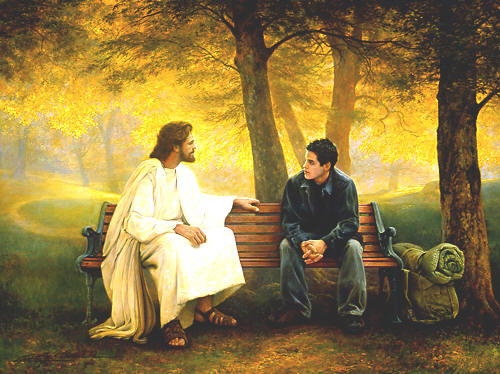
"For it must needs be, that there is an opposition in all things. If not so, my firstborn in the wilderness, righteousness could not be brought to pass, neither wickedness, neither holiness nor misery, neither good nor bad." (2 Nephi 2:11)

For years I've thought of that verse through the lens of mortality (which is true). Good things happen to us and bad things happen to us. But I think it also accurately describes the human condition. We have the light of Christ (see Moroni 7) but we also have the natural man (see Mosiah 3). We have both sides in us. I have premortal Spencer in my heart but I also have my mortal experiences influencing my development (makes me think of a Once Upon a Time post that Joe did before I joined the team).


All this to say that maybe we all deserve some grace. I don't do a very good job granting myself that gift, but maybe I can start by sharing that grace with others when they make a mistake. I haven't figured out how to get Anxiety to stop running around my console during the day, but maybe I can show Anxiety some kindness in the meantime. Being frustrated with my kids doesn't need to mean I'm a bad father. Running behind at work doesn't mean I'm a bad clinician. My heart hasn't been able to process and understand those complexities.

In the meantime, maybe I'll just keep rewatching Inside Out 2 and maybe with each viewing I'll get better at giving myself grace.

PS: Does anyone else just want to hug Embarrassment every time he appears?

Friday, December 2, 2022

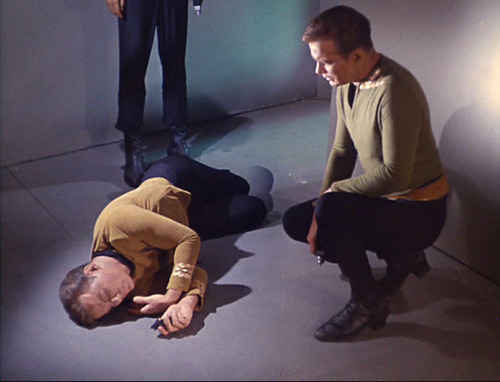
Captain Kirk's Enemy Within


Today’s blog post is brought to you by Paramount Plus and Unicorn Doggo.

Recently, after finishing the first season of Strange New Worlds, I started watching the Original Series (logical place to go). It’s cheesy and the effects suck compared to 21st Century special effects. But the storytelling is timeless (I’ve said the same thing about Classic Doctor Who). Working my way through the first season, “The Enemy Within” caught my attention.


If you need a refresher, “The Enemy Within” features Captain Kirk being split in two during a transporter malfunction. We end up with a “good” Kirk and a “bad” Kirk. But naturally as the story progresses, it would be too straightforward for it to be a matter of good and bad. I mean just look at this conversation between Kirk, Spock, and McCoy:

Captain Kirk: What's the matter with me? 

Spock: Judging from my observations, Captain, you're rapidly losing the power of decision.

Dr. McCoy: You have a point, Spock?

Spock: Yes. Always, Doctor. We have here an unusual opportunity to appraise the human mind, or to examine, in Earth terms, the roles of good and evil in a man: his negative side, which you call hostility, lust, violence, and his positive side, which Earth people express as compassion, love, tenderness.

Dr. McCoy: It's the captain's guts you're analyzing. Are you aware of that, Spock?

Spock: Yes, and what is it that makes one man an exceptional leader? We see indications that it is his negative side which makes him strong, that his "evil" side, if you will, properly controlled and disciplined, is vital to his strength. Your negative side removed from you, the power of command begins to elude you.

Captain Kirk: What is your point, Mr. Spock?

Spock: If your power of command continues to weaken, you'll soon be unable to function as captain.

I wrote before about there being “grace in our failings” (as Vision put it), but I want to expand on that and relate it to Captain Kirk’s experience. As Alma taught his son Shiblon, “bridle all your passions, that ye may be filled with love” (Alma 38:12). As noted by Spock, Kirk’s “evil” side was driven, powerful, and passionate. But by reigning these traits in with his “good” side, he’s able to be a stronger leader. In fact, without his “evil” side, he had lost his ability to make decisions and lead the Enterprise.


Similarly, in an Animorphs book, Rachel got split in two and ends up with a “mean” side and a “nice” side. Like Captain Kirk, we’re kind of meant to feel that her “mean” side was evil. However, as the story progresses, it turns out neither side was evil. The “mean” Rachel has unbridled rage, anger, and drive… but she has no ability to act on anything but impulse. On the flip side, “nice” Rachel was too scared and timid to do anything, but she had foresight and was able to plan a battle like a war general. In our biggest vices often lie our strongest virtues. Can't have one without the other.

You can’t have the good without the bad. To quote Father Lehi, “it must needs be, that there is an opposition in all things. If not so, my firstborn in the wilderness, righteousness could not be brought to pass” (2 Nephi 2:11). So the drive we have to act, to take care of ourselves (even in unhealthy ways), and to live may feel in conflict with our divine potential. But to wish away our dark side, we just end up with more problems (just ask Regina after she split herself from the Evil Queen). Both sides are needed. By bridling the “dark side”, we’re able to use that drive and those passions (as Alma phrased it) to move forward the work of salvation, to serve our families, and change the world.

It's a good time for some self-compassion.

Friday, November 4, 2022

Our Digi-Weaknesses Can Become Digi-Strengths

Some Spoilers ahead for a 23-year-old show…

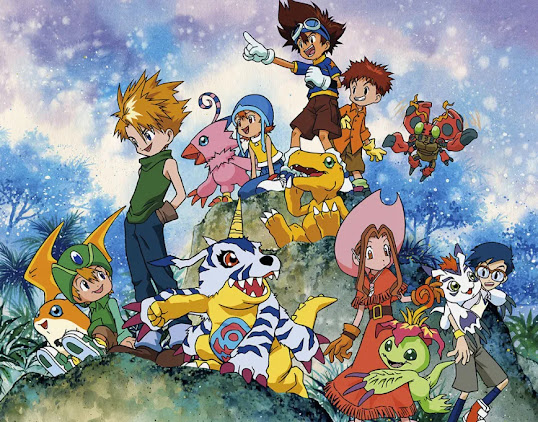
Lately I’ve been rewatching Digimon Adventure with my daughter. It has interesting enough music and action that she can stay interested in what’s going on. I wasn’t that much older when I saw these shows: the last Digimon I watched was Digimon Frontier on Disney XD. Before then, I watched Adventure with my brother around 2000. Streaming has given me access to them again, and they keep drawing me in. Being older, I think I have the chance to think on the shows more deeply. In Digimon’s essence is the spirit of love and brotherhood, of sacrifice and courage, of hope and faith, trust, family, loyalty, charity, and so much more. These things speak to my soul. Even themes around belief, religion, and Christianity spring up. Digimon may, on the surface level, be about immature children and fighting monsters, but that’s not the heart or the purpose of it. The themes of Digimon resonate very deeply along with my faith in Christ and in His gospel, and explore so much about our potential and growth as people.

Digimon, for those who have only heard the opening theme, follows seven children (about age eleven) who are enjoying their summer camp when mysterious Digivices fall from the sky, which they pick up, suddenly pulling them in to an entirely different world. They are chosen as the DigiDestined, tasked with rescuing the Digital World from destruction and evil. At the start, it’s merely a tale of survival and returning home: but being given faithful Digimon companions, and learning that the way to go home is to save the Digital World, they take on their DigiDestined roles. After defeating the first evil, they learn that in order to Digivolve their Digimon to be even stronger, they need to find crests. The journey of finding and activating the powers of the crests illustrates lessons for our own lives.
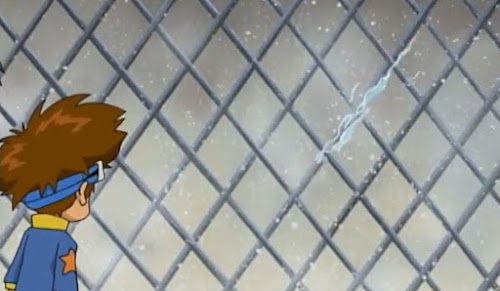
Around the middle of the season (there are 54 episodes in Digimon Adventure alone), Sora, one of the seven DigiDestined, is kidnapped along with her Digimon Biyomon. In order to rescue  her, they have to traverse a pyramid and walk through a hidden entryway of a lethal electric fence. Up to this point, the team had thought that whatever happens in the Digital World doesn’t fully effect the real world, and so Tai felt extremely gung-ho about jumping through the invisible hole in the fence. Just before this, however, Izzy, the tech-specialist of the team, warns Tai that anything in the Digital World, even death, has a permanent and real effect on the real world, including their real bodies. Faced with the possibility of death in order to save Sora, Tai completely freezes. The bad guy, Etemon, catches up to them, and they have to run without saving Sora. After regrouping, Tai breaks down in front of the others, crying:

“I couldn’t, I couldn’t move, it was all my fault, Sora, it was all my fault!”


The team consoles him, and they later manage to sneak back in. Tai faces the deadly electric fence again. He tells Izzy:

“If I don’t do this on my own, I may not ever be able to. A man must face himself before he can face his enemies.”

Tai then jumps through, breaks Sora free, and they all face Etemon together. At first Etemon is too strong for all the children and their Digimon combined, but this only emboldens Tai. Taking courage in this trial and drawing upon his earlier act of courage to save Sora, the power in Tai’s crest of courage activates, giving Greymon strength to digivolve to MetalGreymon. With this strength, they are able to defeat Etemon, but Tai and MetalGreymon are then sucked into a portal into another world, leaving the team behind. Things take a bit of a turn here.
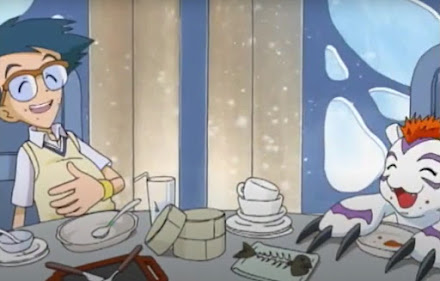

With Tai and Agumon gone, the team split up to try to find them. Joe and Gomamon find themselves at a diner and gorge themselves. Being a good kid, he works to pay off the meal, but the evil hench-”mon”, DemiDevimon, bribes the owner and then sabotages Joe by making him break dishes, or ruining meals. Matt and Gabumon find them, and try to help pay off the debt. This goes on for the course of several weeks. Slowly, the sabotage, lack of communication and anxiety, wears down and strains their friendship. All Matt sees is Joe trapping them for longer, and that’s enough for Matt to yell at Joe, and plan to leave. Fortunately, T.K. (Matt’s young brother) and Tokomon, show up, only to be captured by DemiDevimon and the owner. Gabumon digivolves into Garurumon, but that still isn’t strong enough. Joe sacrifices himself to save T.K., which makes Matt realize how bad of a friend he was, and his tears activate his crest, the crest of friendship. WereGarurumon is able to quickly dispatch the diner and DemiDevimon, and they become free. Matt is embarrassed, but apologizes to Joe. Is it childish? Perhaps, but these two very different and separate instances illustrate some vital lessons.
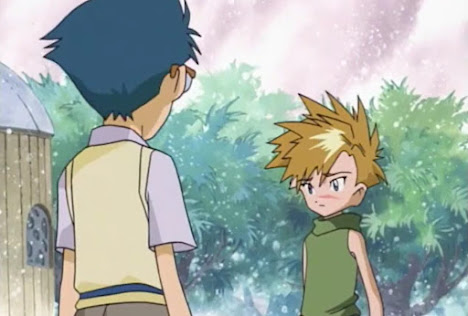

First, we are all human, and weak. Even when we are well intentioned, lack of understanding, lack of communication, and even our own strong emotions can get in the way of success. I think even us adults need to learn this lesson. I don’t always choose to forgive and be understanding.

Second, even the bravest of us can freeze and lose heart. We live in a day and an age where it’s been prophesied that the hearts of men will fail them. If you read my recent Halo post, you’ll know I can easily find myself paralyzed with fear. I really related to Tai’s inability to act when the moment was perilous. Fear is crippling, even when it isn’t rational. 

Third, how did these children find themselves chosen as the DigiDestined?  I think Paul the Apostle had something to say here:

“But God hath chosen the foolish things of the world to confound the wise; and God hath chosen the weak things of the world to confound the things which are mighty; And base things of the world, and things which are despised, hath God chosen, yea, and things which are not, to bring to nought things that are…” (1 Corinthians 1:27-28)
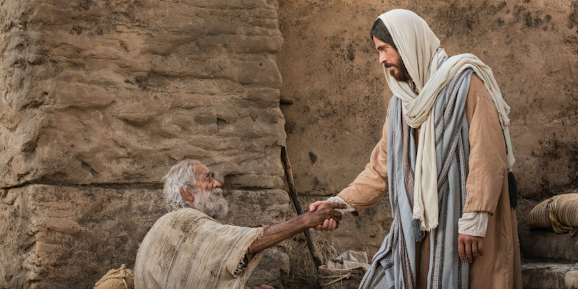

As I said, there are many parallels to the gospel. These kids were chosen. They face enemies that represent the devil, and some of their Digivolutions represent angels of light. Yet it wasn’t the biggest and bravest Digimon that were sent, nor older, more mature, and wiser adults, but it was children. And how did they become stronger themselves? By facing the refiner’s fire, by having to directly face their weaknesses: Tai had to face the chance of death, and Matt had to face his own pride, his unwillingness to admit he was wrong, and his anger. Sometimes our difficulties in life can be addressed that simply: we have to face our weaknesses. However, we don’t have to be alone in this journey. The team had their faithful Digimon to help them, but we have Christ. As the prophet Moroni wrote: 

“And if men come unto me I will show unto them their weakness. I give unto men weakness that they may be humble; and my grace is sufficient for all men that humble themselves before me; for if they humble themselves before me, and have faith in me, then will I make weak things become strong unto them.” (Ether 12:27)

That is why I keep following shows like Digimon, because they remind me of these principles. Even in the church, we can find ourselves surrounded by those who make massive blunders that seem to cripple the ability of the church to live up to the gospel message of hope. Sometimes, we will feel to yell. Sometimes, we will freeze when we feel promptings of the spirit. Instead of giving up, we can hold on to those principles of hope, faith, trust, and charity, and follow our Savior through the difficulties of life. I hope that we all can come to Christ, and humble ourselves, that through Christ we might not only become stronger, but our weaknesses themselves will become strengths.


Monday, December 2, 2019

Frozen II Review

(Guest Post by Ryan)

Frozen II was recently released, and it tells an incredible story with beautiful music, earnest acting, and elegant animation. What a fitting sophomore story for such a behemoth of a success six years ago. Though a review could be written of the entire movie, I wanted to focus on one very moving scene that happens toward the mid-ending of the film. Though the scene is described in detail below, no major plot points are given away in the description. However, if you’re sensitive to these kinds of things, this is your official spoiler warning.

Elsa encounters Nokk, the water spirit who guards the sea to Elsa’s destination. The guardian takes the form of a horse made of water, as eerily seen in early trailers. The horse appears as a creepy, forbidding character, and Elsa is shocked, but undeterred. She pressed forward. The two engage in an epic battle: the horse is unrelenting, Elsa is determined. The horse jumps, kicks, and blocks. Elsa defends, parries, and counters. The battle continues with both entities using their epic powers: the water horse splashes, Elsa freezes, the horse drags Elsa to the depths of the ocean, Elsa fights back. Finally, Elsa creates a reign for the horse, and barely, just barely, defeats the guardian. She mounts the horse, tames him, and uses the horse to continue on her journey. In fact, the horse becomes an ally to Elsa for the rest of the film.


Our mortal lives are filled with challenges and obstacles and things that can potentially make us feel weak. Difficulties that leave us in the lurch. Conflicts that hurt. Trials that test us, try us, and stretch us beyond what we think we’re capable of. But God doesn’t test us beyond what we are capable of. We can stretch. We can grow. We can turn our challenges into strengths that will actually help us in mortality. We can rein in and tame our struggles, and actually use the lessons we learn to become strengths that we draw upon in the future.

“If men come unto me I will show unto them their weakness. I give unto men weakness that they may be humble; and my grace is sufficient for all men that humble themselves before me; for if they humble themselves before me, and have faith in me, then will I make weak things become strong unto them.” (Ether 12:27)


Sunday, November 24, 2019

Sparkshorts Review: Float

(Guest Post by Ryan)

Pixar’s newest nearly wordless short, found only on Disney Plus, is relatable, allegorical, and cathartic. Float tells the story of an imperfect father and his imperfect son, who find perfection in their imperfection. Attention to detail is Pixar’s strength, and it comes through in things like the father’s crooked teeth, the son’s windswept hair, and the looks on the neighbors’ faces that simultaneously show both judgment and awe.

Float was written to tell the story of a father struggling with his son’s atypicality, reflective of director Bobby Rubio’s own struggles when his son was diagnosed with autism. But because Rubio chooses to use floating as the metaphor for autism, the short transcends pigeonholing, and can be applied to any number of divergences from what is considered normal. A boy who floats could just as easily be a girl with depression, a man with anxiety, or a woman who is an introvert.

And who can’t relate to the few spoken words in the short, which are so poignantly shouted, “Why can’t you just be normal?!”

At times heartbreaking, at times heartwarming, and at times both, Float encourages those with challenges, and their loved ones, to embrace their uniqueness. Negative challenges are present in any difference, like the boy in Float who might present differently than “the norm”. A child with depression might be chronically sad. A man with anxiety might have panic attacks. A woman who is an introvert might struggle to be a leader. These challenges are inherent, but if we focus on the negatives, they weigh us down, like so many rocks in our backpack.


But Float also teaches us that there is beauty in our challenges. When we embrace and love our whole selves, we gain perspective. Embracing our ourselves -- not in spite of our uniqueness, but because of our uniqueness -- is the key to finding self esteem and mental health. The boy in Float can do extraordinary things beyond the abilities of others. A child with depression might be more empathetic with those that need a listening ear. A man with anxiety might have more concern and care for others. A woman who is an introvert might be the best listener you’ve ever met.

“My grace is sufficient for thee: for my strength is made perfect in weakness. Most gladly therefore will I rather glory in my infirmities, that the power of Christ may rest upon me.” (2 Corinthians 12:9)


Tuesday, June 26, 2018

Grace in Their Failings

“Humans are odd. They think order and chaos are somehow opposites and try to control what won’t be. But there is grace in their failings. I think you missed that." (Vision, "Avengers: Age of Ultron")

When I was a missionary, we had a theme at one point based on Captain Moroni: “if all men had been … like unto Moroni, behold, the very powers of hell would have been shaken forever.” (Alma 48:17) Keeping that hell-shaker in mind, it was unfortunate when he lashed out at Pahoran, assuming selfish motives (see Alma 60). Noting that, during my last read-through, I was really impressed with Pahoran’s response. Instead of getting offended (especially with all Pahoran was going through) he “[rejoices] in the greatness of [Moroni’s] heart.” (Alma 61:9)

Pahoran saw the grace or silver lining in Moroni's anger. He must have known, as Father Lehi taught, about opposition in all things (see 2 Nephi 2:11). Pahoran had seen that Moroni was a strong man spiritually and emotionally. He knew the intent of Moroni's heart and was able to perceive his comrade's boldness and anger  as truly being love and courage, in defense of the Nephites.


Keeping these strengths and weaknesses in mind, it occurs to me that they're two sides of the same coin. Sometimes my biggest wound is getting hurt by investing in people quicker than they invest in me... conversely, that also leads me to love people more than I would otherwise. I know people who, because of their addictive behaviors, become the best addiction therapists. With grief comes compassion. With trials come faith (see Ether 12:6).

"And if men come unto me I will show unto them their weakness. I give unto men weakness that they may be humble; and my grace is sufficient for all men that humble themselves before me; for if they humble themselves before me, and have faith in me, then will I make weak things become strong unto them." (Ether 12:27)

I always read this scripture in seminary in the frame of mind that weaknesses would be taken away from me. However, it was pointed out to me in a BYU religion class that the actual scripture says "weakness", which I take to mean the natural man (see Mosiah 3:19). Because of the Fall of Adam, we are subjected to a fallen world. Because of this fallen world (aka our weakness) we are given the chance to be made perfect in Christ (see Moroni 10:32-33), where through Christ's atonement we are taught and changed to where our anger and boldness can be used as "greatness of heart" for the cause of God.

Monday, February 23, 2015

Stones in the River

We're going spiritual today.

Last week, I had the occasion to hang out with a good, close friend for a good period of time. This occasion left me feeling grateful and with a smile on my face. And many of you may say that I have plenty to smile about. I have a beautiful wife and the cutest children. And yes, that is true. But sometimes, having something extra to smile about because "husband" and "father" can be difficult alone. Being a friend is still needed. And sometimes, a kind word can do wonders to someone's day.


Today, whilst talking to a friend going through a hard time, an old EFY song came to mind. (Note: EFY means Especially For Youth. It's an annual week-long conference held at BYU where teens can go and get gospel strength and new friends.)

I heard first heard this song about 14 years ago from a friend of mine when he was going through a tough time. The song is called "Stones in the River." It's from the 1999 EFY soundtrack. (I didn't know EFY had soundtracks until I heard this song too.)

four years old at his front door
watches while his daddy drives away
he knows that something's wrong 
when he sees the tears on momma's face
and his whole life will change

teenage boy just down the road
suffering from choices in his life
he's turning to the lord
changing, getting stronger with time
but never knew it was so hard

like stones in the river
we are tossed and turned
when the current moves so strong
but stones in living waters over time
are shaped until the edges are gone
polished and smooth, that's what we will be
if we put ourselves in god's hands
each day of our lives is a gift from the giver
to smooth all the edges
like stones in the river

it's been three weeks since the last card of sympathy arrived
her love of thirty years is gone
she wonders how she will survive on her own

standing on the curb one winter night
they watch their house burn to the ground
family pictures, every keepsake
even her wedding gown
are they always gone?

like stones in the river
we are tossed and turned
when the current moves so strong
but stones in living waters over time
are shaped until the edges are gone
polished and smooth, that's what we will be
if we put ourselves in god's hands
each day of our lives is a gift from the giver
to smooth all the edges
like stones in the river

the trials of our lives can work for our good
if we let the savior's love surround us
he'll find us

like stones in the river
we are tossed and turned
when the current moves so strong
but stones in living waters over time
are shaped until the edges are gone
polished and smooth, that's what we will be
if we put ourselves in god's hands
each day of our lives is a gift from the giver
to smooth all the edges
like stones in the river

to smooth all the edges
like stones in the river


I love these lyrics. You can here the song here. There are those times in life when we feel like asking "why?" Why are these things happening to me? Why do I feel this way? Why can't I just have what they have? Why is everyone happy but me?

I'm a fan of finding deeper meaning to songs. Well, songs I really like and feel already have a good message. This song is about trials and what they can mean for us. That we are stones that get smoothed as we go through the river of life.

There's one key word I really want to focus on here, though. The word is "we". Wait, what? How is that important? It's such a simple, two-letter word. What's so important about "we"?

It's definition. "We" in the collective sense, are not alone in our trials. The stories in the songs tear at our heartstrings because they've happened to people we know. Or maybe to us. Perhaps we can only empathize that pain with our own individual, yet similar, experiences.

For me, there is always someone who can understand our pains. Sometimes, it requires a prayer. Sometimes, it's being vulnerable and speaking to a friend. Sometimes, it's just a slap in the face reminder that we're not alone and need to get off our case. Not sure. But it is better knowing I am not alone. I do have a wonderful and understanding wife. I do have beautiful children who can make me smile and bring me such great joy. I do have good friends who can cheer me up when I'm down or listen to me complain about whatever it is I need to complain about.

Life isn't always peachy keen. It just isn't. But it's good to know that we're going down this river with other stones whose edges are also being smoothed.

Alien abductions are involuntary, but probings are scheduled.

Thursday, April 19, 2012

Escaping Escapism

The real world is unfair.  I got my first speeding ticket in my entire life a few weeks ago.  Because of this, I spent $90 to pay for the citation and now my insurance rates have gone up 20 or so dollars a month.  I feel taken advantage of as a student worker at my University and know the posters I've designed are worth a lot more then what I've been paid for.

This is why video games are so great.  In Hyrule, I don't have to be Stephen Larsen.  I can be the Hero of Time.  In a session of Dungeons and Dragons I can be a level 8 Tiefling druid that lets all emotional issues just roll off his back.  Why stay grounded in reality when the weather in Narnia is so nice this time of year?

Escapism is often central to many a geek's past time.  They will play a game, read a book, or maybe watch a movie to just step away from reality for a few hours.  This can be really healthy or it can be spiritually destructive.  Being a geek must be a balanced life.  The pleasures of our life must compliment our lives not destroy them.  Escapism is found a number of different ways, both healthy and unhealthy, but how do we find balance in the experience of our alter realities?

What is escapism?
Escapism is using a form of entertainment to distract oneself from harsh reality.  This can be idle or destructive or a form of wholesome recreation.  Escapism may not necessarily be bad depending on how it is exercised.  Plenty of people that aren't considered "geek" will read books, play video games, or watch a movie to escape.  In fact, movies during the 1930's and 1940's were often the perfect distraction from the harsh realities of the great depression or World War II to help people stay sane.  The messages could give them hope.  The time away gave them time to breathe before returning to the challenges they faced.  So when does escapism become unhealthy?


Why do we escape?
Don't get me wrong, there isn't anything bad with enjoying your experience of being in a different world by way of entertainment.  A geeky activity can be a wholesome form of recreation.  For me, I love the creative outlet that I can get from Dungeons and Dragons.  I love being able to act and draw the characters.  I love the interaction and being someone else to appreciate myself better.  Playing games is also a great stress relief.  Different stories in entertainment can expand our imaginations.  The healthiest reason to escape is when we really connect with ourselves and get to be ourselves.

Geeky pastimes can be wholesome recreation for
friends and family.

I feel that being yourself is an important spiritual principle often overlooked.  We can still be Christlike and obedient to our Heavenly Father's commandments while retaining our personality.  One of my mission presidents once told us in a zone conference, "Don't let anyone take away your personality because that is what makes you like your Heavenly Father."  This resonated with me.  When we enter the spirit world my Heavenly Father will not ask me, "Why weren't you John Lasseter?" (John Lasseter is an animation hero of mine.)  He will ask, "Why weren't you Stephen Larsen?"  A good, healthy escape can be a great way for us to be ourselves.

Escapism can also be abused and can be a breeding ground for idleness and other spiritually destructive behaviors.  In our weakness we will sometimes escape for validation.  We play games to feel powerful because we don't feel powerful in real life.  When that power is threatened we can turn into anal gamers and poor sports.  (Athletic people will do this too.  They do it playing sports.)  If we are unsatisfied in our life, we will turn to games for a false sense of accomplishment.  We will also turn to entertainment to avoid responsibilities.  If there's something painful that we are experience, then we will seek to numb our feelings and suddenly our escapism becomes an addiction.


"I love it too Bill. ...Bill, it's been 10 minutes.  Let's go."

All of this boils down to beliefs we have about ourselves.  We think, "I'm not pretty," "I'm not powerful," "I'm not manly," "I'm fat," or "I'm not brave."  It's these beliefs we must change about ourselves before we escape to the world of Warcraft, Hyrule, Panem, Forks (Washinton), or some other faux-reality. Playing these games, watching these movies, or reading these books won't change these beliefs.  Believing that they will when we don't turn to the Atonement for comfort is idol worship.  Beliefs like this must be changed if we're ever to find true happiness.

Spending too long in our escape can also cause delusion or unrealistic expectations.  A book about sparkly vampires can create unrealistic expectations in both men and in relationships.  Spending so much time leveling your character in Skyrim can lead you to think that you've leveled up in real life. This doesn't necessarily mean an actual belief you can cast fireballs.  It may mean a sense of pride and over identifying with the world you so frequently visit.  This can be a belief that you're above people with whom you play or even work.


How do we escape escapism?
So we recognize what escapism is.  We can even differentiate between what is healthy and what isn't.  But how do we escape unhealthy escapism?  Sometimes the realities that we create are so comfortable we find it difficult to leave them.  If an addiction has fostered then it may even feel impossible.  Reconnecting to reality can be made possible by socializing, filling your life with healthy activities, and changing beliefs about yourself.

Socializing is probably the most obvious way to reconnect to reality.  I'm not talking about talking to friends over the internet, texting them, or calling them on the phone.  The proper and most healthy socialization you could participate in is face-to-face.  Look people in their eyes when you talk to them.  Make an effort to really connect.  Doing this will ground you in reality.

The next thing we can do to overcome escapism is to fill our life with healthy activities.  Get outside to soak up some sun.  A good hike is healthy and reminds you how beautiful this earth is.  In addition to hiking there are plenty of geek friendly athletics you can participate in.  These healthy activities can even be inside.  The point is that your healthy activities should take you away from whatever your outlet is to have escapism.

Really, the end all of really grounding ourselves in reality is changing the negative beliefs about ourselves.  I can't stress this enough because this is exactly what I needed to do growing up.  Growing up, I used video games and online roleplaying to be someone I really wanted to be.  I didn't like how I looked or who I was.  I wasn't thankful for the body my Heavenly Father gave me.  I was prideful not humble.  Being humble means that you embrace yourself in all of your imperfections, putting faith in the atonement, and forgiving yourself of your shortcomings.  Pride is not forgiving yourself and believing that you're too bad for the atonement.

So how do we change these beliefs about ourselves?  Things that helped me was setting life goals to help me stretch.  Doing this helped me see that I could do it!  I could work towards getting what I wanted out of life.  Even if I didn't get that internship, or move to where I wanted to live, I grew into a man that I liked being.  I started to see that the improvements and the growth I experienced was real.  It just couldn't be measured in whether or not I had a degree or even good grades.  Why should we measure our self worth by someone else's standards?

Setting goals took me outside my comfort zone.  I had to do and face things that scared me.  I did stuff that was insane--like buying a plane ticket to Southern California for a job interview.  I didn't get the job but became more dedicated in meeting my goals.  I became more dedicated to being the man I wanted to be and not trying to be that man in Skyrim, The City of Rapture, or the Kingdom of Hyrule.  When we stretch ourselves to prove ourselves we become our own heroes!

None of this advice will really help you unless you involve the savior.  Share your goals with Him, your feelings with Him, and your struggles with Him in mighty prayer.  Embrace your weakness that you can fully embrace His strength.  Ammon from the Book of Mormon gives us a perfect example of this attitude.

Yea, I know that I am nothing; as to my strength I am weak; therefore I will not boast of myself, but I will boast of my God, for in his strength I can do all things; yea, behold, many mighty miracles we have wrought in this land, for which we will praise his name forever. (Alma 26:12) 
We can’t change these negative beliefs by ourselves. We have to allow the power of the atonement to work in us through prayer, fasting, and exercising our faith in our savior. Thankfully, He is with us every step if we let him in.


Conclusion
I can honestly say that my failures have made me a better man.  I love who I am now.  I love that my relationship with geeky entertainment and past times is much healthier now.  I know that my relationship with my Heavenly Father is at a better place too.  No, I can't bend the earth beneath my feet with kung fu moves.  No, I haven't saved any princesses lately.  Yes, I'm still a skinny twig that can barely lift a weight.  But I'm a child of God and that's more than good enough for me.


--Stephen