I thought I had finished doing Disney-themed Pokemon nicknames (at least through the generations I was familiar with) but while watching Disney movies with my daughters, I thought of plenty more--we're pretty much always watching a Disney movie. I felt like I had too many new ones to fit in another blog post, so here's a sampling of the new nicknames I came up with.
Last month, we took our five-year-old to see Moana 2 for her birthday. It was her first time at the movie theater and if her hanging off the handrail (like Moana hanging on the boat) is any indication, she loved the movie. Sequels are always hit and miss and while I can't pinpoint if I liked Moana 2 more or less than the original, but it resonated with me and hit me hard in the feels.
Spoilers ahead.
My 5-year-old was literally hanging onto the railing like this.
Going Beyond
Shortly after finding "Beyond" on Spotify, I shared my initial impressions about the song on the podcast. I went into the movie without much context for the song and was kind of worried that the context of the movie might change the song for me. Not so.
With Moana going further than her ancestors had gone before, she risks never returning to her sister and she has to face fears she didn't know she had. Like her grandmother's spirit tells her in the movie, three years after her initial voyage with Maui, she knows what she has to lose now. This (the song and movie) all happened as I accepted and prepared for a new job. I was at my last job for over three years (not unlike Moana 2 taking place three years after the original).
Going beyond what's known or familiar is scary. I started my new job last week and I'm reminded how much I struggle with change--even when I know it's the right move. It's a good thing that my daughter loves "Beyond" so much because I've been using it as my anthem to give me strength when I feel too stressed or intimidated by all the changes. The fear is still there and there have been plenty of tears (the movie made my wife and I both cry) but there is resolve.
I loved seeing other ancestors, like Tautai, as animal spirits.
Isolation
I tried to find the exact quote but couldn't, so I'll have to paraphrase. When the spirit of Tautai Vasa appeared to Moana to set off the adventure, he told Moana that isolation would be the end of their story. That's why the journey in Moana 2 was so important... Nalo had separated the peoples of the ocean and kept them isolated for generations. To join together and to grow together would mean life for Moana's people.
Similarly, the adversary often tries to keep us in isolation. Through sin, addiction, mental health struggles, or whatever else he can use against us, Satan wants us to stay isolated because he knows that's how our stories end. Before I met my wife, I thought of abandoning roommate life and living by myself. A wise bishop reminded me that "it is not good for man to be alone" (Genesis 2:18) and while that scripture is directly related to Adam's need for Eve, I've never forgotten how it applied to me. Sure, some people thrive living on their own, but I think that bishop knew me well enough to know that I'd end up isolated.
We need other people in our stories. That's why we have families. That's why we have the Church. And I can tell you the difference it makes for me when I reach out and actively avoid isolation (and I can "isolate" even when I'm surrounded by family, coworkers, patients, etc.). Even just in my first week, I noticed the difference I felt mentally and emotionally when I tried connecting with patients and coworkers, instead of letting myself drift into the background because I'm new and insecure. So while there's something to be said for "me time", nothing good comes from isolation.
Getting Lost
I'm the type of person who likes to know what to expect and to have a certain amount of structure in my day. Even on a day off, I like to have a certain amount of plan to optimize my self-care (if that's even possible). Part of going "beyond" has meant having no clue what to expect in my new job and the new year. It's meant trusting in the Spirit's guidance as I figure life out day by day.
While on the surface it sounded like a classic villain song, Matangi's "Get Lost" can be encouraging. Though it sounded like she was manipulating Moana, her advice was not unfounded. Despite my wish to have a clear path, my life has never played out like that. Sometimes the best advice really is to "get lost" and try something unexpected. Combine that advice with Anna's "The Next Right Thing" and it can be helpful in getting out of the rut I feel when stressors feel too heavy to carry.
I could have a perfect to-do list and plan to get everything done and check all the boxes. Sometimes the best thing to do is go with the flow and "get lost". I don't know. I'm still figuring that one out, but in the movie Moana thought she knew exactly what to do or what she was supposed to do. And while Matangi's song sounded manipulative, it showed Moana how to get out of her own way so that she could rescue her crew (and Maui) and save her people.
"Beyond" These Lessons
I feel like I could keep saying more and more about this movie and the lessons I've learned from it and the songs. There are themes throughout the movie pointing towards identity, community, leadership, diversity, and self-confidence. I'll certainly watch it again after it hits Disney Plus (and I'm sure my daughter hanging off the couch this time) so don't be surprised if there's more Moana content from me in the future. Just like the credit scene setting up another sequel or Disney Plus series, there's more to come here.
My daughter loves music. It is one of the joys of my day to see her look at the blank TV and start waving her hand as if directing music. This is her cue that she is ready for listening to music on the TV. We have introduced her to the likes of the Tabernacle Choir, Home Free and their many guests, BYU’s Vocal Point and Noteworthy, and, of course, a myriad of Disney music. One favorite has become “I’ve got a Dream” from Disney’s Tangled. In one of the more recent viewings of this song, I received a insight that reminded me of Elder Sabin’s October 2023 General Conference talk, “Hallmarks of Happiness.” Let me set the stage and make the connection.
In his attempts to scare Rapunzel away from the real world, Flynn Ryder takes Rapunzel to “The Snuggly Duckling,” a tavern of sorts with all sorts of ne'er-do wells. Initially, things look bleak as no one seems to be in the mood to help an innocent looking girl and her vest wearing accomplice. But, in a stroke of chance, her mentioning that she is on a quest of sorts to fulfill her dream, these ruffians’ hearts are pricked and the ensuing song, “I’ve Got a Dream” begins. The number opens with a Hook handed thug (that is how he is referenced in the credits, no name, just “Hook Hand Thug”) expounding on his harsh nature but inner desire to be a concert pianist. Let me pause a moment to reference Elder Sabin’s talk. He shared the following story:
“Several years ago, on a flight home from a Church assignment, Sister Sabin and I found ourselves seated directly behind a very large man who had a big, angry face tattooed on the back of his bald head as well as the number 439.
"When we landed, I said, 'Excuse me, sir. Do you mind if I ask the significance of the number tattooed on the back of your head?’ I didn’t dare ask about the angry face.
"He said, ‘That’s me. That’s who I am. I own that territory: 219!’
"Four hundred and thirty-nine was the actual number on his head, so I was surprised he got it wrong since it was so important to him.
"I thought how sad it was that this man’s identity and self-esteem were based on a number associated with a gang territory. I thought to myself: This tough-looking man was once someone’s little boy who still needed to feel valued and to belong. If only he knew who he really was and to whom he really belonged, for we have all been ‘bought with a price.’”
I suppose I made the connection between these 2 stories because of the follicular challenged nature of the men in both stories, Hook Hand Thug, and Unnamed Man with 439 on his head. I think both the song and Elder Sabin’s commentary after the story highlight the truth that each person is a child of God and that at some point, everyone was someone’s little boy or little girl with dreams much bigger than how their life may have gone. So the next time you see someone who is “malicious, mean, or scary,” has a “sneer that could curdle dairy” try to remember that “way down deep inside” they’ve got a dream.
One night, I walked in on my parents, my niece and my nephew watching Frozen. Viewers may know that this is a story about a princess who has special powers involving snow and ice. She struggles to control these powers, as they are closely related to how she is feeling, and it sparks fear in people of Arendelle. She gets taught, or eventually learns, to “conceal” and “not feel.” Eventually she leaves Arendelle and heads into the mountains, in part, to protect her sister and others she loves. There’s an element of shame and self-hatred for this part of her. There in the mountains, she “lets go” and creates several things made out of ice and sees what she can do.
It’s pretty much common knowledge that the story of Elsa was compared to “being yourself” and “letting go” of all restraint, no matter the moral consequences. Some people loved it for that reason. Other people were opposed. However, I was shocked at how much I resonated with her story this time. I’d like to share a slightly different take on it
“Don’t feel…” Being raised in the Church I knew what “not to do” by way of the commandments, but I accidentally learned to fear my own humanity, as if my being was somehow opposed to God and His laws. I had inclinations and habits that I was ashamed of and I tried to stuff them away in order to be “good enough” for God. I reckon all of us might have aspects about ourselves that we are ashamed of, whether they be temptations, our body image, or simply passions and desires that go along with being human beings. We attempt to hide them from God out of shame…as if He doesn’t already know every aspect of our being.
“Let it Go” is a song that I know was problematic for some people, as I mentioned. The thing is, many different interpretations are understandable. For me this song was an example of Elsa “letting go” of the things people said about her and her powers and that expectation to “not feel.” This could be any sort of unhelpful and unintentional cultural baggage that Latter-day Saints and other people of faith might pick up on their journeys trying to follow the Savior. It’s “letting go” of the negative views of one’s self and his or her attributes.
This “letting go” might look different in a variety of ways…it’s a process I’m still going through, but I’m also learning more about what a personal relationship with Christ can be like and that I can trust myself when I’m in alignment with Him on the “little things,” like scripture study, temple attendance and fervent prayer. I am “letting go” of various expectations that were unintentionally put upon me by others and finding a deeper moral compass. I am “letting go” of the “should’s” and “shouldn’t’s” and finding a more earnest desire to follow Christ. I am opening my heart and allowing Him to see and love all of me.
This next part is the part that I often feel gets left out when creating an analogy to Elsa’s powers. Elsa eventually learned to appreciate her powers and use them for good. This is parallel to when I think of using my own gifts, attributes and passions “within the bounds the Lord has set.” My covenants with Him are still important. And I believe those boundaries have helped me to understand myself from a place of safety…and yet I know the Atonement is there for me too if I do make mistakes, and I didn’t appreciate it enough before.
Just as Elsa released herself from the shackles of what other people thought and expected, I too am learning to discern between what other people think versus what God thinks. Knowing that He loves me fully and perfectly…that He understands my every desire and inclination…and that His love will be there no matter what I choose to do with my life…that kind of love makes me want to stay as close to Him as possible.
The Disney renaissance was a huge transformation in the animation and entertainment world. The Little Mermaid was the breakout success Disney needed to reinvest in animation, and Beauty and the Beast confirmed that they could produce a critical and commercial powerhouse, surpassing Little Mermaid’s box office records.
This animation renaissance is considered to have ended with the nineties, but in 2013 Frozen’s commercial success and critical reviews are thought by some to have begun a second Disney renaissance. And the musical, Disney-princess film which followed Frozen was Moana.
Beauty and the Beast and Moana appeared at interestingly similar times for Disney animation. Could the studio reproduce comparable results a second time, an original story, music, and characters that could bring in audiences again in the same numbers? Moana did not break Frozen’s ridiculously high box office numbers, but it did still perform well at the year’s awards. Beauty and the Beast garnered still legendary levels of prestige and is revived again and again in its Broadway musical form (I’m intentionally ignoring the live-action remake of BatB to keep the focus on the animated version). Both of these films succeeded extremely well. How different are they, when you look at them closely?
Story Hooks: Character Growth vs. Epic Quest
BatB asks with timeless fairytale mystique, who can learn to love a beast? Implied with this question, we wonder with the film if there is any hope for the cursed and the wretched?
Moana asks, who will return the heart of Te Fiti? This quest is in the style of an Odyssey/Frodo and Sam trek to Mordor fantasy journey. The deeper question, as we learn later on this film, is what do we keep by remembering who we are?
Individual Identity
Belle is a stable, if not yet fully realized, personality. She seems to pick up the slack left by her bumbling yet brilliant father, while keeping her own inquisitive mind from decay with frequent trips to the village for books. Surrounded by dull normies and her father, she is torn between caretaking and making the most of her quickly vanishing youth. She wants more, but perhaps as the vagueness of her ‘I want song’ implies, she hasn’t gotten the time to herself to figure out what precisely it is she wants. But she sure-as-heck knows it’s not marrying Gaston, or being a crazy cat lady in her hole-in-the-wall french village. Belle seems already to have come of age, and all but bloomed as a confident woman, but finds herself bearing adult responsibilities that preclude the hope of adventure in the great wide somewhere, or finding someone who sees her as unforgivably “different from the rest of us”.
Moana’s story is about coming of age. While she has a leadership role and will inherit an island kingdom, she is being parented hard by her Father and Mother into leading in their way (gasp, Disney kids can have moms?). The island life is obviously great for everyone, including Moana, but this pesky fixation on what exists out on the sea is the worst combination of distraction and longing. Her inner conflict fits a younger profile, with the adolescent need to rebel, and interact with the real world beyond adult supervision. And we find that Moana is being chosen by otherworldly powers to do a job which presumably no one else has been capable or willing to do until now.
Cultural Identity
Belle is like her father, a tolerated oddball. Since she is easy on the eyes people are obsessed with her perplexing originality. Gaston in particular sees her as an unattainable conquest only he, or so he thinks, is capable of achieving. No wonder she is determined to go just about anywhere but there (not to subvert her sacrifice later of staying with the Beast. But heck, it seems like it should have crossed her mind at some point “I may be a hostage in this enchanted castle, but it’s honestly not much worse than that village full of bumpkins.”
Moana is the heir, and still a child, highly controlled by her parents. Her story follow a Disney pattern new for the 2000s, being that her storyline does not include any romance. Not only perhaps because of the inappropriateness for a character her age to fall in love, but also the sense that the creators wanted to show a young girl coming into her own without depending on the support of a romance B plot.
Character Arc
Belle goes from a life of upholding responsibility and enduring life as an outsider in her own hometown to being a prisoner in the beast’s house, and discovers both what she wants and needs in a hopeless place.
Moana accepts call to adventure, and faces challenges that demand she develop the confidence she needs to both become a better version of herself, but also to lead a better version of her community.
Antagonists and Villains
The Beast himself is both a villain and an antagonist to Belle’s heroine. He takes her prisoner, yells and threatens her, but after saving her from a wolf pack in the woods, and allowing her to nurse his wounds, they grow from an uneasy alliance to a deep friendship.
Gaston has a distinct character as a poster child for indulgent narcissism that an entire village supports without question. His desire to squash all resistance from Belle and basically subjugate her goes so far as a to recruit the entire village, exploit their fear of the unknown and raid a castle to KILL THE BEAST (such an amazing Disney song.)
Interestingly, the crowning moment of Beast’s transition from antagonist to hero comes from seeing Gaston’s terror when facing his own death, and then literally being stabbed in the back. Beast was ready to kill Gaston in order to save Belle from a life in his rustic hunting lodge, but instead showed mercy. This decision, and the moment when Belle realizes that losing Beast means losing the man she loves finally breaks the curse and allows him to shed the horns and the fur, and be reborn and live a new life capable of loving and being loved.
Moana’s antagonist is a little hazier. Yes, Tamatoa that glam crab is a villain in his own right, but only deserves honorable mention here. Te Ka is the accepted villain of the movie, the final boss battle, if you will. Of course, Te Ka (spoiler alert) winds up being the heartless form of Te Fiti, the goddess of all life. She reverts back immediately once Moana returns her heart. Her transformation is a wonderful moment and a lovely twist, but doesn't ring true to me as the deepest transformative moment in terms of the underlying story. Maui is an antagonist as well, who mostly impedes Moana’s progress toward returning the heart of Te Fiti, until the final hour when he comes to his senses.
Honestly, I think the true antagonist, if not the villain, of the show is Moana’s Father. His desire to shield and herd Moana away from the ocean are the most profound obstacles to her pursuing her destiny to voyage and commence her hero’s journey. The movie gives relatively little time to Moana’s father, but we do know that he deliberately ended voyaging for the village after a terrible experience losing his friend in a boating accident. As bad as we may feel for this happening, his reaction of course stunts the growth of his people in awful ways, torturing his daughter perhaps the most of all. I don't recall a moment at the end acknowledging his overreaction the needed change back to the villages rightful ways of voyaging. This transformation and forgiveness could have made an already good movie much stronger, in my opinion.
A Brief Word about the Music
If you want to know the actual reason for me writing this article, it’s because of the music. My wife and I have a playlist with songs for driving. There is one song from Beauty and the Beast, and one song from Moana on this playlist, and both of them have this ability to give me goosebumps on command.
Moana
The call isn’t out there at all
It’s inside me
It’s like the tide,
Always falling and rising
I will carry you here in my heart
You’ll remind me
That come what may, I know the way
I am Moana
Beauty and the Beast
I was the one who had it all
I was the master of my fate
I never needed anybody in my life
I learned the truth too late
I'll never shake away the pain
I close my eyes, but she's still there
I let her steal into my melancholy heart
It's more than I can bear
Now I know she'll never leave me
Even as she runs away
She will still torment me, calm me, hurt me
Move me, come what may
Wasting in my lonely tower
Waiting by an open door
I'll fool myself, she'll walk right in
And be with me for evermore
I know, I know, the BatB song I chose wasn’t part of the animated version. But it has become a part of the story for me, and doesn’t diminish the rest of the BatB soundtrack in any way to acknowledge it as well. The article above is honestly a way of me exploring why the feelings in these songs have so much power and depth. These stories demonstrate progression through fantastical challenges that create a lovely shift in the way I perceive the challenges of my own life.
At the core of both movies is a transformative journey. For Belle, that journey is in her capacity to see the potential within other people, something there that wasn’t (to her knowledge) there before. While Belle’s journey from home does not go where she expected, Belle finds exactly the life she needs by blooming where she is planted.
For Moana, her transformation comes through finding the confidence in herself to act, and follow through on her epic task. She herself must go through an epic transformation, complete with a Gandalf-esque mentor (her grandma) and numerous trials from coconut warriors riding barges straight out of Waterworld to a bout in the underworld of epic monsters. And indeed, that confidence carries over into transforming the rest of her village after returning home from her voyages.
What inner transformation from a Disney movie most inspired you? I’d love to hear about it! Thanks for reading.
So with the success of my last rent-free post, I figured I'd do one exclusively for my favorite mega-corporation: Disney!
So here's my ADHD/caffeine/sugar fueled journey through the Disney animated universe! :D
So This Is Love and The Transformation (Cinderella)
I love the 1950 animated Cinderella movie to death, so this movie gets two slots. The first one is when Fairy Godmother transforms Cinderella's dress. The animation alone is just incredibly beautiful, and after everything Cinderella's been through this was a deserved glow-up.
The second is the song So This Is Love. I will find myself singing this in the shower when I'm in a good mood. And yes, I know that Cinderella and the Prince exchange maybe three words before they dance and then fall in love but the song is just so pretty and also indicative of how Cinderella is appreciating what she's feeling in the moment. The animation is also beautiful in this scene (Seriously can we please go back to watercolor backgrounds?) and I love Lady Tremaine getting blocked at every opportunity.
9: Part Of Your World Reprise (The Little Mermaid)
I already mentioned this in my other post but I don't care this is a good enough scene to mention twice.
8: Ohana Means Family (Lilo and Stitch)
No they're not all songs, some of them are moments. And of course, Lilo and Stitch is going to be on this list.
This is near the end of the movie where Stitch convinces the alien ambassador to let him stay on Earth. Stitch explains in his limited English what family is, and how he has found a family in Lilo and Nani.
It's little and broken, but still good.
Yeah, still good.
7: You Came Back (Beauty and the Beast)
Beast's death scene is so full of emotion. Beast is surprised that Belle came back, and here Belle is finally able to understand that she does love the Beast. She had already loved him but I don't think she realized it until now. It is in this moment that the Beast finally understands what it means to love and be loved in return.
6: Dress in Drag and do the Hula (Lion King)
So far all these moments have been romantic, poignant, and general feeling tuggers. This one though is none of that. It's just a quick line and an impromptu musical number that makes me giggle every time. I use it whenever I can, which if you're creative can be quite often.
Also this is literally the only time I like Timon and Pumbaa
5: Happy Happy Birthday (The Emperor's New Groove)
Can we all just agree that The Emperor's New Groove just nailed it? I love everything about this movie but Yzma is my kindred spirit. An angry old lady who is done with everyone and this scene is a perfect example of that. As a distraction, Kuzco sends the servers at the little diner to sing happy birthday to the villain and her reaction is just glorious.
4: Party Crashing (Sleeping Beauty)
Nobody can make an entrance like Maleficent, the Dame of All Evil. When we first meet her she's crashed Princess Aurora's christening, put out because she wasn't invited. She's a terrifying presence, without ever really saying anything overtly threatening, just being there is enough to make everyone's skin crawl. This is how I want to enter every room for the rest of my life.
3: Todashi is Here (Big Hero 6)
At the core of Big Hero 6is grief, something that everyone can or will some day have to relate to. Hiro is trying to extract vengeance on the people responsible for his brother Tadashi's death. In one scene Baymax reveals that he has videos of Tadashi trouble shooting his robot, showing Hiro that his brother lives on through his creation and the memories Hiro has of him, and that by turning Baymax into a weapon of vengeance dishonors his memory. This is also when Hiro breaks down crying, truly embracing his grief.
2: Senior Psychopath (Aladdin)
Another moment that makes me giggle is when Aladdin comes back from his trip to the North Pole to find the palace in chaos and under Jafar's evil control. When Aladdin meets up with the Genie, well the scene speaks for itself.
1: I Won't Say (I'm In Love) Hercules
Ugh I think everything on Disney+ lives rent free in my head honestly, these are just 10 that I could think of right now. I didn't even touch Out There, God Help The Outcasts and Hellfire from The Hunchback of Notre Dame, or Tarzan, or every scene with Cruella DeVille, so I'm going to put up the song that I sing to myself often to remind myself that just because I've been burned before it doesn't mean that I'll be burned again.
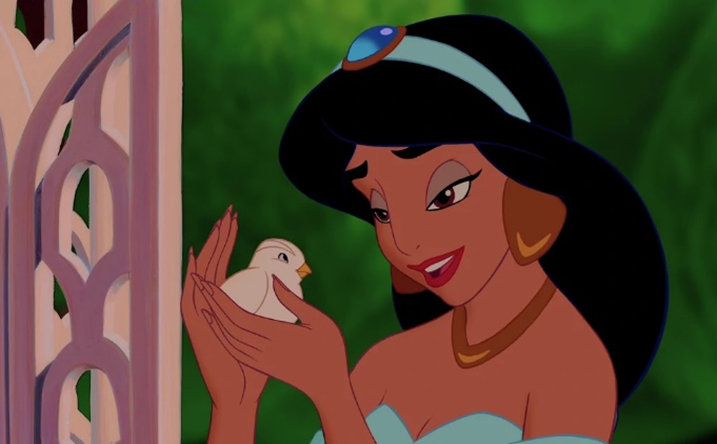
On November 25, 1992, “Aladdin,” Walt Disney Pictures’ 31st animated film premiered in theaters. Loving Disney feature animation, I was excited to see the newest addition to their canon. However, these feelings were tempered by the preconceived idea that I wouldn’t love it like “Beauty and the Beast” released the previous year. When I watched Aladdin on the big screen for the first time, I was immediately drawn in by the gorgeously detailed hand drawn and computer animation and the music by Alan Menken, Tim Rice, and the late Howard Ashman. Surprisingly the movie surpassed Beauty and the Beast in becoming my favorite Disney film. The moment was the appearance of the Sultan of Agrabah’s daughter, Princess Jasmine.
In the Princess’ introductory scene, I learned that she was being required to marry a man of the same social status by a predetermined date (Jasmine’s “next birthday”). In addition, the royal remained in the palace confines by her loving yet overprotective father. Like Belle, I quickly related to Jasmine. As a thirteen-year-old boy, I wasn’t royal, and marriage wasn’t even near the horizon. However, I began feeling the constraints of my parents’ rules. I was growing older and wanted to decide how to live my life.
Since my first encounter with her, I’ve been inspired by Jasmine’s characteristics exhibited in Aladdin and its adaptations to Broadway, television, and live-action film. In the original animated feature, I admire Jasmine’s independence. From the beginning, the princess is willing to utilize it and reject Prince Achmed as a potential husband. She is unafraid to vocalize to her father that she wants love to be the reason she marries and not because a law demands it or to satisfy the Sultan. Jasmine demonstrates her autonomy when she condemns Aladdin (disguised as Prince Ali), the Sultan, and Jafar for debating what’s best for her life. She states, “I am not a prize to be won!” When Aladdin offers the royal the chance to leave the palace via magic carpet, she willingly accepts. After Jafar takes over the kingdom, the deposed royal defies the evil new sovereign by refusing to bow and later rejects his offer to become his queen to end her enslavement. The most powerful moment where Jasmine exercises her independence is when the Sultan alters the marriage law to which she happily declares that Aladdin is her choice.
I like the observing and introspective nature Jasmine displays in the Broadway version of Aladdin. In her solo, the princess expresses frustration with specific demands of her royal station, especially the requirement to wed a man she doesn’t know or love. She knows that her suitors are only interested in her wealth. As the royal and her handmaidens sing about her situation, Jasmine recognizes that if she doesn’t listen to her heart and change course, she’ll end up bitter and unfeeling. This self-realization cements for the princess that she needs to leave the strict security of the palace and find what she is yearning for.
In the retelling of Aladdin in the television series Once Upon a Time, I love how Jasmine’s leadership is exhibited. Determined to end Jafar’s control over her father and Agrabah, the princess seeks out the mythical “diamond in the rough” which turns out to be Aladdin. When the evil sorcerer re-emerges as a threat after initially being stopped, Jasmine rejects the Sultan’s proposed plan for protection which would require her marrying a prince who possesses a military. Instead, she searches for Aladdin (who has disappeared) to enlist his help again. The royal is ready to make the sacrifice and willingly marry her people’s enemy when it appears her options have run out. Even though Jasmine faces setbacks, the princess perseveres. In doing so, Jafar is ultimately defeated and Agrabah is free and safe.
I’m affected by Jasmine’s self-advocacy in the Aladdin live-action remake. The possibility of succeeding her father as Agrabah’s ruler is questioned by Jasmine’s handmaiden, Dahlia, and dismissed by the Sultan and Jafar. This doesn’t stop Jasmine from expressing herself. The most dramatic moment of this is when Jafar usurps the throne. The princess powerfully persuades Hakim, the Captain of the Guard to continue supporting the rightful royal family. Through this demonstration and Jasmine’s subsequent willingness to stand up to their enemy, the Sultan realizes that his daughter is capable of reigning. He abdicates allowing the princess to become a female Sultan.
Since seeing Aladdin during the 1992 holiday season, the Princess of Agrabah has been and continues to be an inspiration. I had the unbelievable opportunity to meet her speaking voice, Linda Larkin and share how Jasmine has influenced my life. In honor of the 30th anniversary of Aladdin’s theatrical release, this post is dedicated to one of my most beloved Disney Princesses. Happy 30th Anniversary, Jasmine! Thanks to you, “I’m like a shooting star. I’ve come so far. I can’t go back to where I used to be!”
When Disney Plus first came out, I thought it would be fun to watch the Tangled TV series entitled Rapunzel’s Tangle Adventures. I remembered watching Aladdin, Timon and Pumbaa, and other Disney cartoons while growing up, so I expected a low-key Disney kids show to watch with my newborn. What I got was much more than a kids show. In fact, some of the scenes were dark enough that I was kind of surprised it was for children.
The story follows Rapunzel and Eugene following the movie Tangled. It goes into this deep mythology of where Rapunzel’s powers came from and what her destiny would entail. However, as intriguing as the mystery of the Sun Drop was, I was more interested in the development of the conman formally known as Flynn Rider.
In addition to the backstory of Gothel’s magical flower, we got some backstory on our beloved rogue. Before he was Eugune or Flynn, he was Prince Horace of the Dark Kingdom. Without giving too much away, baby Prince Horace was sent away from his father for his protection and was raised as an orphan named Eugene Fitzherbert.
Now I could take a super cheesy twist on this and create an analogy of Eugene as a prince with no knowledge of his heritage being like us in mortality… but instead I’m going to focus on how agency is involved with his story.
When we first met Eugene in Tangled, he was a low life thief who was only out to help himself. By the end of the movie, he’d found something (and someone) he wanted to fight for. Throughout Rapunzel’s Tangled Adventures, he spent the years following making a name for himself in Corona, as the princess’s boyfriend and as a reformed man.
Later when he found out his true heritage as Prince of the Dark Kingdom, it could have been easy for him to get wrapped up in that. With this pride, he could have gotten a big head about being a prince, when he always believed he was a lowly peasant. He could have demanded respect from the castle staff because of his title. Alternatively, with how mad he was at his father, he could have let his pride swing him to the other side of the pendulum and forget what he learned in the Dark Kingdom.
Instead, he kept being Eugene. He didn’t let the way he was born or the circumstances of his life define his life. I mentioned this before in reference to Rise of Skywalker, but who we choose to be has little to do with our genetics or our upbringing. Your family name only speaks to your history, not your future. And just like Eugene left behind the names Prince Horace and Flynn Rider, there’s a future, change, and progression for all of us.
Contrast Eugene’s experience with Cassandra. When Cass found out the identity of her birth mother, it sent her spiraling. She let her history and her mom put her into a dark place that pitted her against her closest friends. Because she craved her late mother’s love, she became like her mother, instead of forging her own path like Eugene and his smolder.


:max_bytes(150000):strip_icc():focal(697x562:699x564)/moana-2-villans-112524-c01e84e28b864b64b3cd55a82c4fcdd1.jpg)