Showing posts with label D&D. Show all posts

Friday, March 24, 2023

Creator Spotlight: Pokémon TCG RPG


Do you wish that there was a Dungeons and Dragons (D&D) type RPG for Pokemon? Look no further, Joshua Webster a fellow geek can fix that itch.

This is an open access game that Josh has made, meaning that it is free for anyone that wants to play it. All you need is your Pokémon cards, dice, a willing dungeon master (DM), and download field maps that he has created. If finding a DM is difficult, Josh, hosts online sessions as well as in person sessions at the local library in Brigham City.

The game play is simple and fun combining the fun of the video games with traditional D&D gameplay, and a hint of magic the gathering. 

Custom Map to play on

Starting the Game

To begin a game the players will choose which type of trainer they want to be. There are many classes to choose from such as Bug Catcher, Sailor, Artist, Breeder, Generic Trainer, etc. Each has benefits and disadvantages. For example, Bug catchers would get catch bonus on grass type cards and bug Pokemon and all bug type Pokemon attacks get +10 damage, but if you have a fire cards or flying non bug in your team, your bug Pokemon loose attack advantage and abilities. For first time players it is recommended to play as a generic trainer who has not advantages, but also no weaknesses. 

Pokémon Crystal (Gold and Silver)

After creating your character, the next phase is to choose your starter Pokémon. You can choose any companion from the trading card game as long as it is a basic Pokémon and not a legendary. Who would you choose as your starter? From there you can explore the map searching for more Pokémon to add to your six-member party as well as your deck. You can fight gym leaders or team rocket. You can search for legendary Pokémon or catch them all. You can even join team rocket or create your own villainous organization and steal other players Pokémon which seems tempting to me. 

Battle and Evolution

 Pokémon TCG

In order to battle or evolve a Pokémon you must earn energy. Energy can be earned is various ways, such as battling wild Pokémon, Trainers, or doing nothing for a turn. With energy, that is given to individual Pokémon, you can tap it to fight other Pokémon (like Magic the gathering). the card will indicate how much energy is needed to use a certain attack. For example, it would take Charmander two energies to use Ember, or one energy to use scratch (See Above). Battles are turned based so you attack once, then your opponent will, etc. Once all energy is consumed you can do nothing for a turn to untap the used energy or perform a rollout attack which would inflict 20 damage to your opponent and inflicting your Pokémon for 10. If your Pokémon faints, then you turn the card over and the energy is lost, either going to the opponent or disappearing if it is a wild Pokémon. Luckily there is a Pokémon station to heal your Pokémon.

To catch a Pokémon you will have to damage the opposing Pokémon enough then depending on the type of pokéball you roll two dice. If the two dice are individually higher than the remaining HP of the Pokémon, you catch it, if not you have to try it again, 1 = 10 HP. Like the game throwing a pokéball takes up your turn. 

Typically to evolve a Pokémon you must earn energy equal to the amount of HP that Pokémon has. 1 energy = 10 HP. So, to evolve Charmander I must discard 5 energies to evolve it to Charmeleon. Whatever energy is left stays on the Pokémon.

Storyline

It is really up to the DM to come up with a story, but the basic storyline is you enter a new town with your starter Pokémon and you need to prepare to face the gym leader. You won’t know the gym leaders type unless you face them or investigate the town. Everyone can go at their own pace and the difficulty will change depending how strong your Pokémon team becomes. There are many areas to explore with different types of Pokémon in each area. Many avenues to take in this adventure.

Conclusion

If you are interested in helping another Geek out and you love Pokémon reach out to Joshua he is more than happy to play the game he created. Also, Check out his Youtube channel, kickstarter, and website. He has published another game as well that is like if Mario Kart was a board game. All information about Joshua is posted below.

For downloadable documents (such as maps), here's the link to his Google Drive.


Friday, January 13, 2023

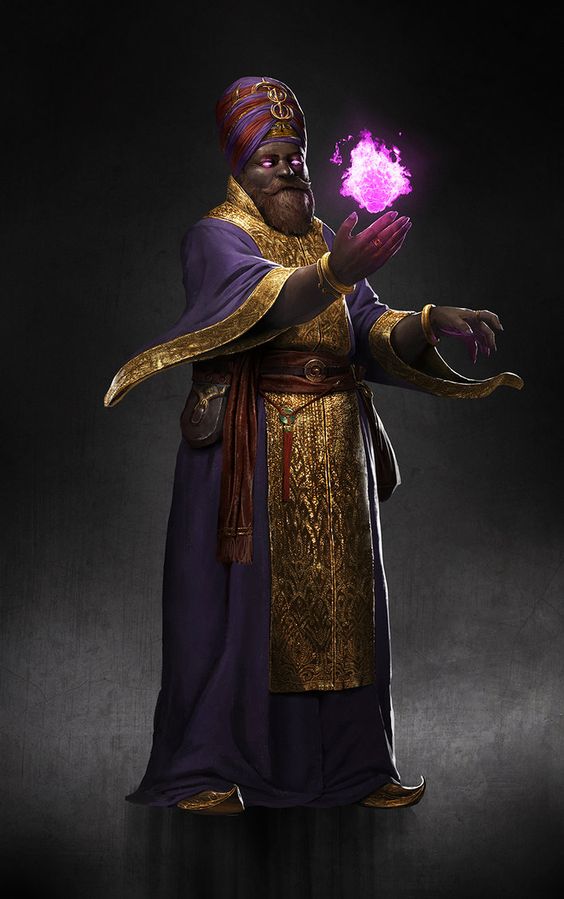
D&D Class Breakdown: Sorcerer

 For new players, it can be hard to choose your first class. For veteran players, it can be hard to choose a class and not fall into stereotypes everyone's seen a thousand times. So now I'm going to deconstruct the 5E Player's Handbook classes (Sorry Artificer, you'll come later) and talk about what works, what doesn't, and some interesting ways to play the classes. 

I won't be going into game mechanics as much as I'll be going into roleplay. 

Let's talk about Sorcerers! 


What Is a Sorcerer? 
Now we get into the arcane magic users, AKA sorcerers, wizards and warlocks, we have to ask: What's the difference? In most fictions the the three words are used interchangeably but in Dungeons and Dragons each is a distinct class and mislabeling one for another is a faux paus you do not want to make at the table. I usually don't get into the game stuff so early but with the magic users I have to just so we know what we're talking about. 

In game, sorcerers gain their access to magic through their bloodline, meaning someone in their family once upon a time was a dragon, demon, angel, eldrich abomination etc. and now they've been blessed with the magic gene (Don't think about the logistics on how this happened. It'll just ruin your day).


Historically sorcerers are like the demigods in Greek and Roman myth, children of a god or other mythical creature and a human and are therefore blessed with powers (We also won't get into how that happened). Celtic myths talk about people who have fairy blood in them, dating back to some weird ancestor that disappeared down a rabbit hole or was replaced with a doppelganger while still an infant, and now they are good at growing plants. To this day we still contribute ability with genetics, as anyone who's done their family history and found anyone of historical significance on the family tree will remind you every time you come in contact with them. We expect the children and grandchildren of great people to themselves be great, even if Albert Einstein's great-grand nephew just wants to play Fortnite. 

In the Game

Sorcerers in Dungeons and Dragons are usually the outsiders in the group. Their power manifests in youth and most of the time they're left to figure out magic on their own. Take the backstory of any of the X-Men and find and replace the word "Mutant" with the word "Sorcerer" and you'll have most of the common backstories. While the sorcerer doesn't have to do much to acquire their magic besides being born, they are limited on the number of spells they know. Since Dungeons and Dragons tends to have a lot of combat, this means that the sorcerer usually knows spells that are of a "do damage to as many people as possible as fast as possible" variety. Sorcerers can also cast the most frequently in a day without needing to recharge their mana batteries so they're usually used as the damage dealer in the group. 


Most players who pick up the sorcerer tend to go the mutant route, making the sorcerer the outcast of society because they were born different, or because they remind their families about how weird great grandpa Albert dated that succubus back in the day. It doesn't help that one of the subclasses for sorcerer is the wild magic sorcerer, which has to roll on a random magic effect table every time they do something cool to see what wacky/detrimental effect befalls the entire party. 

Breaking the Trope
Roleplaying as your favorite X-Men character but with magic can be fun, but the diversity of the class means that they're can be so many more interesting options to try out. Here are a few ideas.


Controller: Instead of focusing on damage spells, focus on spells that effect the enemies in different ways. Cast Grease and knock an enemy squad prone, or use Enlarge/Reduce to disorient the enemy and give your party members a better advantage. 

Illusionist: Things aren't always what they seem, and when you're a sorcerer illusionist things never are as they seem. Turn any situation to your advantage by confusing and tricking your opponents with illusions. A good illusionist can win a battle without ever dealing damage. A great illusionist can avoid the battle altogether. 

Showman: Bards don't have to be the only class who like to put on a show. Be a magician but with real magic, always willing to leave your audiences stunned and amazed and your enemies enthralled until you hit them with that perfect fireball. 

Famous Sorcerers

Elsa and Rapunzel (Disney) I'm just going to list them both together. Both gained their powers from something in their lineage, Elsa from her mom's honoring the spirits and Rapunzel from her mom drinking tea made from the magic sunflower. 

Benders (Avatar The Last Airbender/Legend of Korra) In the series people of different nations are born with the ability to manipulate different elements. As demonstrated in Korra when people move from those areas their children still have the predisposition to have the bending abilities of their native homes, as demonstrated with Mako and Bolin, brothers whose parents were Fire Nation and Earth Kingdom and who each became a bender from one of their respective parent nations. 


X-Men (Marvel) Okay I've danced around it long enough: Mutants from the X-Men franchise are basically sorcerers due to their powers coming almost strictly from their genetics. 

-JOE


Friday, January 6, 2023

Friday Creature Feature - Demogorgon

Normally our Friday Creature Features are explorations of the history of a monster in their fictions and just us gushing about our favorite non-humans, but I want to go in a different direction with this one: I want to talk about why the Demogorgon from Stranger Things is not the same as the one from Dungeons and Dragons and why that's an absolutely wonderful thing. 


The Differences Out of the Way
Okay it's already been talked about how the Stranger Things flower made of flesh and teeth is not the same as Dungeons and Dragons two-headed baboon demon with tentacles for arms. The reason it's called the Demogorgon in Stranger Things is because it's the monster the kids were fighting against in their Dungeons and Dragons game when all the nonsense with Eleven and the Upside-Down landed at their doorstep. The two creatures have absolutely nothing in common on the surface, except both were defeated by a bunch of pre-teens (if barely).


Now Demogorgon don't appear that much in Dungeons and Dragons. I've been playing for over 20 years as both a player and dungeon master and I think I've only used the thing once (I had a magic Saw type trap involving magic circles, high level demons and a Deck of Many Things.) Stranger Things has brought the obscure monsters into the spotlight, so now a Dungeons and Dragons supplement features stats for Mr. Bitey Face and the Magic: The Gathering Demogorgon card featured a shadow of the Stranger Things monster instead of the baboon thing, so Demogorgon has become a new staple in the game.

Cosmic Horror Monsters
Stranger Things is considered a cosmic horror (Or Lovecraftian horror) story, a signature of which is that we just don't know how the universe truly works and thus as humans can't handle it. I would've been disappointed if the boys had ridden their bikes over to the library and found the monster in some pop-up book about ancient Samaria, or if the monster was exactly like the one in the Monster Manual. Either case would mean that the kids would know what it is, that it can be beat, and how to beat it.


The characters in cosmic horror are unprepared to deal with real monsters. They usually spend most of the plot trying to convince themselves that these things don't exist (Hopper in season 1) or when finally faced with the creatures completely overwhelmed by the realization that monsters are real that they can go completely insane (Let's face it, Joyce is not okay at this point). The kids name the creature the Demogorgon, and subsequently the Mind Flayer and Vecna because these monsters are the closest reference they have to describe the horrors they're seeing in reality, despite the fact that they are not a 1:1 comparison to the monsters in their game.

Children's Fears
In my The Thing I Love About Stranger Things post I talked about how my favorite part of the show is the cosmic horror and how the kids drifted between mildly entertaining to "get off my lawn". I do love how the horror is seen through the eyes of the children, who still see the world in terms of good guys/bad guys and monsters. They know that when monsters show up, you figure out their weaknesses and take them down. The father of cosmic horror H. P. Lovecraft never put children into his cosmic horror situations because I think they would've figured out his horrors too early and ended the thereat with a well-aimed slingshot instead of going slowly insane surrounded by thinly veiled racism. They named the monsters and in doing so took a tiny bit of fear away from them and decided that if they have a name there must be a way to stop them.


That's just good writing.


Friday, October 21, 2022

5 Scary Lesser Known Dungeons and Dragons Monsters

 Man that title is clunky...

Dungeons and Dragons monsters are a wide range from cute and cuddly to giant kaiju monstrosities made to slap the smug smile off of any player. As a horror fan, I love finding the exceptionally scary, exceptionally gory monsters to add that little touch of fear to my games. Here are five lesser known but incredibly terrifying Dungeons and Dragons monsters that are not in the Monster Manual. 

Unpleasant dreams. 

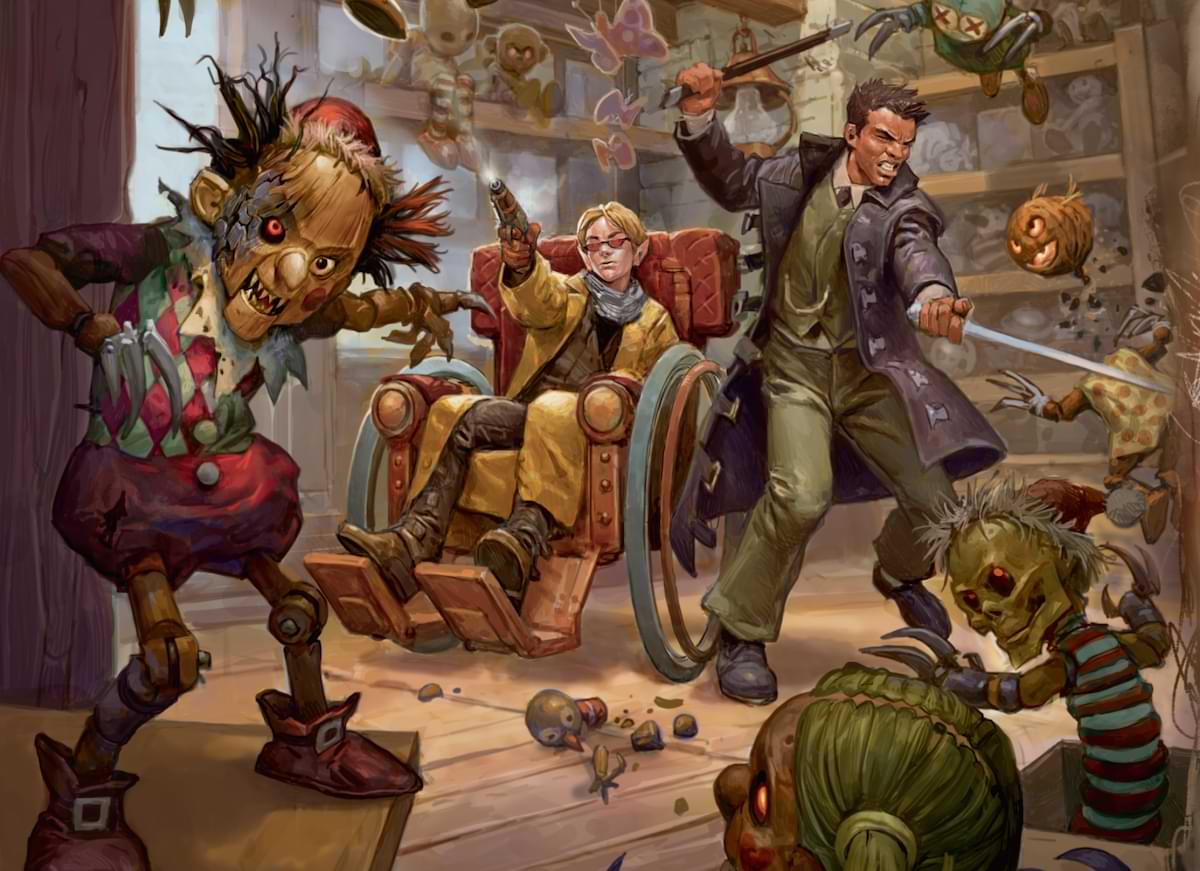
5: Carrionette (Von Richton's Guide to Ravenloft)

In the proud tradition of Chucky and Annabelle, D&D now has its own scary doll. The carrionette is a construct made to look like a child's toy, but when it animates it only has one goal: Stab a living being with an enchanted silver needle, making them switch souls with the victim. The carrionette can then cause havoc in the victim's body, making them perform whatever sinister acts come to mind while the victim is stuck in a dememnted Barbie body. It makes you wonder weather the carrionette really is a demonic soul or if it's another adventurer that was body swapped long ago and has since gone completely mad...


4: Star Spawn (Mordenkainen's Tome of Foes)

The Far Realm is a place beyond the realms of sanity where only the most desperate or mad adventurer dares to travel. Emissaries of the realm, such as mind flayers and star spawn, only hit at the madness that can be found there. Constructs of insanity, the star spawn only come to the Material Plane to prepare the world for its inevitable slip into darkness. Perfect for any Lovecraft fans who want to add some more cosmic horror into their campaigns. 


3: Yuan-Ti Anathema (Volo's Guide to Monsters)

You know what would be scarier than a medusa? If we just skipped the woman's head and had all the writhing snake heads come right off the neck like a hydra nightmare. That's what the Yuan-Ti anathema is, a snake tail, human torso and arms, then a bunch of snake heads. Their Ophidiophobia aura makes any creatures looking at them fear both Yuan-Ti and snakes in the area, making some of the strongest party members completely useless with fear of the slithering hoards. 


2: Oblex (Mordenkainen's Tome of Foes) 

What's scarier than a slime? A slime that can take human form and pretend to be a person until it's too late. Combining the mimic and the slime into a John Carpenter horror monster. The oblex looks human until you notice a tendril of ichor leading to a giant blobby mass of evil. It's unnerving to see one, but how about a whole village of monsters all interconnected by tendrils and all mimicking humanity until the poor adventurer comments on an oddity.... Then they all look at once...


1: Elder Brain Dragon (Fizban's Treasury of Dragons)

Combining the overwhelming raw power of a dragon with the horrifying implications of a mind flayer and you get the elder brain dragon. After an elder brain takes over the body of a dragon, the creature's breath weapon becomes full of infectious illithid tadpoles which can turn anyone into the octopus faced monsters. It's greed for treasure and the lust for power combine into a creature that few can stand against. 


Wednesday, October 5, 2022

D&D Class Breakdown: Rogue

For new players, it can be hard to choose your first class. For veteran players, it can be hard to choose a class and not fall into stereotypes everyone's seen a thousand times. So now I'm going to deconstruct the 5E Player's Handbook classes (Sorry Artificer, you'll come later) and talk about what works, what doesn't, and some interesting ways to play the classes. 

I won't be going into game mechanics as much as I'll be going into roleplay. 

Let's talk about Rogues! 


What is a Rogue? 

We have yet another class based off basic pre-industrial jobs. I kind of love how what was an everyday job 500 years ago is now a fantasy aspiration, like having physical skill is only obtainable in fiction. 

Well that's a mood. 

Anyway, like the fighter and ranger, every culture has someone able to blend into the shadows for one reason for another. The need in criminal circles is obvious, since being able to sneak is handy for thieves and assassins, but the skill also comes in handy for those who need to spy, hunt animals silently, and even protect the innocent by infiltrating bad guy spaces.  

Professional criminals are of course commonly tied to rogues, with burglars being the most in need of the skills. This isn't the "Give up your GP or your HP" sort of thug that mugs people on the streets, but the one that slips into the governor's manor in the dark of the night, taking only the truly valuable jewels, and leaving before anyone even realizes he's there. That's the spirit of the rogue. 


Quick note: the X-Men Rogue, the southern belle mutant who steals people's memories and abilities with a touch, is obviously not the kind of rogue we're talking about. Her name is in reference to the more ambiguous rogue, someone who is on the outskirts of society or the group. Since Rogue can never have a physical relationship without causing harm, she took up the name to express that she will always be an outsider. 

In The Game

Always looking for the next take, the rogue is the unsavory element in society that everyone regrets to admit that they need. The rogue knows how to get into the most guarded dungeons, infiltrate the enemies bases, and deal the lethal blow quickly and effectively. 

Most other classes see the rogue as an unstable wild-card, never quite sure weather or not the rogue can stay loyal if the right about of gold is offered, or if the dangerous individual with the unsettling amount of knives may become the next big bad. 


Players generally play three types of rogues: the murder-hobo, the kleptomaniac and the edge-lord. The murder hobo is the immoral psychopath with a lust for blood and who takes any slight as an excuse to execute the countless NPCs who cross their path. The kleptomaniac will steal anything that's either not nailed down or on fire, sometimes regardless of their value or how much trouble it could cause. The edge-lord wants everyone at the table to know that their character is dark and mysterious, constantly talking about sulking alone in a dark corner and taking a no-nonsense attitude to the parties shannegains. 

Annoying, all of them. 

Breaking the Trope

People playing this class tend to focus only on the criminal aspect of the rogue, rarely exploring the possibilities the class truly has. The following ideas will break away from the basic criminal element and show what can be done with the rogue class. 

Thrillseeker: There's a certain thrill of being somewhere you're not supposed to and seeing things only certain people can see. The thrillseeker may take a trinket here or there, but their main goal is to see what they can find, see how far in they can get before they get caught, and see what dirty little secrets they can reveal. 

Scout: Having someone to scout ahead is an unappreciated strategy for parties. You're basically breaking the DM's game by taking a peek ahead and setting off traps, accessing enemy strengths and weaknesses, and taking out an annoying guard ahead of time. 

Master of Disguise: You can hide in the shadows, yes, but what if you blended into a crowd? What if you got close to the cultist leader by pretending to be one of his inner circle? Slip into the king's party, dance with the queen, taste some crudités, take out the corrupt duke, then slip out with the rest of the shocked party guests. 

Famous Rogues

Vax'ildan (Critical Role): The rangers twin from Vox Machina, Vax is prone to breaking and entering to find the bad guy's lair and getting into trouble, including being hypnotized by a vampire. He's handy in a fight, but don't put him up against a door. 

Catwoman (DC) Selina Kyle is a literal cat burglar, so much so that at one point she put on cat ears and started owning the nickname. She's robbed every bank, museum and penthouse in Gotham, broken into and out of Arkham Asylum, and robbed billionaires like Bruce Wayne and Lex Luthor. The only thing you find after one of Catwoman's burglaries are some shredded curtains and your valuables missing. 

Flynn Ryder (Tangled)
I'd put Aladdin on here to represent Disney, but honestly Aladdin's a shoplifter compared to Flynn, who we meet completing a successful heist to steal a crown. He's a charismatic thief who can talk his way into and out of most situations. Not content to steal everything of value, Flynn focuses on the high value targets to get what he really wants, though his biggest prize is when he stole Rapunzel's heart. 


-JOE

Wednesday, August 31, 2022

D&D Class Breakdown: Ranger

  For new players, it can be hard to choose your first class. For veteran players, it can be hard to choose a class and not fall into stereotypes everyone's seen a thousand times. So now I'm going to deconstruct the 5E Player's Handbook classes (Sorry Artificer, you'll come later) and talk about what works, what doesn't, and some interesting ways to play the classes. 

I won't be going into game mechanics as much as I'll be going into roleplay. 

Let's talk about Rangers! 


What Is A Ranger?

Every culture has someone who is a liaison between civilization and the wilds beyond. Sometimes that's a professional hunter who brings meat back from the woods to share with the village or it can be an expert to call in when a pack of wolves gets too close to people's houses. Today that translates to forest rangers, whose job is to keep the lines between human and wild as clear and defined as possible, no matter how many people want to try to get selfies with buffalo in Yellowstone. 

I have no idea how the Power Rangers come into any of this. 


In The Game

Rangers serve a nearly identical role as they do in reality, just substitute "animal" with "anything not human". Rangers choose an enemy, or enemies, that they are particularly angry against and get bonuses to tracking and fighting said enemy, adding bounty hunter/exterminator to their resumes, but in general are still seen as the ones who handle the owlbear that's made it's home too close to farmer Thunderstone's barn. 

A note on the difference between rangers and druids: Where rangers tend to defend humanity (or elfmanity, or dwarfmanity, or whatevermanity) from the wild, druids try to defend the wilds from humanity. The ranger is on the side of the people where the druid is on the side of the animals. This should put them at odds (Which would honestly make for interesting stories) but usually both parties will settle a problem by putting everyone back where they belong. 

Players usually play the ranger in one of two ways: Either Legolas or Drizzt. They either have a guy who shoots everything ever with arrows or a guy with two swords turning everything into an episode of Hell's Kitchen: Mincing Finals. For races they usually pick an elf, their favored enemy is usually either orcs or dragons, and their animal companions are almost always wolves or large cats. 

Yawn. 


Breaking the Trope

The thing about this class is that it could go in so many interesting directions, and 5E has even more flavors to add to the pot that it's a shame that only the two elf boys get ripped off. Let's use some imagination and come up with some fun alternatives to Orlando Bloom and... Well Drizzt. 

Defender of Alternative Biomes
As I said with the druids, people get obsessed with landing the wild classes in the forest when we have so many more interesting places to play, especially in Dungeons and Dragons. What if the ranger was an expert in sea hunting, and yes that's a thing read Moby Dick. Or use something like the underdark, or the feywild, where they know how to track creatures where a basic forest ranger would be beyond lost. 

Half Orc Ranger
Too many people pigeonhole the half-orcs into being idiot meat heads, when while they may not win at Trivial Pursuit they can survive in a tough spot. Even more interesting, what if the ranger was defending their orc village from encroaching humans, who they saw as the same type of beast as they would any invasive species? 


Scholar
At the turn of the century, expeditions were sent to Africa and South America in droves to research and discover new animals. Sometimes they'd be captured and dragged back to live sad lives in zoos, sometimes their pelts would be brought back and turned into creepy research pieces, either way, these guys had similar skills to the ranger. Arcane magic users don't have to be the only egg-heads in the party if you have a ranger looking to either stock a menagerie or fill a trophy room. 

Bounty Hunter
Rangers can take humanoids as a favored enemy with restrictions to their own race unless they are evil, so why not have a ranger that hunts members of another race that have in some way broken the law? Mean spirited and possibly racist yes but we're talking about fictional races here so let's calm down. I still want the opportunity to have a human ranger to specialize in hunting halflings...

Famous Rangers

Vex'ahlia (Critical Role)
Yup, the usual Matt Mercer darling is here. Vex is the typical bow-focused ranger who has a special taste for dragons. She also has an adorable animal companion in the form of a bear named Trinket, which aids in combat when she remembers that he exists. 

Mando (Mandalorian)
You can substitute this for Boba Fett if you want since in this context they're both the same. Both are trained in survival and how to hunt down prey, and are the bounty hunter type I mentioned above, only these guys do it in space. 


Gaston (Beauty and the Beast)
Gaston is an example of the historical ranger, since we see him coming in with hunting spoils and he brags about his antler collection in the tavern. The townsfolk love him, in story it's because he's the manliest man to ever man, but historically we can assume that some of his popularity comes from providing meat for the village in leaner times or during the winter, making him a lynch pin to the survival of the village. 

-JOE